Source: Carlyle Reader
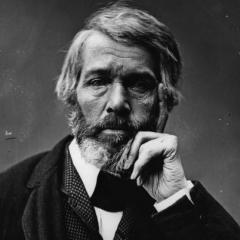
Filter quotes by topic
Famous Thomas Carlyle Quotes
Source: Sartor Resartus and Essays on Burns and Scott
Source: On Heroes, Hero-worship, and the Heroic in History: Six Lectures, Reported, with Emendations and Additions
“The hell of these days is the fear of not getting along, especially of not making money.”
“Democracy will prevail when men believe the vote of Judas as good as that of Jesus Christ.”
“One is hardly sensible of fatigue while he marches to music.”
Source: The Selected Works of Thomas Carlyle
“A fair day's wages for a fair day's work.”
Source: The Selected Works of Thomas Carlyle
“All evil is like a nightmare; the instant you stir under it, the evil is gone.”
Source: Selections from Carlyle
“The age of miracles is forever here.”
Source: On Heroes, Hero-worship and the Heroic in History
Source: Past and Present
“Pain was not given thee merely to be miserable under; learn from it, turn it to account.”
“We have not read an author till we have seen his object, whatever it may be, as he saw it.”
Source: Critical and Miscellaneous Essays ...
Source: The Works of Thomas Carlyle
“The eternal stars shine out again, so soon as it is dark enough.”
“Intellect is the soul of man, the only immortal part of him.”
Source: Works
Source: The Selected Works of Thomas Carlyle
Source: Past and Present
“Society is founded upon Cloth.”
Source: Sartor Resartus: The life and opinions of Herr Teufelsdröckh in three books: By Thomas Carlyle
Source: The Works of Thomas Carlyle
Source: Chartism: Past and Present. By Thomas Carlyle
Source: Critical and Miscellaneous Essays ...
“Great men are the commissioned guides of mankind, who rule their fellows because they are wiser.”
Source: The Collected Works of Thomas Carlyle
“Pin your faith to no ones sleeves, haven't you two eyes of your own.”
Source: The Works of Goethe
Source: Sartor Resartus: The Life and Opinions of Herr Teufelsdrockh: Easyread Super Large 18pt Edition
Source: The Works of Thomas Carlyle: Volume 30, Critical and Miscellaneous Essays V
“He who would write heroic poems should make his whole life a heroic poem.”
Source: Life of Friedrich Schiller (1825): Life of John Sterling (1851)