Quotessence
Home / Authors / Thomas Kuhn
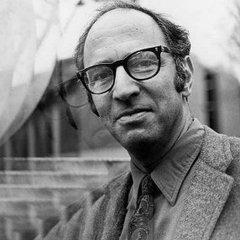
Thomas Kuhn

Thomas Kuhn Quotes

Physicist

Filter quotes by topic

Famous Thomas Kuhn Quotes

“As in political revolutions, so in paradigm choice--there is no standard higher than the assent of the relevant community. To discover how scientific revolutions are effected, we shall therefore have to examine not only the impact of nature and of logic, but also the techniques of persuasive argumentation effective within the quite special groups that constitute the community of scientists.”

“We may... have to relinquish the notion, explicit or implicit, that changes of paradigm carry scientists and those who learn from them closer and closer to the truth... The developmental process described in this essay has been a process of evolution from primitive beginnings-a process whose successive stages are characterized by an increasingly detailed and refined understanding of nature. But nothing that has been or will be said makes it a process of evolution toward anything.”

“Concerned to reconstruct past ideas, historians must approach the generation that held them as the anthropologist approaches an alien culture. They must, that is, be prepared at the start to find that natives speak a different language and map experience into different categories from those they themselves bring from home. And they must take as their object the discovery of those categories and the assimilation of the corresponding language.”

“Groups do not have experiences except insofar as all their members do. And there are no experiences... that all the members of a scientific community must share in the course of a [scientific] revolution. Revolutions should be described not in terms of group experience but in terms of the varied experiences of individual group members. Indeed, that variety itself turns out to play an essential role in the evolution of scientific knowledge.”

“To turn Karl [Popper]'s view on its head, it is precisely the abandonment of critical discourse that marks the transition of science. Once a field has made the transition, critical discourse recurs only at moments of crisis when the bases of the field are again in jeopardy. Only when they must choose between competing theories do scientists behave like philosophers.”

“What chemists took from Dalton was not new experimental laws but a new way of practicing chemistry (he himself called it the 'new system of chemical philosophy'), and this proved so rapidly fruitful that only a few of the older chemists in France and Britain were able to resist it.”

“The historian of science may be tempted to claim that when paradigms change, the world itself changes with them. Led by a new paradigm, scientists adopt new instruments and look in new places. even more important, during revolutions, scientists see new and different things when looking with familiar instruments in places they have looked before. It is rather as if the professional community had been suddenly transported to another planet where familiar objects are seen in a different light and are joined by unfamiliar ones as well.”

“The resolution of revolutions is selection by conflict within the scientific community of the fittest way to practice future science. The net result of a sequence of such revolutionary selections, separated by periods of normal research, is the wonderfully adapted set of instruments we call modern scientific knowledge.”

“Though the world does not change with a change of paradigm, the scientist afterward works in a different world... I am convinced that we must learn to make sense of statements that at least resemble these. What occurs during a scientific revolution is not fully reducible to a re-interpretation of individual and stable data. In the first place, the data are not unequivocally stable.”