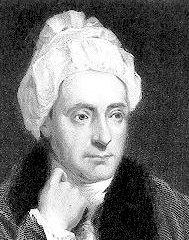
“So Fancy dreams - Disprove it, if ye can,
Ye reas'ners broad awake, whose busy search
Of argument, employ'd too oft amiss,
Sifts half the pleasures of short life away.”
Source: The Complete Poetical Works of William Cowper, Esq: Including the Hymns and Translations from Madame Guion, Milton, Etc. ; with a Memoir of the Author
“Ye fearful saints, fresh courage take,
The clouds ye so much dread
Are big with mercy and shall break
In blessings on your head.”
“Nay,--conduct hath the loudest tongue. The voice
Is but an instrument on which the priest
May play what tune he pleases. In the deed,
The unequivocal authentic deed,
We find sound argument, and read the heart.”
Source: The Poetical Works of William Cowper Volume 1
“He “loved the world that hated him: the tear
That dropped upon his Bible was sincere;
Assailed by scandal and the tongue of strife,
His only answer was a blameless life”
“Now stir the fire, and close the shutters fast,
Let fall the curtains, wheel the sofa round,
And, while the bubbling and loud hissing urn
Throws up a steamy column and the cups
That cheer but not inebriate, wait on each,
So let us welcome peaceful ev'ning in.”
Source: The Complete Poetical Works of William Cowper
“And in that hour,
The seeds of cruelty, that since have swell'd
To such gigantic and enormous growth,
Were sown in human nature's fruitful soil.
Hence date the persecution and the pain
That man inflicts on all inferior kinds,
Regardless of their plaints.”
Source: The poetical works of William Cowper: Complete ed., with memoir, explanatory notes etc
“And, of all lies (be that one poet's boast) / The lie that flatters I abhor the most.”
Source: The task, Table talk, and other poems: With critical observations of various authors on his genius and character, and notes, critical and illustrative
“No traveler e'er reached that blest abode who found not thorns and briers in his road.”
“Heaven speed the canvas, gallantly unfurl'd, To furnish and accommodate a world, To give the Pole the produce of the sun, And knit the unsocial climates into one.”
Source: The complete poetical works of William Cowper, with life and critical notice of his writings
“The man to solitude accustom'd long, Perceives in everything that lives a tongue; Not animals alone, but shrubs and trees Have speech for him, and understood with ease, After long drought when rains abundant fall, He hears the herbs and flowers rejoicing all.”
Source: The poetical works of William Cowper: Complete ed., with memoir, explanatory notes etc
“Restraining prayer, we cease to fight; Prayer keeps the Christian's armor bright; And Satan trembles when he sees The weakest saint upon his knees.”
“How soft the music of those village bells, Falling at interval upon the ear In cadence sweet; now dying all away, Now pealing loud again, and louder still, Clear and sonorous, as the gale comes on! With easy force it opens all the cells Where Memory slept.”
Source: The task, Table talk, and other poems: With critical observations of various authors on his genius and character, and notes, critical and illustrative
“I pity bashful men, who feel the pain Of fancied scorn and undeserved disdain, And bear the marks upon a blushing face, OF needless shame, and self-impos'd disgrace.”
Source: Poems
“But oars alone can ne'er prevail To reach the distant coast; The breath of Heaven must swell the sail, Or all the toil is lost.”
Source: The Poems of William Cowper
“Toil for the brave! The brave that are no more.”
“Me howling blasts drive devious, tempest-tossed, / Sails ripped, seams opening wide, and compass lost.”
Source: The Poetical Works of William Cowper
“The still small voice is wanted.”
Source: The Works of William Cowper: His Life, Letters, and Poems ; Now First Completed by the Introduction of Cowper's Private Correspondence
“Give what thou canst, without Thee we are poor; And with Thee rich, take what Thou wilt away.”
Source: Poetical works of William Cowper (with selections from the works of Robert Lloyd [and others]) ed. by R. Bell
“Great contest follows, and much learned dust Involves the combatants; each claiming truth, And truth disclaiming both.”
“But conversation, choose what theme we may,
And chiefly when religion leads the way,
Should flow, like waters after summer show'rs,
Not as if raised by mere mechanic powers.”
“Thieves at home must hang; but he that puts Into his overgorged and bloated purse The wealth of Indian provinces, escapes.”
Source: The task, Table talk, and other poems: With critical observations of various authors on his genius and character, and notes, critical and illustrative
“But many a crime deemed innocent on earth Is registered in Heaven; and these no doubt Have each their record, with a curse annex'd.”
“Without one friend, above all foes, Britannia gives the world repose.”
Source: The Complete Poetical Works of William Cowper: With Life, and Critical Notice of His Writings. Eight Engravings on Steel
“England with all thy faults, I love thee still-- My country! and, while yet a nook is left Where English minds and manners may be found, Shall be constrained to love thee.”
Source: The Life and Works of William Cowper: His life and letters by William Hayley. Now first completed by the introduction of Cowper's private correspondence
“Man on the dubious waves of error toss'd.”
“All constraint, / Except what wisdom lays on evil men, / Is evil.”
Source: The poetical works of William Cowper: Complete ed., with memoir, explanatory notes etc
“Ever let the Fancy roam, Pleasure never is at home.”
“Fate steals along with silent tread, Found oftenest in what least we dread; Frowns in the storm with angry brow, But in the sunshine strikes the blow.”
Source: The Works of Cowper and Thompson: Including Many Letters and Poems Never Before Published in this Country. With a New and Interesting Memoir of the Life of Thomson
“If hindrances obstruct the way, Thy magnanimity display. And let thy strength be seen: But O, if Fortune fill thy sail With more than a propitious gale, Take half thy canvas in.”
Source: The poetical works of William Cowper, ed: with notes and biographical introd. by William Benham
“The Frenchman, easy, debonair, and brisk, Give him his lass, his fiddle, and his frisk, Is always happy, reign whoever may, And laughs the sense of mis'ry far away.”
Source: The Poetical Works of William Cowper
“That good diffused may more abundant grow.”
Source: The Poetical Works of William Cowper: With Life ; Six Engravings on Steel
“Whoever keeps an open ear For tattlers will be sure to hear The trumpet of contention.”
Source: The Poems of William Cowper
“An inadvertent step may crush the snail That crawls at evening in the public path. But he that has humanity, forewarned, Will turn aside and let the reptile live.”
Source: Poems. With an introductory essay by J. Montgomery
“How various his employments whom the world Calls idle; and who justly in return Esteems that busy world an idler too!”
Source: The Works of William Cowper: Comprising His Poems, Correspondence, and Translations. With a Life of the Author
“An idler is a watch that wants both hands; As useless if it goes as when it stands.”
Source: The poetical works of William Cowper: Complete ed., with memoir, explanatory notes etc
“Did Charity prevail, the press would prove A vehicle of virtue, truth, and love.”
Source: Table talk, Truth, Expostulation, Hope, Charity, and other poems
“How shall I speak thee, or thy power address Thou God of our idolatry, the Press. . . . . Like Eden's dead probationary tree, Knowledge of good and evil is from thee.”
“Philologists, who chase A painting syllable through time and space Start it at home, and hunt it in the dark, To Gaul, to Greece, and into Noah's Ark.”
“For 'tis a truth well known to most, That whatsoever thing is lost, We seek it, ere it comes to light, In every cranny but the right.”
Source: The poetical works of William Cowper, ed: with notes and biographical introd. by William Benham
“Misses! the tale that I relate This lesson seems to carry-- Choose not alone a proper mate, But proper time to marry.”
Source: Works of Cowper and Thomson
“What peaceful hours I once enjoy'd! How sweet their memory still! But they have left an aching void The world can never fill.”
Source: The Works: Comprising His Poems, Correspondence and Translations : in Eight Volumes. ¬The poetical works, Vol. 1
“Mercy to him that shows it, is the rule.”
Source: The Complete Poetical Works of William Cowper, Esq: Including the Hymns and Translations from Madame Guion, Milton, Etc. ; with a Memoir of the Author
“How fleet is a glance of the mind! Compared with the speed of its flight, The tempest itself lags behind, And the swift-winged arrows of light.”
Source: Works of Cowper and Thomson
“Stamps God's own name upon a lie just made, To turn a penny in the way of trade.”
“Mountains interposed Make enemies of nations, who had else Like kindred drops been mingled into one.”
Source: The Works of William Cowper: His Life, Letters, and Poems. Now First Completed by the Introduction of Cowper's Private Correspondence
“Some to the fascination of a name, Surrender judgment hoodwinked.”
Source: The Poems of William Cowper ...
“Dejection of spirits, which may have prevented many a man from becoming an author, made me one. I find constant employment necessary, and therefore take care to be constantly employed. . . . When I can find no other occupation, I think; and when I think, I am very apt to do it in rhyme.”
Source: The Poetical Works of William Cowper: With Life ; Six Engravings on Steel
“Twere better to be born a stone Of ruder shape, and feeling none, Than with a tenderness like mine And sensibilities so fine! Ah, hapless wretch! condemn'd to dwell Forever in my native shell, Ordained to move when others please, Not for my own content or ease; But toss'd and buffeted about, Now in the water and now out.”
Source: The Works of William Cowper: His Life, Letters, and Poems ; Now First Completed by the Introduction of Cowper's Private Correspondence
“Though peace be made, yet it's interest that keep peace.”
“Greece, sound, thy Homer's, Rome thy Virgil's name, But England's Milton equals both in fame.”
Source: The poetical works of William Cowper, ed: with notes and biographical introd. by William Benham