Quotessence
Home / Authors / William Dean Howells Books
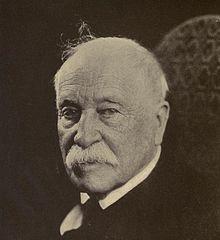
William Dean Howells

William Dean Howells Books

Author

Editha

A source page for quotes linked to William Dean Howells.
0 quotes

Of Literature

A source page for quotes linked to William Dean Howells.

0 quotes

Poems

A source page for quotes linked to William Dean Howells.

0 quotes

The Friendly Fire

A source page for quotes linked to William Dean Howells.

0 quotes

Related Quotes

“Yes, there's sense in that. But the suddenly rich are on a level with any of us nowadays. Money buys position at once. I don't say that it isn't all right. The world generally knows what it's about, and knows how to drive a bargain. I dare say that it makes the new rich pay too much. But there's no doubt but money is to the fore now. It is the romance, the poetry of our age. It's the thing that chiefly strikes the imagination. The Englishmen who come here are more curious about the great new millionaires than about anyone else, and they respect them more. It's all very well. I don't complain of it.”

“What does that one-armed Dutchman do on this book?" "What does he do?" March echoed, as people are apt to do with a question that is mandatory and offensive. "Yes, sir, what does he do? Does he write for it?" "I suppose you mean Lindau," said March. He saw no reason for refusing to answer Dryfoos's demand, and he decided to ignore its terms. "No, he doesn't write for it in the usual way. He translates for it; he examines the foreign magazines, and draws my attention to anything he thinks of interest. But I told you about this before—" "I know what you told me, well enough. And I know what he is. He is a red-mouthed labor agitator. He's one of those foreigners that come here from places where they've never had a decent meal's victuals in their lives, and as soon as they get their stomachs full, they begin to make trouble between our people and their hands. There's where the strikes come from, and the unions and the secret societies. They come here and break our Sabbath, and teach their atheism. They ought to be hung! Let 'em go back if they don't like it over here. They want to ruin the country." March could not help smiling a little at the words, which came fast enough now in the hoarse staccato of Dryfoos's passion. "I don't know whom you mean by they, generally speaking; but I had the impression that poor old Lindau had once done his best to save the country. I don't always like his way of talking, but I know that he is one of the truest and kindest souls in the world; and he is no more an atheist than I am. He is my friend, and I can't allow him to be misunderstood.”

“NoMarch felt the forces of fate closing about him and pushing him to a decision. He feebly fought them off till he could have another look at the flat. Then, baked and subdued still more by the unexpected presence of Mrs. Grosvenor Green herself, who was occupying it so as to be able to show it effectively, he took it. He was aware more than ever of its absurdities; he knew that his wife would never cease to hate it; but he had suffered one of those eclipses of the imagination to which men of his temperament are subject, and into which he could see no future for his desires. He felt a comfort in irretrievably committing himself, and exchanging the burden of indecision for the burden of responsibility.”

“He parted from him on the usual terms outwardly, but he felt obscurely abused by Fulkerson in regard to the Dryfooses, father and son. He did not know but Fulkerson had taken an advantage of him in allowing him to commit himself to their enterprise with out fully and frankly telling him who and what his backer was; he perceived that with young Dryfoos as the publisher and Fulkerson as the general director of the paper there might be very little play for his own ideas of its conduct. Perhaps it was the hurt to his vanity involved by the recognition of this fact that made him forget how little choice he really had in the matter, and how, since he had not accepted the offer to edit the insurance paper, nothing remained for him but to close with Fulkerson. In this moment of suspicion and resentment he accused Fulkerson of hastening his decision in regard to the Grosvenor Green apartment; he now refused to consider it a decision, and said to himself that if he felt disposed to do so he would send Mrs. Green a note reversing it in the morning. But he put it all off till morning with his clothes, when he went to bed, he put off even thinking what his wife would say; he cast Fulkerson and his constructive treachery out of his mind, too, and invited into it some pensive reveries of the past, when he still stood at the parting of the ways, and could take this path or that. In his middle life this was not possible; he must follow the path chosen long, ago, wherever, it led. He was not master of himself, as he once seemed, but the servant of those he loved; if he could do what he liked, perhaps he might renounce this whole New York enterprise, and go off somewhere out of the reach of care; but he could not do what he liked, that was very clear. In the pathos of this conviction he dwelt compassionately upon the thought of poor old Lindau; he resolved to make him accept a handsome sum of money—more than he could spare, something that he would feel the loss of—in payment of the lessons in German and fencing given so long ago. At the usual rate for such lessons, his debt, with interest for twenty-odd years, would run very far into the hundreds. Too far, he perceived, for his wife's joyous approval; he determined not to add the interest; or he believed that Lindau would refuse the interest; he put a fine speech in his mouth, making him do so; and after that he got Lindau employment on 'Every Other Week,' and took care of him till he died.”

“The swelling and towering omnibuses, the huge trucks and wagons and carriages, the impetuous hansoms and the more sobered four-wheelers, the pony-carts, donkey-carts, hand-carts, and bicycles which fearlessly find their way amidst the turmoil, with foot-passengers winding in and out, and covering the sidewalks with their multitude, give the effect of a single monstrous organism, which writhes swiftly along the channel where it had run in the figure of a flood till you were tired of that metaphor. You are now a molecule of that vast organism.”

“n artistic atmosphere does not create artists a literary atmosphere does not create literators; poets and painters spring up where there was never a verse made or a picture seen. This suggests that God is no more idle now than He was at the beginning, but that He is still and forever shaping the human chaos into the instruments and means of beauty.”

“Christ and the life of Christ is at this moment inspiring the literature of the world as never before, and raising it up a witness against waste and want and war. It may confess Him, as in Tolstoi's work it does, or it may deny Him, but it cannot exclude Him; and in the degree that it ignores His spirit, modern literature is artistically inferior. In other words, all good literature is now Christmas literature.”

“Lord, for the erring thought Not unto evil wrought: Lord, for the wicked will Betrayed, and baffled still: For the heart from itself kept, Our thanksgiving accept. For ignorant hopes that were Broken to our blind prayer: For pain, death, sorrow, sent Unto our chastisement: For all loss of seeming good, Quicken our gratitude.”

“A man never sees all that his mother has been to him until it's too late to let her know that he sees it.”

“It is the curse of prosperity that it takes work away from us, and shuts that door to hope and health of spirit.”

“It's a curious thing, this thing we call civilization...we think it is an affair of epochs, and nations. It's really an affair of individuals. One brother will be civilized and the other a barbarian...All civilization comes through literature now, especially in our country. A Greek got his civilization by talking and looking, and in some measure a Parisian may still do it. But we, who live remote from history and monuments, we must read or we must barbarise.”

“In Europe life is histrionic and dramatized, and in America, except when it is trying to be European, it is direct and sincere.”

“Is it worth while to observe that there are no Venetian blinds in Venice?”

“We are creatures of the moment; we live from one little space to another, and only one interest at a time fills these.”