Quotessence
Home / Authors / William Hazlitt Books
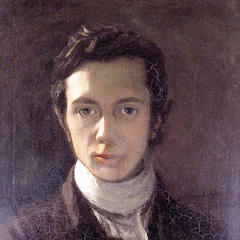
William Hazlitt

William Hazlitt Books

Writer

Table talk

A source page for quotes linked to William Hazlitt.
0 quotes

Essays

A source page for quotes linked to William Hazlitt.

0 quotes

Related Quotes

“If love at first sight were mutual, or to be conciliated by kind offices; if the fondest affection were not so often repaid and chilled by indifference and scorn; if so many lovers both before and since the madman in Don Quixote had not ‘worshipped a statue, hunted the wind, cried aloud to the desert’; if friendship were lasting; if merit were renown, and renown were health, riches, and long life; or if the homage of the world were paid to conscious worth and the true aspirations after excellence, instead of its gaudy signs and outward trappings, then indeed I might be of opinion that it is better to live to others than one’s self; but as the case stands, I incline to the negative side of the question.”

“Leave me to my repose,’ is the motto of the sleeping and the dead. You might as well ask the paralytic to leap from his chair and throw away his crutch, or, without a miracle, to ‘take up his bed and walk,’ as expect the learned reader to throw down his book and think for himself. He clings to it for his intellectual support; and his dread of being left to himself is like the horror of a vacuum. He can only breathe a learned atmosphere, as other men breathe common air. He is a borrower of sense. He has no ideas of his own, and must live on those of other people. The habit of supplying our ideas from foreign sources ‘enfeebles all internal strength of thought,’ as a course of dram-drinking destroys the tone of the stomach.”

“One of the pleasantest things in the world is going a journey; but I like to go by myself. I can enjoy society in a room; but out of doors, nature is company enough for me. I am then never less lone than when alone...I cannot see the wit of walking and talking at the same time. When I am in the country, I wish to vegetate like the country...I like solitude, when I give myself up to it, for the sake of solitude...”

“Rome has been called the "Sacred City": - might not our Oxford be called so too? There is an air about it, resonant of joy and hope: it speaks with a thousand tongues to the heart: it waves its mighty shadow over the imagination: it stands in lowly sublimity, on the "hill of ages"; and points with prophetic fingers to the sky: it greets the eager gaze from afar, "with glistering spires and pinnacles adorned," that shine with an internal light as with the lustre of setting suns; and a dream and a glory hover round its head, as the spirits of former times, a throng of intellectual shapes, are seen retreating or advancing to the eye of memory: its streets are paved with the names of learning that can never wear out: its green quadrangles breathe the silence of thought.”

“The “olden times” are only such in reference to us. The past is rendered strange, mysterious, visionary, awful from this great gap in time that parts us from it, and the long perspective of waning years. Things gone by and almost forgotten, look dim and dull, uncouth and quaint, from our ignorance of them, and the mutability of customs. But in their day—they were fresh, unimpaired, in full vigour, familiar and glossy.”

“The love of fame is too high and delicate a feeling in the mind to be mixed up with realities, it is a solitary abstraction. * * * A name "fast anchored in the deep abyss of time" is like a star twinkling in the firmament, cold, silent, distant, but eternal and sublime; and our transmitting one to posterity is as if we should contemplate our translation to the skies.”

“Persons without education certainly do not want either acuteness or strength of mind in what concerns themselves, or in things immediately within their observation; but they have no power of abstraction, no general standard of taste, or scale of opinion. They see their objects always near, and never in the horizon. Hence arises that egotism which has been remarked as the characteristic of self-taught men.”

“What I mean by living to one's-self is living in the world, as in it, not of it: it is as if no one know there was such a person, and you wished no one to know it: it is to be a silent spectator of the mighty scene of things, not an object of attention or curiosity in it; to take a thoughtful, anxious interest in what is passing in the world, but not to feel the slightest inclination to make or meddle with it.”

“Man is an intellectual animal, and therefore an everlasting contradiction to himself. His senses centre in himself, his ideas reach to the ends of the universe; so that he is torn in pieces between the two, without a possibility of its ever being otherwise.”