Quotessence
Home / Quotes / Quote by Richard Rodriguez

Quote by Richard Rodriguez

“I had an Indian face, but I never saw it as Indian, in part because in America the Indian was dead. The Indian had been killed in cowboy movies, or was playing bingo in Oklahoma. Also, in my middle-class Mexican family indio was a bad word, one my parents shy away from to this day. That's one of the reasons, of course, why I always insist, in my bratty way, on saying, Soy indio! - "I am an Indian!"”

Quote by Richard Rodriguez

Author
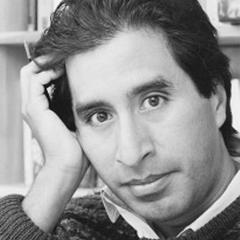
Richard Rodriguez
Richard Rodriguez

Richard Rodriguez is an American writer born on July 31, 1944. His works primarily explore issues of identity, culture, and class, particularly the experiences of Latinos in American society. Rodriguez is known for his profound social commentary and literary talent. more

You May Also Like

“The myth of the dead Indian goes back to the Protestant settlement of the U.S. The Pilgrims wanted to start a new life in America. They wanted to believe that in some sense they had come to a new Eden and that they could leave history behind in Europe. So they convinced themselves that this land had no history, that this was "virgin" land. This made the Indians' presence inconvenient.”

“Suddenly the land is haunted by all these dead Indians. There is this new fascination with the Southwest, with places like Santa Fe, New Mexico, where people come down from New York and Boston and dress up as Indians. When I go to Santa Fe, I find real Indians living there, but they are not involved in the earth worship that the American environmentalists are so taken by. Many of these Indians are interested, rather, in becoming Evangelical Christians.”

“What has happened in the last generation is that Tijuana has become a new Third World capital - much to the chagrin of Mexico City, which is more and more aware of how little it controls Tijuana politically and culturally. In addition to whorehouses and discos, Tijuana now has Korean factories and Japanese industrialists and Central American refugees, and a new Mexican bourgeoisie that takes its lessons from cable television.”