“The devotion of democracy to education is a familiar fact. The superficial explanation is that a government resting upon popular suffrage cannot be successful unless those who elect and who obey their governors are educated. Since a democratic society repudiates the principle of external authority, it must find a substitute in voluntary disposition and interest; these can be created only by education.”
Quote by John Dewey
Work
Democracy and Education: Top American Authors
Democracy and Education: Top American Authors is a scholarly compilation that delves into the intersection of democracy and education. The book examines how leading American authors have shaped the discourse on education within a democratic framework, highlighting their perspectives on the importance of education for fostering a democratic society. It includes analyses of various educational theories and practices as presented by these authors, providing a comprehensive view of the evolution of educational thought in the United States. more
Author
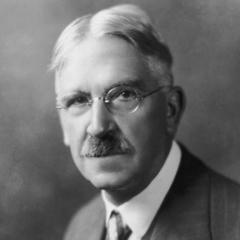
John Dewey
John Dewey was an American philosopher and educator, born on October 20, 1859, and died on June 1, 1952. He was a leading figure in the philosophy of pragmatism and had a profound impact on 20th-century education, philosophy, and the social sciences. more
You May Also Like
“Creative thinking will improve as we relate the new fact to the old and all facts to each other.”
Source: The Middle Works, 1899-1924: 1922
Source: The Essential Dewey: Pragmatism, education, democracy
Source: The Essential Dewey: Pragmatism, education, democracy
Source: Experience and Education, 60th Anniversary Edition
“I believe the Abominable Snowman may be real. I think there may be something in that.”
Source: Experience And Education
Source: The Later Works, 1925-1953: 1929-1930