Quotessence
Home / Quotes / Quote by Gilbert K. Chesterton

Quote by Gilbert K. Chesterton

“For they (capitalists) hold as their chief heresy, in a coarser form, the fundamental falsehood that things are not made to be used but made to be sold. All the collapse of their commercial system in their own time has been due to that fallacy of forcing things on a market where there was no market; of continually increasing the power of supply without increasing the power of demand; of briefly, of always considering the man who sells the potato and never considering the man who eats it.”

Quote by Gilbert K. Chesterton

Author
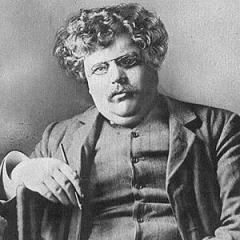
Gilbert K. Chesterton

Gilbert K. Chesterton was an English writer, critic, and theologian, born on May 29, 1874, and died on June 14, 1936. Known for his unique literary style and profound philosophical thinking, Chesterton's works spanned a variety of genres, including novels, poetry, drama, and criticism. more

You May Also Like

“For why, my brothers and sisters, would you rejoice in silver? Either your silver will perish, or you will, and no one knows which will perish first. For neither can you remain here always, nor can silver remain here always; so also with gold, wardrobes, houses, money, real estate-and in the end, even the light by which we enjoy all these things. So do not be willing then to rejoice in such things as these. Rejoice instead in the light that has no setting; rejoice in the dawn which no yesterday precedes, and no tomorrow follows.”

“However destructive may be the policies of the government and the methods and products of the corporations, the root of the problem is always found to be found in private life. We must learn to see that every problem that concerns us as conservationists always leads straight to the question of how we live. The world is being destroyed, no doubt about it, by the greed of the rich and powerful. It is also being destroyed by popular demand.”

“Human beings are themselves considered consumer goods to be used and then discarded. We have created a “disposable” culture which is now spreading. It is no longer simply about exploitation and oppression, but something new. Exclusion ultimately has to do with what it means to be a part of the society in which we live; those excluded are no longer society’s underside or its fringes or its disenfranchised – they are no longer even a part of it. The excluded are not the “exploited” but the outcast, the “leftovers”.”

“In a consumer society, expectations dare not plateau, because a growing economy depends on rising expectations... The more we let our level of contentment be determined by outside factors-a new car, fashionable clothes, a prestigious career, social status-the more we relinquish control over our own happiness.”