“We try to show that the well-ordered society of justice as fairness is indeed possible according to our nature and those requirements. This endeavor belongs to political philosophy as reconciliation; for seeing that the conditions of a social world at least allow for that possibility affects our view of the world itself and our attitude toward it. No longer need it seem hopelessly hostile, a world in which the will to dominate and oppressive cruelties, abetted by prejudice and folly, must inevitably prevail. None of these may ease our loss, situated as we may be in a corrupt society. But we may reflect that the world is not in itself inhospitable to political justice and its good. Our social world might have been different and there is hope for those at another time and place”
Quote by John Rawls
Work
This book offers a refined and updated version of John Rawls's influential theory of justice as fairness, originally developed in his earlier work 'A Theory of Justice.' In this restatement, Rawls responds to criticisms and clarifies his arguments, focusing on the idea that a just society is one that all free and equal citizens would agree to under fair conditions. He outlines two key principles: one guaranteeing equal basic liberties, and another addressing social and economic inequalities, which must be arranged to benefit the least advantaged and be attached to positions open to all. The work emphasizes the importance of public reason and the overlapping consensus in a pluralistic society, aiming to provide a stable and just political framework for democratic institutions. more
Author
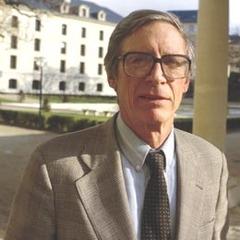
John Rawls (February 21, 1921 - November 24, 2002) was an influential American philosopher, known for his contributions to political philosophy, particularly his theories on justice, freedom, and equality. His work, 'A Theory of Justice,' is considered a classic in the field of political philosophy and has had a profound impact on the late 20th-century discourse on these issues. more
You May Also Like
“Patience is the glue that binds hard work and faith.”
“Making a decision based on fear is like painting a self-portrait of someone else.”
“To the issues of friendship, love, business and war, "surprise" is the optimistic solution.”
“The American political experience can therefore be viewed as optimism in the collective.”
“Americans have a tendency to believe that when there's a problem there must be a solution.”