Quotessence
Home / Quotes / Quote by Stephen Jay Gould

Quote by Stephen Jay Gould

“Hyper-selectionism has been with us for a long time in various guises; for it represents the late nineteenth century's scientific version of the myth of natural harmony all is for the best in the best of all possible worlds (all structures well designed for a definite purpose in this case). It is, indeed, the vision of foolish Dr. Pangloss, so vividly satirized by Voltaire in Candide the world is not necessarily good, but it is the best we could possibly have.”

Quote by Stephen Jay Gould

Work

The Panda's Thumb: More Reflections in Natural History

This book is a compilation of essays by the author, delving into the intricacies of evolutionary biology and its implications. It offers a blend of scientific inquiry and philosophical reflection, examining the natural world and the ways in which it challenges and reshapes our understanding of life and the universe. more

Author
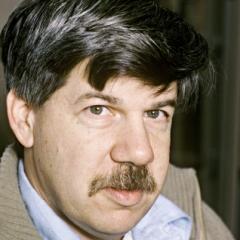
Stephen Jay Gould
Stephen Jay Gould

Stephen Jay Gould was a renowned paleontologist, evolutionary theorist, science writer, and academic. He is known for his work in ornithology, paleontology, evolutionary theory, and speciation. Gould's writings and papers have had a profound impact on the scientific community, and he was a long-time contributor to the journal 'Nature'. more

You May Also Like

“I despair of persuading people to drop the familiar and comforting tactic of dichotomy. Perhaps, instead, we might expand the framework of debates by seeking other dichotomies more appropriate than, or simply different from, the conventional divisions. All dichotomies are simplifications, but the rendition of a conflict along differing axes of several orthogonal dichotomies might provide an amplitude of proper intellectual space without forcing us to forgo our most comforting tool of thought.”

“The silliest and most tendentious of baseball writing tries to wrest profundity from the spectacle of grown men hitting a ball with a stick by suggesting linkages between the sport and deep issues of morality, parenthood, history, lost innocence, gentleness, and so on, seemingly ad infinitum . (The effort reeks of silliness because baseball is profound all by itself and needs no excuses; people who don't know this are not fans and are therefore unreachable anyway.”

“It is so hard for an evolutionary biologist to write about extinction caused by human stupidity. Let me then float an unconventional plea, the inverse of the usual argument. The extinction of Partula is unfair to Partula. That is the conventional argument, and I do not challenge its primacy. But we need a humanistic ecology as well, both for the practical reason that people will always touch people more than snails do or can, and for the moral reason that humans are legitimately the measure of all ethical questions for these are our issues, not nature's.”

“Unfortunately, all life on earth - the only life we know - represents, for all its current variety, the results of a single experiment , for every earthly species evolved from the common ancestry of a single origin. We desperately need a repetition of the experiment (several would be better, but let's not be greedy!) in order to make a judgement. Mars represents our first real hope for a second experiment - the sine qua non - for any proper answer for the question of questions.”

“Complex organisms cannot be construed as the sum of their genes, nor do genes alone build particular items of anatomy or behavior by themselves. Most genes influence several aspects of anatomy and behavior as they operate through complex interactions with other genes and their products, and with environmental factors both within and outside the developing organism. We fall into a deep error, not just a harmful oversimplification, when we speak of genes "for" particular items of anatomy or behavior.”

“As a graduate student at Columbia University, I remember the a priori derision of my distinguished stratigraphy professor toward a visiting Australian drifter [a supporter of the theory of continental drift]. Today my own students would dismiss with even more derision anyone who denied the evident truth of continental drift - a prophetic madman is at least amusing; a superannuated fuddy-duddy is merely pitiful.”

“There is no gene "for" such unambiguous bits of morphology as your left kneecap or your fingernail. [...] Hundreds of genes contribute to the building of most body parts and their action is channeled through a kaleidoscopic series of environmental influences: embryonic and postnatal, internal and external. Parts are not translated genes, and selection doesn't even work directly on parts.”

“I believe that we can still have a genre of scientific books suitable for and accessible alike to professionals and interested laypeople. The concepts of science, in all their richness and ambiguity, can be presented without any compromise, without any simplification counting as distortion, in language accessible to all intelligent people. I hope that this book can be read with profit both in seminars for graduate students and if the movie stinks and you forgot your sleeping pills on the businessman's special to Tokyo.”

“The oppressive weight of disaster and tragedy in our lives does not arise from a high percentage of evil among the summed total of all acts, but from the extraordinary power of exceedingly rare incidents of depravity to inflict catastrophic damage, especially in our technological age when airplanes can become powerful bombs. (An even more evil man, armed only with a longbow, could not have wreaked such havoc at the Battle of Agincourt in 1415.)”