Quotessence
Home / Quotes / Quote by Thomas Hobbes

Quote by Thomas Hobbes

“The law is more easily understood by few than many words. For all words are subject to ambiguity, and therefore multiplication of words in the body of the law is multiplication of ambiguity. Besides, it seems to imply (by too much diligence) that whosoever can evade the words is without the compass of the law.”

Quote by Thomas Hobbes

Work

Leviathan

Leviathan is a seminal work in political philosophy, examining the relationship between the ruler and the ruled, the nature of government, and the social contract. It argues for the absolute power of the sovereign and the necessity of a strong central authority to maintain order and stability in society. more

Author

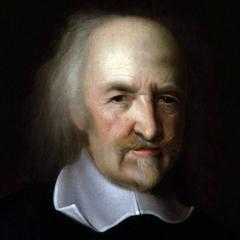
Thomas Hobbes
Thomas Hobbes

Thomas Hobbes, a British philosopher, politician, historian, economist, and writer, was born on April 5, 1588, in Wiltshire, and died on December 4, 1679, in Oxford, England. Hobbes is considered one of the most important philosophers of the 17th century, known for his profound analysis of the state, society, and human behavior. more

You May Also Like

“We are not to renounce our senses and experience, nor (that which is the undoubted Word of God) our natural Reason. For they are the talents which he hath put into our hands to negotiate, till the coming again of our blessed savior, and therefore not to be folded up in the napkin of an implicate faith, but employed in the purchase of justice, peace, and true religion. For though there be many things in God's Word above Reason--that is to say, which cannot by natural reason be either demonstrated or confuted--yet there is nothing contrary to it.”

“For such is the nature of men, that howsoever they may acknowledge many others to be more witty, or more eloquent, or more learned, yet they will hardly believe there be many so wise as themselves, for they see their own wit at hand, and other men's at a distance. But this proveth rather that men are in that point equal, than unequal. For there is not ordinarily a greater sign of the equal distribution of any thing than that every man is contented with his share.”

“Whatsoever is the object of any man's Appetite or Desire; that is it which he for his part calleth Good: and the object of his Hate and Aversion, evil.”