“A great thing is a great book; but a greater thing than all is the talk of a great man.”
Quote by Benjamin Disraeli
Work
The works of Benjamin Disraeli, earl of Beaconsfield: embracing novels, romances, plays, poems, biography, short stories and great speeches
This compilation encompasses a wide array of Benjamin Disraeli's writings, showcasing his versatility as a writer and orator. It includes his novels, which often blend political commentary with romantic narratives, his plays, which explore social and political themes, his poetry, and his biography. Additionally, the collection features his short stories and a selection of his most significant speeches, highlighting his political career and oratory skills. more
Author
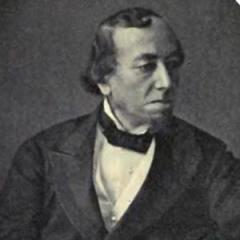
Benjamin Disraeli
Benjamin Disraeli was a prominent British politician who served as the Leader of the House of Commons. Born on December 21, 1804, in London, he passed away on April 19, 1881. Disraeli was known for his political acumen, oratory skills, and literary achievements. more
You May Also Like
“Books are the curse of the human race.”
Source: Collected Edition of the Novels and Tales
“A book reviewer is usually a barker before the door of a publisher's circus.”
Source: You've had your time: being the second part of the confessions of Anthony Burgess
Source: The Devil's Dictionary: The Devil World
Source: The Unabridged Devil's Dictionary
“About Newton: Nature to him was an open book, whose letters he could read without effort.”
Source: The Ayn Rand Lexicon: Objectivism from A to Z