“As every writer has his use, every writer ought to have his patrons; and since no man, however high he may now stand, can be certain that he shall not be soon thrown down from his elevation by criticism or caprice, the common interest of learning requires that her sons should cease from intestine hostilities, and, instead of sacrificing each other to malice and contempt, endeavour to avert persecution from the meanest of their fraternity.”
Quote by Samuel Johnson
Work
The works of Samuel Johnson, LL.D.: Together with his life, and notes on his Lives of the poets, by Sir John Hawkins, Knt. In eleven volumes ...
The book is a compilation of Samuel Johnson's literary works, accompanied by a biography and critical analysis of his Lives of the poets. Authored by Sir John Hawkins, it offers an in-depth look into Johnson's life and contributions to literature. The collection is presented across eleven volumes, showcasing the breadth of Johnson's work and the scholarly insights provided by Hawkins. more
Author
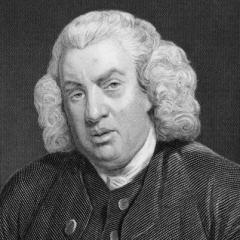
Samuel Johnson
Samuel Johnson was an English writer, poet, and lexicographer, renowned for his comprehensive English dictionary, 'A Dictionary of the English Language', published in 1755. His distinctive writing style and wit have cemented his place as a significant figure in the history of English literature. more
You May Also Like
Source: Samuel Johnson: Selected Writings
Source: The works of Samuel Johnson, with Murphy's essay, ed. by R. Lynam
Source: Selected poetry and prose
Source: The Rambler: In Four Volumes..
Source: The Works of Samuel Johnson, LL. D.: With an Essay on His Life and Genius /c by Arthur Murphy, Esq
Source: Selected essays
Source: The Rambler
Source: The Works of Samuel Johnson: An essay on the life and genius of Dr. Johnson [by A. Murphy] Poems.- v. 2-4. The rambler.- v. 5. The idler. History of Rasselas, prince of Abissinia.- v. 6-8. The lives of the English poets.- v. 9. Lives of eminent persons. Letters, selected from the collection of Mrs. Piozzi and others. Prayers and meditations.- v. 10. Philological tracts, &c.- v. 11. Miscellaneous tracts, &c. Dedications. Reviews and criticisms. Tales of imagination. The adventurers.-
“To read, write, and converse in due proportions, is, therefore, the business of a man of letters.”
Source: The Wisdom of the Rambler, Adventurer, and Idler
Source: The Works of Samuel Johnson, LL.D.