“Among the numerous requisites that must concur to complete an author, few are of more importance than an early entrance into the living world. The seed of knowledge may be planted in solitude, but must be cultivated in public. Argumentation may be taught in colleges, and theories formed in retirement; but the artifice of embellishment and the powers of attraction can be gained only by a general converse.”
Quote by Samuel Johnson
Work
Selected poetry and prose
This book compiles a selection of poetry and prose, offering readers a diverse array of literary expressions and narratives. The collection is intended to provide insight into the author's writing style and the various subjects explored within the works. more
Author
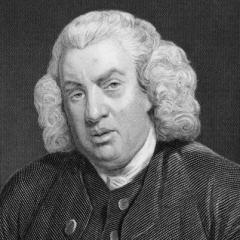
Samuel Johnson
Samuel Johnson was an English writer, poet, and lexicographer, renowned for his comprehensive English dictionary, 'A Dictionary of the English Language', published in 1755. His distinctive writing style and wit have cemented his place as a significant figure in the history of English literature. more
You May Also Like
Source: The Rambler: In Four Volumes..
Source: The Works of Samuel Johnson, LL. D.: With an Essay on His Life and Genius /c by Arthur Murphy, Esq
Source: Selected essays
Source: The Rambler
Source: The Works of Samuel Johnson: An essay on the life and genius of Dr. Johnson [by A. Murphy] Poems.- v. 2-4. The rambler.- v. 5. The idler. History of Rasselas, prince of Abissinia.- v. 6-8. The lives of the English poets.- v. 9. Lives of eminent persons. Letters, selected from the collection of Mrs. Piozzi and others. Prayers and meditations.- v. 10. Philological tracts, &c.- v. 11. Miscellaneous tracts, &c. Dedications. Reviews and criticisms. Tales of imagination. The adventurers.-
“To read, write, and converse in due proportions, is, therefore, the business of a man of letters.”
Source: The Wisdom of the Rambler, Adventurer, and Idler
Source: The Works of Samuel Johnson, LL.D.
“Western business people often don't get the importance of establishing human relationships.”
Source: The Works of Samuel Johnson, LL.D.: With Murphy's Essay
Source: The Works of Samuel Johnson, LL.: D., with an Essay on His Life and Genius