Quotessence
Home / Quotes / Quote by Thomas Pogge

Quote by Thomas Pogge

“The extremely low respect Congress enjoys among the population indicates that the citizens understand broadly what's going on. But the lack of a realistic political reform path leads to apathy and the kind of mindless frustration that manifests itself in the Tea Party-style hatred of any and all government.”

Quote by Thomas Pogge

Author
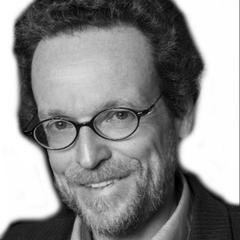
Thomas Pogge
Thomas Pogge

Thomas Pogge is a German-born American philosopher known for his contributions to ethics and political philosophy. His research focuses on issues of global justice, poverty, and inequality, particularly concerning human rights in developing countries. more

You May Also Like

“There is at the global level a very small number of actors who can meaningfully weigh in on global institutional design, who are able - through powerful governments and most effectively through the government of the United States - to exert substantial influence on international negotiations, which are routinely conducted behind closed doors.”

“Often vastly more important, international agreements are not routinely published in draft form or publicly debated, and civil society organizations and ordinary citizens often learn of important global institutional design decisions only after they have already been finalized and adopted. The only reliable way to be kept informed and to exert timely influence is by lobbying and paying the politicians and their negotiators.”

“Domestic and supranational regulatory capture leads to two things: on the one hand, to an inequality spiral where the rich get richer because they can influence rulemaking and rule application in their favor; on the other hand, it also leads to instability. This is so because the relatively few organizations capable of influencing supranational rulemaking through the lobbying of major governments have diverse interests. This will, in some cases, lead to compromises. But it will also lead to spheres of influence.”

“Each powerful player, or coalition of players, will make concessions in areas where it has relatively less at stake in exchange for other such players making reciprocal concessions in other areas where it has relatively more at stake. Such trades are collectively rational insofar as they get each of the powerful players more of what it wants. But such trades are also dangerous because the whole international rule-system will become incoherent and therefore vulnerable to crises that will continue to become increasingly severe.”

“The World Bank is the monopoly provider of poverty data and, partly due to a leadership change there, the World Bank's reporting has been heavily on the rosy side since about 2000. The Bank's cultivation of an upbeat picture affords a very interesting lesson in statistics and how you can, depending on which numbers you present and how you present them, create a more positive or more negative impression of the evolution of poverty.”

“Purchasing power parities are not a reasonable method for comparing households across countries or currencies. The reason for this is simply that PPPs are sensitive to the prices of all the commodities, goods and services, that households are consuming worldwide, with each commodity weighted in the calculations according to its share in international household consumption expenditure.”

“Car prices play a large role in calculating PPPs even while they play no role whatsoever in the consumption or consumption needs of the poor. And the prices of rice, bread and beans play a small role in calculating PPPs even though they play a huge role in meeting the consumption needs of the poor. So the World Bank's method of comparing and converting everything at general purchasing power parities into US dollars is highly distorting within an exercise whose purpose it is to determine whether households are or are not capable of meeting their basic consumption needs.”