Quotessence
Home / Quotes / Quote by Joseph Conrad

Quote by Joseph Conrad

“claiming that the destructive practice of mountaintop removal mining, blowing the tops off mountains to get at the coal beneath, performs the "necessary" function of creating flat land for development To tear treasure out of the bowels of the land was their desire, with no more moral purpose at the back of it than there is in burglars breaking into a safe.”

Quote by Joseph Conrad

Author
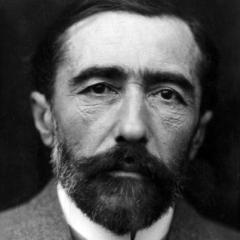
Joseph Conrad
Joseph Conrad

Joseph Conrad, born on December 3, 1857 in Poland and died on August 3, 1924 in the United Kingdom, was a renowned British author of the late 19th and early 20th centuries. He is known for his profound descriptions of maritime life and his insightful explorations of human nature. more

You May Also Like

“Unkindness to anything means an injustice to that thing. If I am unkind to you I do you an injustice, or wrong you in some way. On the other hand, if I try to assist you in every way that I can to make a better citizen and in every way to do my very best for you, I am kind to you. The above principles apply with equal force to the soil. The farmer whose soil produces less every year, is unkind to it in some way; that is, he is not doing by it what he should; he is robbing it of some substance it must have, and he becomes, therefore, a soil robber rather than a progressive farmer.”

“We are already engaged in World War III. It is a war against nature, and it is simply no contest. As a result, the threat from the skies is no longer missiles but ozone-layer depletion and global warming. Leaders who assert they will not concede one square meter of national territory to an invader should think of the hundreds of square kilometers of topsoil eroded from their countries each year.”

“What the new fertilizer technology has accomplished for the farmer is clear: more crop can be produced on less acreage than before. Since the cost of fertilizer, relative to the resultant gain in crop sales, is lower than that of any other economic input, and since the Land Bank pays the farmer for acreage not in crops, the new technology pays him well. The cost-in environmental degradation-is borne by his neighbors in town who find their water polluted. The new technology is an economic success-but only because it is an ecological failure.”

“When we mistake what we can know for all there is to know, a healthy appreciation of one's ignorance in the face of a mystery like soil fertility gives way to the hubris that we can treat nature as a machine. Once that leap has been made, one input follows another, so that when the synthetic nitrogen fed to plants makes them more attractive to insects and vulnerable to disease, as we have discovered, the farmer turns to chemical pesticides to fix his broken machine.”

“Humility is the situation of the earth. It's there silent and accepting everything and in a miraculous way making out of all the refuse new richness...transforming corruption itself into a power of life and a new possibility of creativeness, open to the sunshine, open to the rain, ready to receive any seed we sow and capable of bringing thirtyfold, sixtyfold, a hundredfold out of every seed.”

“If in the human economy, a squash in the field is worth more than a bushel of soil, that does not mean that food is more valuable than soil; it means simply that we do not know how to value the soil. In its complexity and its potential longevity, the soil exceeds our comprehension; we do not know how to place a just market value on it, and we will never learn how. Its value is inestimable; we must value it, beyond whatever price we put on it, by respecting it.”