Quotessence
Home / Quotes / Quote by Milan Kundera

Quote by Milan Kundera

“It has something malicious about it (things suddenly turning out different from what they pretended to be), but to some extent also a beneficent relief (things are less weighty than they appeared to be, letting us live more freely, no longer oppressing us with their austere seriousness).”

Quote by Milan Kundera

Work

The Book of Laughter and Forgetting

Browse quotes and source details for this work. more

Author
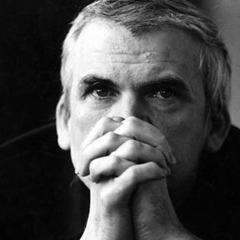
Milan Kundera
Milan Kundera

Milan Kundera is a renowned Czech-French writer known for his profound psychological insights and unique narrative techniques. His works often explore themes of personal freedom, love, morality, and existentialism, with notable titles including 'The Unbearable Lightness of Being' and 'The Joke'. more

You May Also Like

“But in Miamas a newborn doesn't get a godparent, newborns get a Laugher instead. After the child's parents and granny and a few other people the Elsa's granny when she was telling Elsa the story, didn't seem to thnk were terribly important, The Laugher is the most important person in a child's life in miamas. And the Laugher is not chosen by the parents, because Laughers are far too important to be chosen by parents. It's the child who does the choosing. So when a child is born in Miamas, all the family's friends cdome to the cot and tell stories and pull faces and dance and sing and make jokes, and the first one to make the child laugh becomes the Laugher. The Laugher is personally responsible for making it happen as oftenand as loudly and in as many situations as possible, particularly those that cause embarrassment to the parent.”

“Every Joke has a bottom, a familiar pain, anger, trauma. "Get it? Do ya get it?" Whatever the joke is, it's usually only funny once, sometimes not at all. David Bohm would report being distressed and disturbed by Krishnamurti's "jokes", and even Carl Jung thought Kierkegaard, with his emphasis on comedy was borderline pathological. Kierkegaard's comedy emphasized the "winning side". No one could make people laugh like Jung could, however, he wasn't necessarily trying to be funny. Some make people laugh due to the warmth of their rapport with the other, not necessarily because of the sophistication or memorization of a worn out joke. Compulsive joking about some familiar or unfamiliar pain will only take you so far. People get turned off by the repetitive need to find entertainment in something distressing and all too familiar.”