Quotessence
Home / Quotes / Quote by Steig Larsson

Quote by Steig Larsson

Work

The Girl with the Dragon Tattoo: Books 1-3

Browse quotes and source details for this work. more

Author
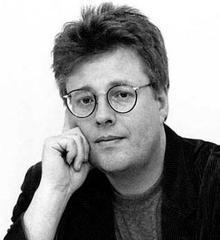
Steig Larsson
Steig Larsson

Steig Larsson was a Swedish journalist and author known for his investigative reporting on social issues. His most famous work is the Millennium series of novels, which have gained immense popularity worldwide and have been adapted into films and television series. more

You May Also Like

“No writer ever knows enough words but he doesn’t have to try to use all that he does know. Tests would show that I had an enormous vocabulary and through the years it must have grown, but I never had a desire to display it in the way that John Updike or William Buckley or William Safire do to such lovely and often surprising effect. They use words with such spectacular results; I try, not always successfully, to follow the pattern of Ernest Hemingway who achieved a striking style with short familiar words. I want to avoid calling attention to mine, judging them to be most effective as ancillaries to a sentence with a strong syntax. My approach has been more like that of Somerset Maugham, who late in life confessed that when he first thought of becoming a writer he started a small notebook in which he jotted down words that seemed unusually beautiful or exotic, such as chalcedony, for as a novice he believed that good writing consisted of liberally sprinkling his text with such words. But years later, when he was a successful writer, he chanced to review his list and found that he had never used even one of his beautiful collection. Good writing, for most of us, consists of trying to use ordinary words to achieve extraordinary results. I struggle to find the right word and keep always at hand the largest dictionary my workspace can hold, and I do believe I consult it at least six or seven times each working day, for English is a language that can never be mastered.* [*Even though I have studied English for decades I am constantly surprised to find new definitions I have not known: ‘panoply’ meaning ‘a full set of armor’, ‘calendar’ meaning ‘a printed index to a jumbled group of related manuscripts or papers’. —Chapter IX “Intellectual Equipment”, page 306”

“I suppose my attitude toward the creative process is much like that of Alexandre Dumas pere when he was approached by a young aspirant who boasted that he was going to write a novel much better than either “The Three Musketeers” or “The Count of Monte Cristo”. ‘Have you an attractive setting?’ the veteran writer asked politely, and the young man replied: ‘The greatest! Ominous islands. Gleaming castles. Wooded glens with gracious mansions.’ ‘Have you interesting characters?’ ‘Kings and princesses and dubious cardinals.’ ‘But have you a logical plot to tie this together?’ ‘A most ingenious one. Twists and turns that will bewilder and delight.’ Said Dumas: ‘Young man, you’re in excellent shape. Now all you need are two hundred thousand words, and they’d better be all the right ones.’” —Chapter IX, “Intellectual Equipment”, pages 311-312”

“In order to know something, you must go back to the source. You have to be critical and wise what are the original roots and not the corrupted outcome but in order to know the truth, you have to examine all angles, all sides, all possible traces of deception, the fortress of protection of hidden elements camouflaged with what it seemed overlapping masks along a river of clear or dirty water. The water flows in varying speed depending on the atmospheric factors and men’s interventions in using the flowing water however, the stone remains. Think of the truth: many would hide it, distort it, change it, bury it, or even destroy it but the uncorrupted truth, the unparalleled truth shall always come out. How do you seek the truth? When you seek for the truth, are you guided with an honest heart? Why do you seek the truth? Or, are you among those folks who prefer to hide or bury the truth thinking that the majority won’t find it out? If and when the truth comes out, are you among those persons who will target sacrificial lambs for scapegoats? It is wise to remember that the truth however hidden shall eventually come out. A Cameroonian proverb says, "Water always finds a way out." The same thing I can say about the truth: the truth however hidden shall eventually come out. The water flows, the stones remain. The lies flow, the truth remains. The truth thrives forever." ~ Angelica Hopes, an excerpt from K.H. Trilogy”

“Widespread criticisms of jihad in Islam and the so-called sword verses in the Quran have unearthed for fair-minded Christians difficult questions about Christianity's own traditions of holy war and 'texts of terror.' Like Hinduism's Mahabharata epic, the Bible devotes entire books to war and rumors thereof. Unlike the Quran, however, it contains hardly any rules for how to conduct a just war.”

“Carlyle's genius was many-sided. He touched and ennobled the national life at all points. He lifted a whole generation of young men out of the stagnating atmosphere of materialism and dead orthodoxy into the region of the ideal. With the Master of Balliol, we believe that 'no English writer has done more to elevate and purify our ideas of life and to make us conscious that the things of the spirit are real, and that in the last resort there is no other reality.”

“In employing the long sentence the inexperienced writer should not strain after the heavy, ponderous type. Johnson and Carlyle used such a type, but remember, an ordinary mortal cannot wield the sledge hammer of a giant. Johnson and Carlyle were intellectual giants and few can hope to stand on the same literary pedestal.”

“The wind blows east, the wind blows west, And the frost falls and the rain: A weary heart went thankful to rest, And must rise to toil again, ‘gain, And must rise to toil again. The wind blows east, the wind blows west, And there comes good luck and bad; The thriftiest man is the cheerfulest; ’Tis a thriftless thing to be sad, sad, ’Tis a thriftless thing to be sad. The wind blows east, the wind blows west; Ye shall know a tree by its fruit: This world, they say, is worst to the best;— But a dastard has evil to boot, boot, But a dastard has evil to boot. The wind blows east, the wind blows west; What skills it to mourn or to talk? A journey I have, and far ere I rest; I must bundle my wallets and walk, walk, I must bundle my wallets and walk. The wind does blow as it lists alway; Canst thou change this world to thy mind? The world will wander its own wise way; I also will wander mine, mine, I also will wander mine.”