Quotessence
Home / Quotes / Quote by Yann Martel

Quote by Yann Martel

“And the scrotum! To think that something so vital to the survival of the species, fully responsible for 50 percent of the ingredients - though none of the work - should hang freely from the body in a tiny, defenceless bag of skin. One whack, one bite, one paw scratch - and its just at the right level, too, for your average animal, a dog, a lion, a sabre-tooth tiger, and that's it, end of story. Don't you think it should get better protection? Behind some bone for example? The penis is just such a lousy design.”

Quote by Yann Martel

Book:Self

Work

Self

This book delves into the nature of the self, addressing questions about what constitutes personal identity and how individuals perceive themselves. It discusses various perspectives from philosophy, psychology, and neuroscience, considering topics such as self-awareness, the continuity of self over time, and the influence of social and cultural factors on self-concept. The text aims to provide a comprehensive overview of theories and debates surrounding the self, without endorsing a single viewpoint, and encourages readers to reflect on their own understanding of selfhood. more
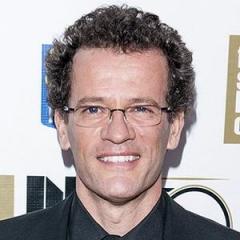
Author

Yann Martel
Yann Martel

Yann Martel is a Canadian author known for his unique literary style and profound themes. His novel 'Life of Pi' won the Booker Prize in 2002 and became an international bestseller, propelling him to global recognition. Martel's works often explore deep questions of humanity and existence. more

You May Also Like

“The majority of research I’ve reviewed describes an intense male value on inde-pendence and what appears to be an almost phobic response to dependence. In fact, for many men it’s not even an option to ask for assistance or to admit they “don’t know.” This places tremendous pressure on men to deny their vulnerability and need for information which makes detachment from relationships easier.”

“God made him, and therefore let him pass for a man. In truth, I know it is a sin to be a mocker, but he! why, he hath a horse better than the Neapolitan’s, a better bad habit of frowning than the Count Palentine; he is every man in no man. If a throstle sing, he falls straight a-cap’ring. He will fence with his own shadow. If I should marry him, I should marry twenty husbands.”

“Carpe diem: Enjoying the "instants" as they emerge. When living is too comfy or glitzy, it may not be easy to appreciate the humblest things in life. Being happy with the small gifts we receive can be a bliss, but we can, even more, expand it through voluntary action and exalting Voltaire's words, "today, I have decided to be happy." (« Is that all there is?")”

“It's a privilege to love someone, to truly love them; and while it's paradisaical if she or he loves you back, it's unfair to demand or expect reciprocity. We should consider ourselves luck, honored, blessed that we possess the capacity to feel tenderness of such magnitude and be grateful even when that love is not returned. Love is the only game in which we win even when we lose.”

“The transformation of the world is brought about by the transformation of oneself, because the self is the product and a part of the total process of human existence. To transform oneself, self-knowledge is essential; without knowing what you are, there is no basis for right thought, and without knowing yourself there cannot be transformation. One must know oneself as on is, not as on wishes to be, which is merely an ideal and there for fictitious, unreal; it is only that which is that can be transformed, not that which you wish to be. To know oneself as one is requires and extraordinary alertness of mind, because what is, is constantly undergoing transformation, change; and to follow it swiftly the mind must not be tethered to any particular dogma or belief, to any particular pattern of action. If you would follow anything, it is no good being tethered. To know yourself, there must be the awareness, the alertness of mind in which there is freedom from all beliefs, from all idealization, because beliefs and ideals only give you a color, perverting true perception. If you want to know what you are, you cannot imagine or have belief in something which you are not. If I am greedy, envious, violent, merely having an ideal of non-violence, of non-greed, is of little value. The understanding of what you are, whatever it be – ugly or beautiful, wicked or mischievous – the understanding of what you are, without distortion, is the beginning of virtue. Virtue is essential, for it gives freedom.”

“... nothing is easier than to distance ourselves from great figures, whether through a negative interpretation or through idealization. Denigration and idealization are twins with the same basic motive: to avoid taking responsibility for the discoveries before us and to avoid taking responsibility for emulating the lives of great individuals. If we find severe flaws in the personality of the "genius," we can look upon him as some kind of genetic freak, closely linked to the madman, whose contributions were almost an incidental offshoot of his weird personality. If we consider the great man a triumphant genius with a basically unflawed personality, we can make small demands upon ourselves since we lack genius and possess flaws. Still another way of dealing with the great man is simply through indifference. One explains his loneliness and suffering through the kind of cliches Reich hated: "A genius is always one hundred years ahead of his time," or, "A genius always meets opposition in his lifetime." The need for distance from greatness is especially intense when we are dealing with persons who make the implicit demand: You must change your life if you are truly to understand what I have discovered.”