Quotessence
Home / Quotes / Quote by Ronald Wright

Quote by Ronald Wright

Work

A Short History Of Progress

This book delves into the evolution of human civilization, analyzing the advancements and challenges that have shaped our world. more

Author
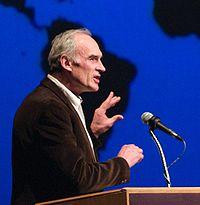
Ronald Wright
Ronald Wright

Ronald Wright is a renowned Canadian author known for his historical novels and essays. His works often delve into the relationship between humans and nature, as well as profound insights into the course of human civilization. more

You May Also Like

“All dynamic societies founded their success on two production processes that unfolded in parallel: the manufacturing of a surplus and the manufacturing of consent (regarding its distribution). However, the feedback between the two processes grew to new heights in the Age of Capital. The rise of commodification, which also led to the flourishing of finance, coincided with a subtler, more powerful, form of consent. And here lies a delicious paradox: consent grew more powerful the more economic life was financialized. And as finance grew in importance, the more prone our societies became to economic crises. Hence the interesting observation that modern societies tend to produce both more consent and more violent crises.”

“To say that a poet is justified in employing a disintegrating form in order to express a feeling of disintegration, is merely a sophistical justification for bad poetry, akin to the Whitmanian notion that one must write loose and sprawling poetry to "express" the loose and sprawling American continent. In fact, all feeling, if one gives oneself (that is, one's form) up to it, is a way of disintegration; poetic form is by definition a means to arrest the disintegration and order the feeling; and in so far as any poetry tends toward the formless, it fails to be expressive of anything.”

“Decía mi abuelo que cada palabra tiene su dueño y que una palabra justa hace temblar la tierra. La palabra es un rayo, un tigre, un vendaval, decía el viejo mirándome con rabia mientras se servía alcohol de farmacia, pero ay del que usa la palabra a la ligera. ¿Sabés qué pasa con los mentirosos?, decía. [...] ¿Sabés lo que le pasa al que miente?, insistía el abuelo, esquelético, amenazándome con el bastón: la palabra lo abandona, y al que se queda vacío cualquiera lo puede matar.”

“Esse ferro bem polido a mim faz-me lembrar, desculpem a divagação, dizia Florita Almada, os óculos escuros de alguns chefes políticos ou de alguns dirigentes sindicais, ou de alguns polícias. Para que tapam eles os olhos?, interrogo-me. Terão passado mal a noite a estudas formas para que o país progrida, para que os operários tenham maior segurança no trabalho ou um aumento salarial, para que a delinquência bata em retirada? Talvez. Não digo que não. Talvez as olheiras deles se devam a isso. Mas o que aconteceria se eu me aproximasse de um deles e lhe os óculos e visse que não têm olheiras? Tenho medo só de imaginar.”