“Unpopular ideas can be silenced, and inconvenient facts kept dark, without the need for any official ban. Anyone who has lived long in a foreign country will know of instances of sensational items of news — things which on their own merits would get the big headlines-being kept right out of the British press, not because the Government intervened but because of a general tacit agreement that ‘it wouldn’t do’ to mention that particular fact. So far as the daily newspapers go, this is easy to understand. The British press is extremely centralised, and most of it is owned by wealthy men who have every motive to be dishonest on certain important topics. But the same kind of veiled censorship also operates in books and periodicals, as well as in plays, films and radio. At any given moment there is an orthodoxy, a body of ideas which it is assumed that all right-thinking people will accept without question. It is not exactly forbidden to say this, that or the other, but it is ‘not done’ to say it, just as in mid-Victorian times it was ‘not done’ to mention trousers in the presence of a lady. Anyone who challenges the prevailing orthodoxy finds himself silenced with surprising effectiveness. A genuinely unfashionable opinion is almost never given a fair hearing, either in the popular press or in the highbrow periodicals.”
Quote by George Orwell
Book:Animal Farm
Work
Animal Farm
George Orwell's novel depicts the rise and fall of a group of animals who overthrow their human masters and establish their own society, only to find that power corrupts and the original ideals are lost. more
Author
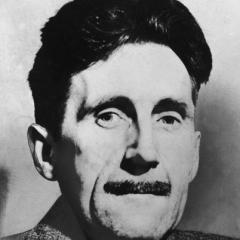
George Orwell
George Orwell, born Eric Arthur Blair, was a British novelist and political critic. Known for his sharp social criticism and profound insights into totalitarianism, Orwell is best remembered for his novels '1984' and 'Animal Farm', which remain influential to this day. more
You May Also Like
Source: A Short History Of Progress
Source: The Global Minotaur: America, the True Origins of the Financial Crisis and the Future of the World Economy
Source: El cuaderno de Maya
“Real people have cracks. Perfect people have masks.”
Source: Life Simplified: Quote - Unquote
Source: The Demon-Haunted World: Science as a Candle in the Dark
Source: Nuestro mundo muerto
Source: Lo raro es vivir