Quotessence
Home / Quotes / Quote by Philip K. Dick

Quote by Philip K. Dick

Work

We Can Build You

Browse quotes and source details for this work. more
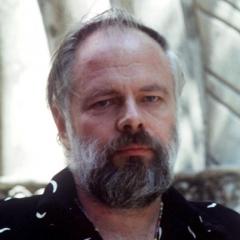
Author

Philip K. Dick
Philip K. Dick

Philip K. Dick was an American science fiction novelist known for his unique philosophical thinking and profound futuristic imagination. His works often explore the boundaries between individuals and society, reality and illusion, and have had a profound impact on science fiction literature. more

You May Also Like

“I have a foreboding of an America in my children's or grandchildren's time -- when the United States is a service and information economy; when nearly all the manufacturing industries have slipped away to other countries; when awesome technological powers are in the hands of a very few, and no one representing the public interest can even grasp the issues; when the people have lost the ability to set their own agendas or knowledgeably question those in authority; when, clutching our crystals and nervously consulting our horoscopes, our critical faculties in decline, unable to distinguish between what feels good and what's true, we slide, almost without noticing, back into superstition and darkness... The dumbing down of American is most evident in the slow decay of substantive content in the enormously influential media, the 30 second sound bites (now down to 10 seconds or less), lowest common denominator programming, credulous presentations on pseudoscience and superstition, but especially a kind of celebration of ignorance”

“Difference of opinion is advantageous in religion. The several sects perform the office of a Censor morum over each other. Is uniformity attainable? Millions of innocent men, women, and children, since the introduction of Christianity, have been burnt, tortured, fined, imprisoned; yet we have not advanced one inch towards uniformity. What has been the effect of coercion? To make one half the world fools, and the other half hypocrites. To support roguery and error all over the earth. Let us reflect that it is inhabited by a thousand millions of people. That these profess probably a thousand different systems of religion. That ours is but one of that thousand. That if there be but one right, and ours that one, we should wish to see the 999 wandering sects gathered into the fold of truth. But against such a majority we cannot effect this by force. Reason and persuasion are the only practicable instruments. To make way for these, free enquiry must be indulged; and how can we wish others to indulge it while we refuse it ourselves.”