Quotessence
Home / Quotes / Quote by Christopher Pike

Quote by Christopher Pike

Work

The Hidden Beast

Browse quotes and source details for this work. more
Author

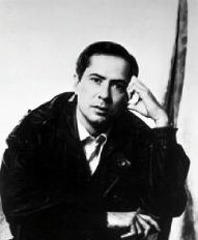
Christopher Pike
Christopher Pike

Christopher Pike is an American author known for his young adult literature. Born on November 12, 1954, he has published numerous best-selling books since his first novel in 1981. Pike's works often feature suspense and adventure, and they are highly favored by young readers. more

You May Also Like

“Unpopular ideas can be silenced, and inconvenient facts kept dark, without the need for any official ban. Anyone who has lived long in a foreign country will know of instances of sensational items of news — things which on their own merits would get the big headlines-being kept right out of the British press, not because the Government intervened but because of a general tacit agreement that ‘it wouldn’t do’ to mention that particular fact. So far as the daily newspapers go, this is easy to understand. The British press is extremely centralised, and most of it is owned by wealthy men who have every motive to be dishonest on certain important topics. But the same kind of veiled censorship also operates in books and periodicals, as well as in plays, films and radio. At any given moment there is an orthodoxy, a body of ideas which it is assumed that all right-thinking people will accept without question. It is not exactly forbidden to say this, that or the other, but it is ‘not done’ to say it, just as in mid-Victorian times it was ‘not done’ to mention trousers in the presence of a lady. Anyone who challenges the prevailing orthodoxy finds himself silenced with surprising effectiveness. A genuinely unfashionable opinion is almost never given a fair hearing, either in the popular press or in the highbrow periodicals.”

“All dynamic societies founded their success on two production processes that unfolded in parallel: the manufacturing of a surplus and the manufacturing of consent (regarding its distribution). However, the feedback between the two processes grew to new heights in the Age of Capital. The rise of commodification, which also led to the flourishing of finance, coincided with a subtler, more powerful, form of consent. And here lies a delicious paradox: consent grew more powerful the more economic life was financialized. And as finance grew in importance, the more prone our societies became to economic crises. Hence the interesting observation that modern societies tend to produce both more consent and more violent crises.”

“To say that a poet is justified in employing a disintegrating form in order to express a feeling of disintegration, is merely a sophistical justification for bad poetry, akin to the Whitmanian notion that one must write loose and sprawling poetry to "express" the loose and sprawling American continent. In fact, all feeling, if one gives oneself (that is, one's form) up to it, is a way of disintegration; poetic form is by definition a means to arrest the disintegration and order the feeling; and in so far as any poetry tends toward the formless, it fails to be expressive of anything.”

“Decía mi abuelo que cada palabra tiene su dueño y que una palabra justa hace temblar la tierra. La palabra es un rayo, un tigre, un vendaval, decía el viejo mirándome con rabia mientras se servía alcohol de farmacia, pero ay del que usa la palabra a la ligera. ¿Sabés qué pasa con los mentirosos?, decía. [...] ¿Sabés lo que le pasa al que miente?, insistía el abuelo, esquelético, amenazándome con el bastón: la palabra lo abandona, y al que se queda vacío cualquiera lo puede matar.”