Quotessence
Home / Quotes / Quote by Terry Eagleton

Quote by Terry Eagleton

“[B]y reinterpreting Freudianism in terms of language, a pre-eminently social activity, Lacan permits us to explore the relations between the unconscious and human society. One way of describing his work is to say that he makes us recognize that the unconscious is not some kind of seething, tumultuous, private region ‘inside’ us, but an effect of our relations with one another. The unconscious is, so to speak, ‘outside’ rather than ‘within’ us — or rather it exists ‘between’ us, as our relationships do.”

Quote by Terry Eagleton

Work

Literary Theory: An Introduction

This book serves as an introductory resource for understanding the various theories and methodologies that shape the study of literature. It covers key concepts such as structuralism, postmodernism, and deconstruction, offering insights into the analysis of literary texts and their cultural contexts. more

Author
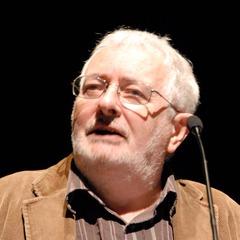
Terry Eagleton
Terry Eagleton

Terry Eagleton is a renowned British literary critic, known for his research on Marxist literary theory. His work spans a wide range of literary and theoretical topics, influencing cultural studies and political commentary as well. more

You May Also Like

“We see not because everything is visible, but because something always defies the eye, persisting beyond the remit of mere representation. This something, which Pasolini endeavors to situate at the heart of filmmaking, is preceisely 'that which always escapes from the grasp of that form of vision that is satisfied with itself in imagining itself as consicousness' (Lacan, 1998).”

“Nietzsche said we will never rid ourselves of God because we have too much faith in grammar/language. Lacan said because of the religious tenets of language, religion will triumph. Chomsky, master linguist, says 'there are no skeptics. You can discuss it in a philosophy seminar but no human being can - in fact - be a skeptic.' These musings shed light on Soren K's leap to faith idea. This is more nuanced than the circular leap of faith argument he's been wrongly accused of... Soren is saying that, as we use the logic of language to express existence and purpose, we will always leap TO faith in a superior, all encompassing, loving force that guides our lives. This faith does not negate our reason. It simply implies that the reasoning of this superior force is superior to our own. Edwin Abbott crystalizes this in Flatland.”

“The other concept of truth in Lacan situates the truth, so to speak, in the midst of reality. Here, the discontinuities, ruptures, standstills, and crises of reality are places or points of its truth. The truth is not some impossible and lethal Beyond that can be reached only by transgressing the limits of the Symbolic and the Imaginary –Lacan comes to present it as something that speaks between the lines, detectable in changes of discursivity, in the disturbances, interruptions, and slips of the discourse...”

“To suggest that we look to the past, to Freud and Lacan, in order to find a new ethical code may seem counterintuitive, but when capital reterritorializes the psyche into systems based on their compatibility with viral market shares of the mental health topographical map, it is hard to argue for an ever-forward, arc of history that always bends toward justice. This is where ethics must come into play.”

“At the core of Lacanian ethics if therefore the idea that the subject who steps into the real - the place of the lack in the Other - severes its ties to the symbolic order. Such a subject is no longer embarassed by its inability to adhere to the rules of social behavior but instead embraces - feels compelled to embrace - the destructive energies of the real. This subject is not interested in trying to solve its problem within the parameteres of the system but rather insists on changing the game entirely, on defying the very structuring principles of the system, which is why the act opens a gateway to what might, from the perspective of the established order, seem completely inconceivable (or even utterly insane).”

“At the core of Lacanian ethics is therefore the idea that the subject who steps into the real - the place of the lack in the Other - severes its ties to the symbolic order. Such a subject is no longer embarassed by its inability to adhere to the rules of social behavior but instead embraces - feels compelled to embrace - the destructive energies of the real. This subject is not interested in trying to solve its problem within the parameteres of the system but rather insists on changing the game entirely, on defying the very structuring principles of the system, which is why "the act" opens a gateway to what might, from the perspective of the established order, seem completely inconceivable (or even utterly insane).”

“Lacan destaca que é importante fazer a distinção entre a imagem narcísica i(a) e o que se desprende em sua própria constituição, a, já que este último está sempre velado, mascarado atrás do primeiro. Para ele, o melancólico necessita passar através de sua própria imagem para atingir esse objeto que o transcende e para dar-se conta de que sua queixa de ser nada em verdade não se dirige à sua imagem especular, ou seja, não é uma queixa de má aparência, porém de “ser o último dos últimos”. E não apenas de “ser”, mas também de “ter”, na medida em que a auto-acusação implica o ter sido arruinado. Lacan fala, ainda, em suicídio do objeto. Ele aponta que o objeto se constituiu, mas que por alguma razão desapareceu. Em suas auto-acusações, o melancólico está inteiramente no simbólico, assinala ele no seminário A transferência.”

“Na festa do capitalismo avançado em que vivemos, encontramos basicamente duas categorias de sujeitos: aqueles que aproveitam a festa até a última gota, se deixam consumir e seguem as prescrições do excesso em práticas hedonistas em que o prazer só pode ser obtido na ultrapassagem de medidas; e os que não se acham merecedores do convite ou não sabem como consegui-lo, os barrados no baile. Poderíamos dizer que essa dupla e extrema forma de expressão, em crescimento na contemporaneidade, seria, em grande parte, fomentada pelo pano de fundo do capitalismo avançado e, de formas diferentes, contribui para ampliar o distanciamento do sujeito em relação ao registro do desejo, ilustrando o crescimento da dimensão do gozo. O conceito de gozo teve suas primeiras formulações em Freud, no início de seu percurso, referido ao gozo sexual, e mais adiante em sua obra, embora não com esse termo. Depois de 1920, Freud faz referência a determinadas condições em que o sujeito obtém satisfação com o próprio sofrimento. Com a segunda teoria pulsional e o advento da pulsão de morte, avança nesse terreno intermediário entre o prazer e a dor que se enlaçam e se confundem. Coube a Jacques Lacan, em sua releitura do texto freudiano, nomear e definir o gozo como um dos conceitos de maior fertilidade para a abordagem das condições de vida contemporâneas. Para uma pesquisa mais ampla das depressões, é importante mencioná-lo, na medida em que as depressões podem ser consideradas, hoje, uma modalidade narcísica de gozo.”