Quotessence
Home / Authors / Albert Camus
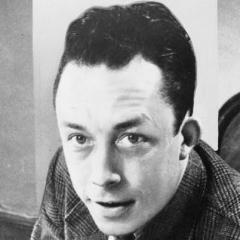
Albert Camus

Albert Camus Quotes

Author

Filter quotes by topic

Famous Albert Camus Quotes

“Everyone tries to make his life a work of art. We want love to last and we know that it does not last; even if, by some miracle, it were to last a whole lifetime, it would still be incomplete. Perhaps, in this insatiable need for perpetuation, we should better understand human suffering, if we knew that it was eternal. It appears that great minds are, sometimes, less horrified by suffering than by the fact that it does not endure. In default of inexhaustible happiness, eternal suffering would at least give us a destiny. But we do not even have that consolation, and our worst agonies come to an end one day. One morning, after many dark nights of despair, an irrepressible longing to live will announce to us the fact that all is finished and that suffering has no more meaning than happiness.”

“تخلى عن عشرين سنة من عمره من أجل امرأة مشتتة الذهن، مضحياً بكل شئ في سبيلها،أصدقائه ،وعمله والاحترام الذي كانت حياته تمتاز به ،وادرك في احدى الأمسيات انه لم يكن يحبها ابداً . كان ضجراً، هذا هو كل ما في الأمر ، كان ضجراً كأكثر الناس وهكذا صنع لنفسه حياة مليئة بالتعقيدات والمأساة”

“The priest gazed around my cell and answered in a voice that sounded very weary to me. 'Every stone here sweats with suffering, I know that. I have never looked at them without a feeling of anguish. But deep in my heart I know that the most wretched among you have seen a divine face emerge from their darkness. That is the face you are asked to see.' This perked me up a little. I said I had been looking at the stones in these walls for months. There wasn't anything or anyone in the world I knew better. Maybe at one time, way back, I had searched for a face in them. But the face I was looking for was as bright as the sun and the flame of desire—and it belonged to Marie.”

“the rebels of 1905, at the frontier on which they stand united, teach us, to the sound of exploding bombs, that rebellion cannot lead, without ceasing to be rebellion, to consolation and to the comforts of dogma. Their only evident victory is to triumph at least over solitude and negation. In the midst of a world which they deny and which rejects them, they try, man after man, like all the great-hearted ones, to reconstruct a brotherhood of man. The love they bear for one another, which brings them happiness even in the desert of a prison, which extends to the great mass of their enslaved and silent fellow men, gives the measure of their distress and of their hopes. To serve this love, they must first kill; to inaugurate the reign of innocence, they must accept a certain culpability. This contradiction will be resolved for them only at the very last moment. Solitude and chivalry, renunciation and hope will only be surmounted by the willing acceptance of death.”

“Whereas during those months of separation time had never gone quickly enough for their liking and they were wanting to speed its flight, now that they were in sight of the town they would have liked to slow it down and hold each moment in suspense, once the breaks went on and the train was entering the station. For the sensation, confused perhaps, but none the less poingant for that, of all those days and weeks and months of life lost to their love made them vaguely feel they were entitled to some compensation; this present hour of joy should run at half the speed of those long hours of waiting.”

“[To speak more particularly at last of lovers] their situation allowed them to consider their feelings with a sort of feverish objectivity, and it was rare, at such times, for them not to see their own shortcomings clearly. The first occasion of this was the difficulty they had in imagining precisely the absent person's actions and gestures. They deplored the fact that they knew nothing about how their loved ones spent their time; they felt guilty about their past failure to find this out and about having pretended to believe that, for a person in love, the beloved's actions are not the source of every joy. From then on it was easy for them to go back through the story of their love and to examine its imperfections. In normal times we are aware, consciously or not, that there is no love that cannot be surpassed, yet we accept with a greater or lesser degree of equanimity that ours shall remain merely average. But memory is more demanding.”

“[To speak more particularly at last of lovers] their situation allowed them to consider their feelings with a sort of feverish objectivity, at it was rare, at such times, for them not to see their own shortcomings clearly. The first occasion of this was the difficulty they had in imagining precisely the absent person's actions and gestures. They deplored the fact that they knew nothing about how their loved ones spent their time; they felt guilty about their past failure to find this out and about having pretended to believe that, for a person in love, the beloved's actions are not the source of every joy. From then on it was easy for them to go back through the story of their love and to examine its imperfections. In normal times we are aware, consciously or not, that there is no love that cannot be surpassed, yet we accept with a greater or lesser degree of equanimity that ours shall remain merely average. But memory is more demanding.”

“This was, indeed, the hour when he could feel surest she was wholly his. Till four in the morning one is seldom doing anything and at that hour, even if the night has been a night of betrayal, one is asleep. Yes, everyone sleeps at that hour, and this is reassuring, since the great longing of an unquiet heart is to possess constantly and consciously the loved one, or, failing that, to be able to plunge the loved one, when a time of absence intervenes, into a dreamless sleep timed to last unbroken until the day they meet again.”

“Confronted with the horror of a period in which man, whom he wanted to magnify, has been persistently degraded in the name of certain principles that surrealism adopted, Breton felt constrained to propose, provisionally, a return to traditional morality. That represents a hesitation perhaps. But it is the hesitation of nihilism and the real progress of rebellion. After all, when he could not give himself the morality and the values of whose necessity he was clearly aware, we know very well that Breton chose love.”

“The desire for possession is only another form of the desire to endure; it is this that comprises the impotent delirium of love. No human being, even the most passionately loved and passionately loving, is ever in our possession. On the pitiless earth where lovers are often separated in death and are always born divided, the total possession of another human being and absolute communion throughout an entire lifetime are impossible dreams. The desire for possession is insatiable, to such a point that it can survive even love itself. To love, therefore, is to sterilize the person one loves. The shamefaced suffering of the abandoned lover is not so much due to being no longer loved as to knowing that the other partner can and must love again. In the final analysis, every man devoured by the overpowering desire to endure and possess wishes that those whom he has loved were either sterile or dead. This is real rebellion. Those who have not insisted, at least once, on the absolute virginity of human beings and of the world, who have not trembled with longing and impotence at the fact that it is impossible, and have then not been destroyed by trying to love halfheartedly, perpetually forced back upon their longing for the absolute, cannot understand the realities of rebellion and its ravening desire for destruction. But the lives of others always escape us, and we escape them too; they have no firm outline. Life from this point of view is without style. It is only an impulse that endlessly pursues its form without ever finding it. Man, tortured by this, tries in vain to find the form that will impose certain limits between which he can be king.”

“The older I get, the more I find that you can only live with those who free you, who love you with an affection that is as light to bear as it is strong to feel. Today's life is too hard, too bitter, too anemic, for us to undergo new bondages, from whom we love (...]. This is how I am your friend, I love your happiness, your freedom, Your adventure in one word, and I would like to be for you the companion we are sure of, always.”

“That evening, Marie came to see me and asked me if I wanted to marry her. I said that it was all the same to me and that we could get married if she wanted to. Then she wanted to know if I loved her. I replied as I had once before that that didn't mean anything, but said I was pretty sure I didn't love her. 'Why marry me, then?' she asked. I explained that it was of no importance whatsoever but if that was what she wanted, we could get married. And besides, she was the one asking and I was happy to say yes. She then remarked that marriage was a serious business. I said: 'Not at all. She said nothing for a moment, just looked at me in silence. Then she spoke. She simply wanted to know if I would say yes to any other woman who asked me, if I were involved with her in the same way. I said: 'Of course.' She then wondered if she loved me, but there was no way I could know anything about that. After another moment's silence, she murmured that I was very strange, that she undoubtedly loved me for that very reason, but that one day she might find me repulsive, for the same reason. When I said nothing, because I had nothing more to say, she smiled, put her arm through mine and said that she wanted to marry me. I said we could do it as soon as she wanted.”

“Don't walk behind me; I may not lead. Don't walk in front of me; I may not follow. Just walk beside me and be my friend.”