Quotessence
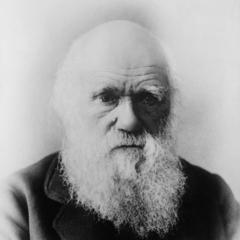
Home / Authors / Charles Darwin
Charles Darwin

Charles Darwin Quotes

Naturalist

Filter quotes by topic

Famous Charles Darwin Quotes

“We cannot fathom the marvelous complexity of an organic being; but on the hypothesis here advanced this complexity is much increased. Each living creature must be looked at as a microcosm--a little universe, formed of a host of self-propagating organisms, inconceivably minute and as numerous as the stars in heaven.”

“Ignorance more frequently begets confidence than does knowledge.”

“I am not very sceptical, — a frame of mind which I believe to be injurious to the progress of science. A good deal of scepticism in a scientific man is advisable to avoid much loss of time, but I have met with not a few men, who, I feel sure, have often thus been deterred from experiment or observations, which would have proved directly or indirectly serviceable .”

“For my own part I would as soon be descended from that heroic little monkey, who braved his dreaded enemy in order to save the life of his keeper; or from that old baboon, who, descending from the mountains, carried away in triumph his young comrade from a crowd of astonished dogs-as from a savage who delights to torture his enemies, offers up bloody sacrifices, practices infanticide without remorse, treats his wives like slaves, knows no decency, and is haunted by the grossest superstitions.”

“This preservation of favourable variations and the destruction of injurious variations, I call Natural Selection, or the Survival of the Fittest. Variations neither useful nor injurious would not be affected by natural selection and would be left a fluctuating element.”

“Looking to future generations, there is no cause to fear that the social instincts will grow weaker... the social instincts, - the prime principle of man's moral constitution - with the aid of active intellectual powers and the effects of habit, naturally lead to the golden rule, "As ye would that men should do to you; do ye to them likewise"; and this lies at the foundation of morality.”

“After five years' work I allowed myself to speculate on the subject, and drew up some short notes; these I enlarged in 1844 into a sketch of the conclusions, which then seemed to me probable: from that period to the present day I have steadily pursued the same object. I hope that I may be excused for entering on these personal details, as I give them to show that I have not been hasty in coming to a decision.‎”

“Man with all his noble qualities, with sympathy which feels for the most debased, with benevolence which extends not only to other men but to the humblest living creature, with his god-like intellect which has penetrated into the movements and constitution of the solar system- with all these exalted powers- Man still bears in his bodily frame the indelible stamp of his lowly origin.”

“If worms have the power of acquiring some notion, however rude, of the shape of an object and over their burrows, as seems the case, they deserve to be called intelligent; for they act in nearly the same manner as would man under similar circumstances.”

“The number of humble-bees in any district depends in a great degree on the number of field-mice, which destroy their combs and nests; and Mr. H. Newman, who has long attended to the habits of humble-bees, ... says "Near villages and small towns I have found the nests of humble-bees more numerous than elsewhere, which I attribute to the number of cats that destroy the mice." Hence it is quite credible that the presence of a feline animal in large numbers in a district might determine, through the intervention first of mice and then of bees, the frequency of certain flowers in that district!”

“It is not the conscience which raises a blush, for a man may sincerely regret some slight fault committed in solitude, or he may suffer the deepest remorse for an undetected crime, but he will not blush... It is not the sense of guilt, but the thought that others think or know us to be guilty which crimsons the face.”

“It is well-known that those who have charge of young infants, that it is difficult to feel sure when certain movements about their mouths are really expressive; that is when they really smile. Hence I carefully watched my own infants. One of them at the age of forty-five days, and being in a happy frame of mind, smiled... I observed the same thing on the following day: but on the third day the child was not quite well and there was no trace of a smile, and this renders it probable that the previous smiles were real.”

“It is certain that there may be extraordinary mental activity with an extremely small absolute mass of nervous matter: thus the wonderfully diversified instincts, mental powers, and affections of ants are notorious, yet their cerebral ganglia are not so large as the quarter of a small pin's head. Under this point of view, the brain of an ant is one of the most marvelous atoms of matter in the world, perhaps more so than the brain of a man.”

“It is interesting to contemplate an entangled bank clothed with many plants of many kinds with birds singing on the bushes, with various insects flitting about and with worms crawling through the damp earth and to reflect that these elaborately constructed forms so different from each other and dependent on each other and so complex a manner have all been produced by laws acting around us.”

“About thirty years ago there was much talk that geologists ought only to observe and not theorise; and I well remember some one saying that at this rate a man might as well go into a gravel-pit and count the pebbles and describe the colours. How odd it is that anyone should not see that all observation must be for or against some view if it is to be of any service!”

“I cannot anyhow be contented to view this wonderful universe, and especially the nature of man, and to conclude that everything is the result of brute force. I am inclined to look at everything as resulting from designed laws, with the details, whether good or bad, left to the working out of what we call chance. Not that this notion at all satisfies me. I feel most deeply that the whole subject is too profound for the human intellect. A dog might as well speculate on the mind of Newton. Let each man hope and believe what he can.”

“It is really laughable to see what different ideas are prominent in various naturalists' minds, when they speak of 'species'; in some, resemblance is everything and descent of little weight-in some, resemblance seems to go for nothing, and Creation the reigning idea-in some, descent is the key,-in some, sterility an unfailing test, with others it is not worth a farthing. It all comes, I believe, from trying to define the undefinable.”

“Among the scenes which are deeply impressed on my mind, none exceed in sublimity the primeval [tropical] forests, ... temples filled with the varied productions of the God of Nature. No one can stand in these solitudes unmoved, and not feel that there is more in man than the mere breath of his body.”