Quotessence
Home / Authors / Dallas Willard
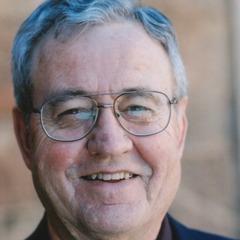
Dallas Willard

Dallas Willard Quotes

Philosopher

Filter quotes by topic

Famous Dallas Willard Quotes

“Jesus never expected us simply to turn the other cheek, go the second mile, bless those who persecute us, give unto them that ask, and so forth. These responses, generally and rightly understood to be characteristic of Christlikeness, were put forth by him as illustrative of what might be expected of a new kind of person – one who intelligently and steadfastly seeks, above all else, to live within the rule of God and be possessed by the kind of righteousness that God himself has, as Matthew 6:33 portrays. Instead, Jesus did invite people to follow him into that sort of life from which behavior such as loving one’s enemies will seem like the only sensible and happy thing to do. For a person living that life, the hard thing to do would be to hate the enemy, to turn the supplicant away, or to curse the curser… True Christlikeness, true companionship with Christ, comes at the point where it is hard not to respond as he would.”

“Spirituality has thus come to be regarded by the world as those futile, self-torturing excesses of strange men and women who lived in far-off, benighted places and times. Accordingly, the One who came to give abundance of life is commonly thought of as a cosmic stuffed shirt, whose excessive "spirituality" probably did not allow him normal bodily functions and certainly would not permit him to throw a frisbee or tackle someone in a football game.”

“Contemporary American churches in particular do not require following Christ in his example, spirit, and teachings as a condition of membership-either of entering into or continuing in fellowship of a denomination or a local church.... Most problems in contemporary churches can be explained by the fact that members have not yet decided to follow Christ.”

“My central claim is that we become like Christ by doing one thing-by following Him in the overall style of life He chose for Himself. If we have faith in Christ, we must believe that He knew how to live. We can, through faith and grace, become like Christ by practicing the types of activities He engaged in, by arranging our whole lives around the activities He Himself practiced in order to remain constantly at home in the fellowship of the Father.”

“The revolution of Jesus is in the first place and continuously a revolution of the human heart or spirit...it is a revolution of character which proceeds by changing people from the inside through ongoing personal relationship to God in Christ and to one another. It is one that changes their ideas, beliefs, feelings, and habits of choice, as well as their bodily tendencies and social relations. It penetrates to the deepest layer of their soul. External, social arrangements may be used to this end, but they are not the end, nor are they a fundamental part of the means”

“Everyone receives spiritual formation, just as everyone gets an education. The only question is whether it is a good one or a bad one. We need to take a conscious, intentional hand in the developmental process. We need to understand what the formation of the human spirit is, and how it can best be done as Christ would have it done. This is an indispensable aspect of developing a psychology that is adequate to human life.”

“The greatest issue facing the world today, with all its heartbreaking needs, is whether those who, by profession or culture, are identified as ‘Christians’ will become disciples – students, apprentices, practitioners – of Jesus Christ, steadily learning from him how to live the life of the Kingdom of the Heavens into every corner of human existence.”

“God is the treasure, and where the treasure is, there is the heart. By this we may test our love to God. What are our thoughts most upon? Can we say we are ravished with delight when we think on God? Have our thoughts got wings? Are they fled aloft? Do we contemplate Christ and glory? A sinner crowds God out of his thoughts. He never thinks of God, unless with horror, as the prisoner thinks of the judge.”