Quotessence
Home / Authors / Darren Aronofsky Books
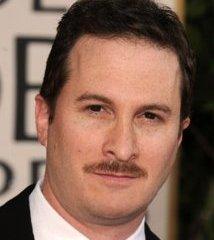
Darren Aronofsky

Darren Aronofsky Books

Film director

The Fountain

A source page for quotes linked to Darren Aronofsky.
0 quotes

Related Quotes

“Izzi: Remember Moses Morales? Tom Verde: Who? Izzi: The Mayan guide I told you about. Tom Verde: From your trip. Izzi: Yeah. The last night I was with him, he told me about his father, who had died. Well Moses wouldn't believe it. Tom Verde: Izzi... Izzi: [embraces Tom] No, no. Listen, listen. He said that if they dug his father's body up, it would be gone. They planted a seed over his grave. The seed became a tree. Moses said his father became a part of that tree. He grew into the wood, into the bloom. And when a sparrow ate the tree's fruit, his father flew with the birds. He said... death was his father's road to awe. That's what he called it. The road to awe. Now, I've been trying to write the last chapter and I haven't been able to get that out of my head! Tom Verde: Why are you telling me this? Izzi: I'm not afraid anymore, Tommy.”

“It would be nice to make a movie that other people want to make, because every one of these movies, I basically have to find the only company in the world that's willing to make it, and it's always a big challenge. I end up spending a tremendous amount of energy and time trying to get money to make these movies and it's exhausting.”

“CGI means, just to be clear, creating any type of image with a computer. Basically, starting off with nothing, or with images and manipulating them. The way we did it, everything was actual photographed images. A lot of that stuff was shot through a microscope of chemical reactions, yeast growing, lots of weird things, by Peter Parks. We put it into a computer and collaged it, manipulated it. Meaning we digitally shaped it to fit with other images. But there was no computer-generated imagery at all.”

“I feel that so many sci-fi films and films in general have just become really dependent on and addicted to CGI, and that some of the big CGI films of the summer, you see these effects that look like crap. You don't know if you're watching a cartoon or something that's real. And I didn't want to fall into that trap. I really thought there was a way to use a lot of these old techniques to do some new and really neat stuff.”

“I think there's something in collaboration - the fact that you can sit there and bounce ideas off of someone. It definitely matters who the person is, because certain people... The act of collaboration, where you can talk to someone, hang out, get ideas going, there is something in that. That's similar between everyone. But I think every individual collaborator is different, because they have different brains and emotions and ways of working, so it changes. Definitely.”

“I've been joking that if Madonna taught us anything, you've got to reinvent yourself. I think it's important as a filmmaker, as any person working in the arts, that you've got to try new stuff and challenge yourself and take chances. I've tried to take a chance with every film I've done - I've never done it the easy way, and I think that's because that's what excites me, is making as big a mountain as I can in front of me, and just trying to mount it.”

“Unfortunately, when you're working in film, it's this huge machine, and you've got to get everyone right there, so you get kind of locked into things. I'm not sure where the artistry in film making is. It's usually that moment when you're on set and you're working with the actors. That's the time to play around, the moment of theater. And then you can shape things. But a lot of it is just managing stuff. It's upsetting because you get away from the core.”

“In seventh grade I had a magical teacher, her name was Mrs. Fried. She wore only pink, she drove a pink Mustang, and she was half out of her head. But very inspiring. And one day she said, "Take out a paper and pen and write something about peace." For some reason I wrote a poem on Noah - I don't know why I chose Noah - and it turned out it was for a contest for the UN. I ended up winning and reading the poem in front of the UN. I remember Mrs. Fried telling me, "When you write your first book, dedicate it to me." That was like, "Whoa."”

“Noah is the battle of justice versus mercy. In Genesis it says that Noah was righteous in his times. You think you sort of know what righteous means, you know, if you listen to a lot of Bob Marley. According to all the biblical scholars we talked to, righteousness is the proper balance of justice and mercy. If you think of that, as a parent, you know that if you have too much justice and you're too strict, you destroy a child. If you have too much mercy, as a parent, you destroy a child as well. A big part of this movie is Noah finding mercy for man.”