Quotessence
Home / Authors / Edward T. Hall Books
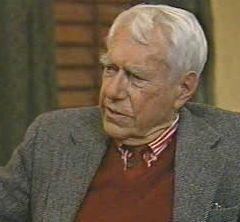
Edward T. Hall

Edward T. Hall Books

Anthropologist

Beyond Culture

A source page for quotes linked to Edward T. Hall.
0 quotes

Related Quotes

“The spoken language is a symbolization of something that happened, could have happened, or is in the process of happening, while the written language is a symbolization of the spoken language. James Joyce, for example, dedicated his life to trying to close the gap between the two systems. In Finnegans Wake, Joyce portrays in writing the workings of the verbal parts of the brain.”

“I may be able to spot arrowheads on the desert but a refrigerator is a jungle in which I am easily lost. My wife, however, will unerringly point out that the cheese or the leftover roast is hiding right in front of my eyes. Hundreds of such experiences convince me that men and women often inhabit quite different visual worlds. These are differences which cannot be attributed to variations in visual acuity. Man and women simply have learned to use their eyes in very different ways.”

“When Western people train the mind, the focus is generally on the left hemisphere of the cortex, which is the portion of the brainthat is concerned with words and numbers. We enhance the logical, bounded, linear functions of the mind. In the East, exercises of this sort are for the purpose of getting in tune with the unconscious--to get rid of boundaries, not to create them.”

“People are tied together and yet isolated from each other by invisible threads of rhythm and hidden walls of time. Time is... a primary organizer of all activities, a synthesizer and integrator, a way of handling priorities and categorizing experience, a feedback mechanism for how things are going, a measuring rod against which competence, effort, and achievement are judged as well as a special message system revealing how people really feel about each other and whether or not they can get along.”

“We live fragmented, compartmentalized lives in which contradictions are carefully sealed off from each other. We have been taught to think linearly rather than comprehensively, and we do this not through conscious design or because we are not intelligent or capable, but because of the way in which deep cultural undercurrents structure life in subtle but highly consistent ways that are not consciously formulated.”