Quotessence
Home / Authors / George Friedman
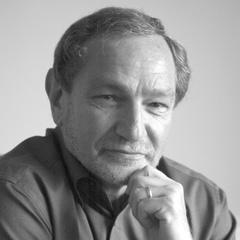
George Friedman

George Friedman Quotes

Political Scientist

Filter quotes by topic

Famous George Friedman Quotes

“The British bombed German cities [during World War II] to keep the workers awake at night. So instead of dropping one bomb, we sent a thousand planes and, yes, we took out the factory sometimes, but we also took out the city. It reached the point where we wanted more efficient ways to destroy a city. The result was nuclear weapons.”

“While certain coastal cities have become very prosperous, the rest of China has a per capita income of $200 a year. The coast wants to have nothing to do with the interior; it wants to work with Tokyo and New York. This is an old story in China. It is why Mao succeeded in 1927. He wanted [coastal] Shanghai to throw the foreigners out, but Shanghai was doing too well financially [to expel foreigners]. So Mao went to the interior and raised a peasant army. He came back to Shanghai and sealed off the country.”

“The Chinese central government will slowly and steadily lose authority while regional armies [gain power]. The Western powers are going to take sides to protect their investments - they have put billions of dollars into Shanghai. Their fear is that [these investments] are going to be expropriated by a warlord from the interior who will sweep down on Shanghai. They will try to form alliances with warlords to protect their concessions, and there will be a huge flow of weapons into China.”

“War to me is very much like sex. You can develop a theory that says sex is primarily for the exchange of genetic material, or that it's a celebration of life, or you can make up 50,000 theories about why human beings have sex, all of which are in some sense true, all of which by themselves miss the point. Because the answer is extraordinarily complex. It may be for fun, it may be for reproduction, for financial reasons, any number of things.”

“When you're young and going to war, it's a genuinely exciting moment. You are going to risk yourself. On the battlefield, you are suddenly free. You realize: I'm here, I'm in it. Exaltation. Suddenly you're hit by another extraordinary feeling: my God, I can be killed. And: will I embarrass myself? It's like you're in a kaleidoscope and all of these extraordinary feelings are zipping by.”

“It has always struck me as the world's great fortune that the two great superpowers were the United States and the Soviet Union, who managed the Cold War with meticulous care in retrospect. Imagine the European diplomats of 1914 or 1938 armed with nuclear weapons. It is easy to believe they would not have been as cautious.”