Quotessence
Home / Authors / Katherine Anne Porter Books
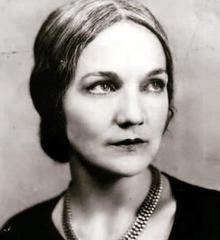
Katherine Anne Porter

Katherine Anne Porter Books

Journalist

Ship of Fools

A source page for quotes linked to Katherine Anne Porter.
0 quotes

Related Quotes

“It is a simple truth that the human mind can face better the most oppressive government, the most rigid restrictions, than the awful prospect of a lawless, frontierless world. Freedom is a dangerous intoxicant and very few people can tolerate it in any quantity; it brings out the old raiding, oppressing, murderous instincts; the rage for revenge, for power, the lust for bloodshed. The longing for freedom takes the form of crushing the enemy- there is always the enemy!- into the earth; and where and who is the enemy if there is no visible establishment to attack, to destroy with blood and fire? Remember all that oratory when freedom is threatened again. Freedom, remember, is not the same as liberty.”

“As she began "Dear..." she thought again that it did not matter which of the lot she addressed the letter to, for they presented to her the impermeable front of what she called "the family attitude" – suspicion of the worst based on insufficient knowledge of her life, and moral disapproval based firmly on their general knowledge of the weakness of human nature. Jenny couldn't possibly be up to any good, or she would have stayed at home, where she belonged. That is the sum of it, thought Jenny, and wouldn't their blood run cold if they could only know the facts? Ah well, the family can get under your skin with little needles and scalpels if you venture too near them: they attach suckers to you and draw your blood from every pore if you don't watch out. But that didn't keep you from loving them, nor them from loving you, with that strange longing, demanding, hopeless tenderness and bitterness, wound into each other in a net of living nerves.”

“Yes, she had changed her mind after sixty years and she would like to see George. I want you to find George. Find him and be sure to tell him I forgot him. I want him to know I had my husband just the same and my children and my house like any other woman. A good house too and a good husband that I loved and fine children out of him. Better than I had hoped for even. Tell him I was given back everything he took away and more. Oh, no, oh, God, no, there was something else besides the house and the man and the children. Oh, surely they were not all? What was it? Something not given back... Her breath crowded down under her ribs and grew into a monstrous frightening shape with cutting edges; it bored up into her head, and the agony was unbelievable: Yes, John, get the Doctor now, no more talk, the time has come.”

“Bells Screamed all off key, wrangling together as they collided in midair, horns and whistles mingled shrilly with cries of human distress; sulphur-colored light ex-ploded through the black windowpane and flashed away in darkness. Miranda waking from a dreamless sleep asked without expecting an answer, “What is happening?” for there was a bustle of voices and footsteps in the corridor, and a sharpness in the air; the far clamour went on, a furious exasperated shrieking like a mob in revolt. The light came on, and Miss Tanner said in a furry voice, “Hear that? They’re celebrating . It’s the Armistice. The war is over, my dear.” Her hands trembled. She rattled a spoon in a cup, stopped to listen, held the cup out to Miranda. From the ward for old bedridden women down the hall floated a ragged chorus of cracked voices singing, “My country, ’tis of thee…” Sweet land… oh terrible land of this bitter world where the sound of rejoicing was a clamour of pain, where ragged tuneless old women, sitting up waiting for their evening bowl of cocoa, were singing, “Sweet land of Liberty-” “Oh, say, can you see?” their hopeless voices were asking next, the hammer strokes of metal tongues drowning them out. “The war is over,” said Miss Tanner, her underlap held firmly, her eyes blurred. Miranda said, “Please open the window, please, I smell death in here.”

“The arts do live continuously, and they live literally by faith; their names and their shapes and their uses and their basic meanings survive unchanged in all that matters through times of interruption, diminishment, neglect; they outlive governments and creeds and the societies, even the very civilization that produced them. They cannot be destroyed altogether because they represent the substance of faith and the only reality. They are what we find again when the ruins are cleared away.”

“I was always restless, always a roving spirit. When I was a little child I was always running away. I never got very far, but they were always having to come and fetch me. Once when I was about six, my father came to get me somewhere I'd gone, and he told me later he'd asked me, "Why are you so restless? Why can't you stay here with us?" and I said to him, "I want to go and see the world. I want to know the world like the palm of my hand.”

“Marriage is a public declaration of a man and a woman that they have formed a secret alliance, with the intention to belong to, and share with each other, a mystical estate; mystical exactly in the sense that the real experience cannot be communicated to others, nor explained even to oneself on rational grounds.”

“Art is a vocation, as much as anything in this world. For the real artist, it is the most natural thing in the world, not as necessary as air and water, perhaps, but as food and water. But we really do lead almost a monastic life, you know; to follow it you very often have to give up something.”

“But my belief is growing that our political and social evils are remediable, if only all of us who want a change for the better just get up and work for it, all the time, with as much knowledge and intelligence as we can muster for it. Half the wrongs of human life exist because of the inertia of people who simply will not use their energies in fighting for what they believe in. And finally the wrongs roll up into world catastrophes and millions of deaths and a terrible set-back for all mankind.”

“Civilization, let me tell you what it is. First the soldier, then the merchant, then the priest, then the lawyer. The merchant hires the soldier and priest to conquer the country for him. First the soldier, he is a murderer; then the priest, he is a liar; then the merchant, he is a thief; and they all bring in the lawyer to make their laws and defend their deeds, and there you have your civilization!”

“We have the bad habit, some of us, of looking back to a time - almost any time will do - when society was stable and orderly, family ties stronger and deeper, love more lasting and faithful, and so on. Let me be your Cassandra prophesying after the fact, and a long study of the documents in the case: it was never true, that is, no truer than it is now.”

“advance money is really a delusion, that is to say, I get no more until it is paid out in sales, but still, living from hand to mouth and day to day as I do, a nickel in the hand is more useful than the same nickel next year. What do I know about next year? I've never been there. I don't know any one who has.”

“If we say I love you, it may be received with doubt, for there are times when it is hard to believe. Say I hate you, and the one spoken to believes it instantly, once for all. ... Love must be learned, and learned again and again; there is no end to it. Hate needs no instruction, but waits only to be provoked.”

“There have been many times when I have been so entirely sickened of life it was very hard to work to keep on, a half dozen times I have been tempted to suicide, but I am glad I did not give way, for I have always felt that the last half of my life would somehow atone for the first half, and I still think it may ... It is not possible to live in this world without suffering unless one is a born stone. But it is also possible to have a great deal of happiness in spite of the suffering.”