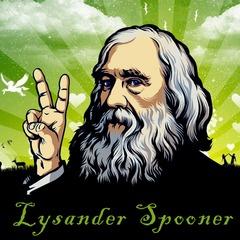
“The very idea of law originates in men's natural rights. There is no other standard, than natural rights, by which civil law can be measured. Law has always been the name of that rule or principle of justice, which protects those rights. Thus we speak of natural law.”
Source: The Unconstitutionality of Slavery
“What is the motive to the secret ballot? This, and only this: Like other confederates in crime, those who use it are not friends, but enemies; and they are afraid to be known, and to have their individual doings known, even to each other.”
Source: No Treason
“A man's 'original and natural right' to make all contracts that are 'intrinsically obligatory,' and to coerce the fulfillment of them, is one of the most valuable and indispensable of all human possessions.”
Source: A Letter to Grover Cleveland on His False Inaugural Address, the Usurpation and Crimes of Lawmakers and Judges, and Consequent Poverty, Ignorance, and Servitude of the People
“All know the importance of sustaining the hopes of a sick man. The reason of this is that his nervous system is then, vastly more than in health, susceptible to the influence of particular states of the mind.”
Source: The collected works of Lysander Spooner
“All, or nearly all, the advantage there is in fixing any constitutional limits to the power of a government, is simply to give notice to the government of the point at which it will meet with resistance.”
Source: An Essay on the Trial by Jury
“Any rule, not existing in the nature of things, or that is not permanent, universal and inflexible in its application, is no law, according to any correct definition of the term law.”
Source: The Unconstitutionality of Slavery
“But for their right to judge of the law, and the justice of the law, juries would be no protection to an accused person, even as to matters of fact; for, if the government can dictate to a jury any law whatever, in a criminal case, it can certainly dictate to them the laws of evidence.”
Source: An Essay on the Trial by Jury
“Doing a thing by law, or according to law, is only carrying the law into execution. And punishing a man by, or according to, the sentence or judgment of his peers, is only carrying that sentence or judgment into execution.”
Source: An Essay on the Trial by Jury
“Doubtless the most miserable of men, under the most oppressive government in the world, if allowed the ballot, would use it, if they could see any chance of thereby ameliorating their condition.”
Source: No Treason: No. 1-
“If a jury have not the right to judge between the government and those who disobey its laws, and resist its oppressions, the government is absolute, and the people, legally speaking, are slaves.”
Source: An Essay on the Trial by Jury
“If it be said that the consent of the strongest party in a nation, is all that is necessary to justify the establishment of a government that shall have authority over the weaker party, it may be answered that the most despotic governments in the world rest upon that very principle, viz.: the consent of the strongest party.”
“If men were but to read the New Testament with the same tone and emphasis, with which they do other books, and were to keep out of mind the idea of its being sacred, they would be disgusted with the credulity, and the want of intellect, reason and judgment, that is apparent in it.”
“If taxation without consent is robbery, the United States government has never had, has not now, and is never likely to have, a single honest dollar in its treasury. If taxation without consent is not robbery, then any band of robbers have only to declare themselves a government, and all their robberies are legalized.”
“If two individuals enter into a contract to commit trespass, theft, robbery or murder upon a third, the contract is unlawful and void, simply because it is a contract to violate natural justice, or men's natural rights.”
Source: The unconstitutionality of slavery: including parts first and second
“It cannot be said that the Constitution formed 'the people of the United States,' for all time, into a corporation. It does not speak of 'the people' as a corporation, but as individuals. A corporation does not describe itself as 'we,' nor as 'people,' nor as 'ourselves.' Nor does a corporation, in legal language, have any 'posterity.'”
Source: Let's Abolish Government
“It is with government paper, and bank paper, as it is with the paper of private persons; that is, it is worth just what can be delivered in redemption of it, and no more. We all understand that the notes of the Astors, and Stewarts, and Vanderbilts, though issued by millions, and tens of millions, are really worth their nominal values.”
Source: A New Banking System: the Needful Capital for Rebuilding the Burnt District
“Legally speaking, the term 'public rights' is as vague and indefinite as are the terms 'public health,' 'public good,' 'public welfare,' and the like. It has no legal meaning, except when used to describe the separate, private, individual rights of a greater or less number of individuals.”
Source: The collected works of Lysander Spooner
“Legally speaking, there are no such things as 'public rights,' as distinguished from individual rights. Legally speaking, there is no such creature or thing as 'the public.'”
Source: The collected works of Lysander Spooner
“Martyrdom is evidence only of a man's honesty - it is no evidence that he is not mistaken. Men have suffered martyrdom for all sorts of opinions in politics and in religion; yet they could not therefore have all been in the right; although they could give no stronger evidence that they believed themselves in the right.”
Source: The Deist's Reply to the Alleged Supernatural Evidences of Christianity, Etc
“Men's moral principles are weak enough without their being made subordinate to selfishness; and their selfishness is quite active enough, without any such effort as Christianity makes to constitute it the mainspring of all their conduct.”
Source: The collected works of Lysander Spooner
“Now a slave is not 'held' by any legal contract, obligation, duty, or authority, which the laws will enforce. He is 'held' only by brute force. One person beats another until the latter will obey him, work for him, if he require it, or do nothing if he require it.”
Source: A Defence for Fugitive Slaves
“Now it is clear, that if the government can exclude, on account either of their opinions or feelings, any persons thus drawn by lot, the trial is no longer a trial by 'the country,' but only by a portion of the country.”
Source: The Collected Works of Lysander Spooner: Legal writings
“One essential of a free government is that it rest wholly on voluntary support. And one certain proof that a government is not free, is that it coerces more or less persons to support it, against their will.”
Source: No Treason: No. 1-
“Slavery, if it can be legalized at all, can be legalized only by positive legislation. Natural law gives it no aid. Custom imparts to it no legal sanction.”
Source: The Unconstitutionality of Slavery
“The commerce of a free people is many times more valuable than that of slaves. Freemen produce and consume vastly more than slaves. They have therefore more to buy and more to sell. Hence the free states have a direct pecuniary interest in the civil freedom of all the other states. Commerce between free and slave states is not reciprocal or equal.”
Source: The Unconstitutionality of Slavery
“The desertion of Jesus, by his followers, furnishes an argument in support of the supposition that he attempted to be king of the Jews, rather than that he was a superior being.”
Source: The collected works of Lysander Spooner
“The imaginations of believers have dressed up and exaggerated the excellence of the style and matter of the New Testament generally, in the same manner, in which they have the moral instructions of Jesus.”
Source: The collected works of Lysander Spooner
“The mental capacity of a person to make reasonable contracts, is the only criterion, by which to determine his legal capacity to make obligatory contracts. And his mental capacity to make reasonable contracts is certainly not to be determined by the fact that he is, or is not, twenty-one years of age.”
Source: A Letter to Grover Cleveland on His False Inaugural Address, the Usurpation and Crimes of Lawmakers and Judges, and Consequent Poverty, Ignorance, and Servitude of the People
“The number who actually consented to the Constitution of the United States, at the first, was very small. Considered as the act of the whole people, the adoption of the Constitution was the merest farce and imposture, binding upon nobody.”
Source: No Treason: No. 1-
“The right and the physical power of the people to resist injustice, are really the only securities that any people ever can have for their liberties. Practically no government knows any limit to its power but the endurance of the people.”
Source: A Defence for Fugitive Slaves
“The right of absolute and irresponsible dominion is the right of property, and the right of property is the right of absolute, irresponsible dominion. The two are identical; the one necessarily implying the other.”
Source: Let's Abolish Government
“The right of revolution, which tyrants, in mockery, accord to mankind, is no legal right under a government; it is only a natural right to overturn a government.”
Source: An Essay on the Trial by Jury
“The single despot stands out in the face of all men, and says: I am the State: My will is law: I am your master: I take the responsibility of my acts: The only arbiter I acknowledge is the sword: If any one denies my right, let him try conclusions with me.”
Source: The collected works of Lysander Spooner
“The trial by jury is a trial by 'the country,' in contradistinction to a trial by the government. The jurors are drawn by lot from the mass of the people, for the very purpose of having all classes of minds and feelings, that prevail among the people at large, represented in the jury.”
Source: The Collected Works of Lysander Spooner: Legal writings
“The trial by jury might safely be introduced into a despotic government, if the jury were to exercise no right of judging of the law, or the justice of the law.”
Source: The Collected Works of Lysander Spooner: Anti-slavery writings
“There is not, in the Constitution, a syllable that implies that persons, born within the territorial limits of the United States, have allegiance imposed upon them on account of their birth in the country, or that they will be judged by any different rule, on the subject of treason, than persons of foreign birth.”
Source: Individualist anarchist pamphlets
“There is perhaps not an enlightened Christian in America who, notwithstanding he may believe that, at the time of Jesus, men were possessed of devils, believes that they ever have been in any other instance, either before or since.”
Source: The collected works of Lysander Spooner
“Those who deny the right of a jury to protect an individual in resisting an unjust law of the government, deny him all defence whatsoever against oppression.”
Source: An Essay on the Trial by Jury
“To measure prices by a currency that is called by the same names as gold, but that is really inferior in value to gold, and then - because those prices are nominally higher than gold prices - to say that they are inflated, relatively to gold, is a perfect absurdity.”
Source: The Collected Works of Lysander Spooner: Economic writings
“To say that majorities, as such, have a right to rule minorities, is equivalent to saying that minorities have, and ought to have, no rights, except such as majorities please to allow them.”
Source: No Treason: No. 1-
“Those who are capable of tyranny are capable of perjury to sustain it.”
Source: An Essay on the Trial by Jury
“And yet we have what purports, or professes, or is claimed, to be a contract—the Constitution—made eighty years ago, by men who are now all dead, and who never had any power to bind us, but which (it is claimed) has nevertheless bound three generations of men, consisting of many millions, and which (it is claimed) will be binding upon all the millions that are to come; but which nobody ever signed, sealed, delivered, witnessed, or acknowledged; and which few persons, compared with the whole number that are claimed to be bound by it, have ever read, or even seen, or ever will read, or see.”
Source: The collected works of Lysander Spooner
“Vices are simply the errors which a man makes in his search after his own happiness. Unlike crimes, they imply no malice toward others, and no interference with their persons or property.”
Source: Vices Are Not Crimes: A Vindication of Moral Liberty
“The highwayman takes solely upon himself the responsibility, danger, and crime of his own act. He does not pretend that he has any rightful claim to your money, or that he intends to use it for your own benefit ... Furthermore, having taken your money, he leaves you, as you wish him to do ... He does not keep "protecting" you by commanding you to bow down and serve him; by requiring you to do this, and forbidding you to do that.”
“Man, no doubt, owes many other moral duties to his fellow men; such as to feed the hungry, clothe the naked, shelter the homeless, care for the sick, protect the defenseless, assist the weak, and enlighten the ignorant. But these are simply moral duties, of which each man must be his own judge, in each particular case, as to whether, and how, and how far, he can, or will perform them.”
Source: Natural Law, Or, The Science of Justice: A Treatise on Natural Law, Natural Justice, Natural Rights, Natural Liberty, and Natural Society : Showing that All Legislation Whatsoever is an Absurdity, a Usurpation, and a Crime
“There has been no clearer principle of English or American constitutional law than that, in criminal cases, it is not only the power and duty of juries to judge what are the facts, what is the law, and what is the moral intent of the accused; but that it is also their power, and their primary and paramount duty, to judge the justice of the law, and to hold all laws invalid, that are, in their opinion, unjust or oppressive, and find all persons guiltless in violating, or resisting the execution of, such laws.”
“If our fathers, in 1776, had acknowledged the principle that a majority had the right to rule the minority, we should never have become a nation; for they were in a small minority, as compared with those who claimed the right to rule over them.”
Source: No Treason: No. 1-
“The constitution of the United States declares that "no State shall pass any law impairing the obligation of contracts."”
“All the great establishments, of every kind, now in the hands of a few proprietors, but employing a great number of wage laborers, would be broken up; for few or no persons, who could hire capital and do business for themselves would consent to labour for wages for another.”
Source: A Letter to Grover Cleveland on His False Inaugural Address, the Usurpation and Crimes of Lawmakers and Judges, and Consequent Poverty, Ignorance, and Servitude of the People
“It is self-evident that no number of men, by conspiring, and calling themselves a government, can acquire any rights whatever over other men, or other men's property, which they had not before, as individuals. And whenever any number of men, calling themselves a government, do anything to another man, or to his property, which they had no right to do as individuals, they thereby declare themselves trespassers, robbers, or murderers, according to the nature of their acts.”