Quotessence
Home / Authors / Marie-Louise von Franz Books
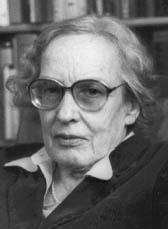
Marie-Louise von Franz

Marie-Louise von Franz Books

Psychologist

Psyche and Matter

A source page for quotes linked to Marie-Louise von Franz.
0 quotes

Number and Time

A source page for quotes linked to Marie-Louise von Franz.

0 quotes

Related Quotes

“This is an archetypal motif: where the pearl is, there is also the dragon, and vice versa. They are never separate. Frequently, just after the first intuitive realization of the Self, the powers of desolation and darkness break in. A terrible slaughtering always takes place at the time of the birth of the hero, as for instance the killing of the innocents at Bethlehem when Christ was born. Some persecuting power starts at once to blot out the inner germ. Outwardly, it is often that the innermost kernel of the human being has an actually irritating effect upon outer surroundings. Realization of the Self when in statu nascendi, when only a hunch, makes a person unadapted and difficult for those around, for it disturbs the unconscious instinctive order. Jung often said that it is as if a flock of sheep resented it bitterly that one sheep wanted to walk by itself.”

“The healing hero, therefore, is the one who finds some creative way out, a way not already known, and does not follow a pattern. Ordinary sick people follow ordinary patterns, but the shaman cannot be cured by the usual methods of healing. He has to find the unique way, the only way that applies to him. The creative personality who can do that then becomes a healer and is recognized as such by his colleagues.”

“To what end does one liberate one's country if afterward there is no meaningful goal in life, no goal for which it is worthwhile to be free? If a person no longer finds any meaning in their life, it makes no difference whether they waste away under a communist or a capitalist regime. Only if they can use their freedom to create something meaningful is it relevant that they should be free. That is why finding the inner meaning of life is more important to the individual than anything else, and why the process of individuation must be given priority.”

“Numbers, furthermore as archetypal structural constants of the collective unconscious, possess a dynamic, active aspect which is especially important to keep in mind. It is not what we can do with numbers but what they do to our consciousness that is essential.”

“The animus awakens passion in a woman. His plans, purposes and whims stir up self-doubt within her and caused her to drag her feminine, passive nature out into the world and to expose herself to the resistance of the outer world. Then, when a woman has been successful in a man's world, it means acute suffering to narrow down the scope of her activities, or to give them up altogether, in order to become more feminine again.”

“This lowly activity is also a kind of compensation to persuade the woman to become feminine again. The effect of animus pressure can lead a woman to deeper femininity, providing she accepts the fact that she is animus-possessed and does something to bring her animus into reality. If she gives him a field of action- that is, if she takes up some special study or does some masculine work- this can occupy the animus, and at the same time her feeling will be vivified and she will come back to feminine activities. The worst condition comes about when a woman has a powerful animus, and does not even live it; then she is straightjacketed by animus opinions, and while she may avoid any sort of work that seems in the least masculine, she is much less feminine.”

“In the clutches of the animus, no woman is able to give up whatever power she may have, or her conviction that it is right and necessary and valuable. The convictions a woman has lived by spring from inferior masculine thinking; the less she herself is able to evaluate them, the more passionately she clings to them. This is a reason for the persistence of the animus possession. Unfortunately such a woman never thinks that anything could be wrong with herself and is convinced that the fault lies with others.”

“Jung writes that women with a negative mother complex often miss the first half of life; they walk past it in a dream. Life to them is a constant source of annoyance and irritation. But if they can overcome this negative mother complex, they have a good chance in the second half of rediscovering life with the youthful spontaneity missed in the first half. For though, as Jung says in the last paragraph, a part of life has been lost, its meaning has been saved. That is the tragedy of such women, but they can get to the turning point, and in the second half of life have their hands healed and can stretch them out for what they want — not from the animus or from the ego, but, according to nature, simply stretch out their hands toward something they love. Though it is infinitely simple, it is extremely difficult, for it is the one thing the woman with a negative mother complex cannot do; it needs God's help. Even the analyst cannot help her — it must one day just happen, and this is generally when there has been sufficient suffering. One cannot escape one's fate; the whole pain of it must be accepted, and one day the infinitely simple solution comes.”

“Therefore, it is not off the point if, along with the forgotten feminine principles, there are no longer good carpets at the kings court and they need one, for they have again to find the pattern in of life. In this way the story tells us that the subtlety of the inventions of the unconscious and the secret design woven into a human life are infinitely more intelligent than human consciousness and more subtle and superior than man could invent. One is again and again overwhelmed by the genius of that unknown mysterious something in our psyche which is the inventor of our dreams, It picks elements from day impressions, from something the dreamer has read the evening before in the paper, or from a childhood memory, and makes a nice kind of potpourri out of it, and only when you have interpreted its meaning do you see the subtlety and the genius of each dream composition. Every night we have that carpet weaver at work within us, who makes those fantastically subtle patterns, so subtle that, unfortunately often after an hour's attempt to interpret them, we are unable to find out the meaning. We are just too clumsy and stupid to follow up the genius of that unknown spirit of the unconscious which invents dreams. But we can understand that this carpet is more subtly woven than any human could ever achieve.”

“As you know, there was a famous quarrel between Max Planck and Einstein, in which Einstein claimed that, on paper, the human mind was capable of inventing mathematical models of reality. In this he generalized his own experience because that is what he did. Einstein conceived his theories more or less completely on paper, and experimental developments in physics proved that his models explained phenomena very well. So Einstein says that the fact that a model constructed by the human mind in an introverted situation fits with outer facts is just a miracle and must be taken as such. Planck does not agree, but thinks that we conceive a model which we check by experiment, after which we revise our model, so that there is a kind of dialectic friction between experiment and model by which we slowly arrive at an explanatory fact compounded of the two. Plato-Aristotle in a new form! But both have forgotten something- the unconscious. We know something more than those two men, namely that when Einstein makes a new model of reality he is helped by his unconscious, without which he would not have arrived at his theories...But what role DOES the unconscious play?...either the unconscious knows about other realities, or what we call the unconscious is a part of the same thing as outer reality, for we do not know how the unconscious is linked with matter.”

“Creativity sometimes needs the protection of darkness, of being ignored. That is very obvious in the natural tendency many artists and writers have not to show their paintings or writings before they are finished.”

“If you notice an unconscious fantasy coming up within you, you would be wise not to interpret it at once. Do not say that you know what it is and force it into consciousness. Just let it live with you, leaving it in the half-dark, carry it with you and watch where it is going or what it is driving at.”

“The ego must be able to listen attentively and to give itself, without any further design or purpose, to that inner urge toward growth. People living in cultures more securely rooted than our own have less trouble in understanding that it is necessary to give up the utilitarian attitude of conscious planning in order to make way for the inner growth of the personality.”

“To sum up: numbers appear to represent both an attribute of matter and the unconscious foundation of our mental process. For this reason, number forms, according to Jung, that particular element that unites the realms of matter and psyche. It is "real" in a double sense, as an archetypal image and as a qualitative manifestation in the realm of outer-world experience.”

“Number, as it were, lies behind the psychic realm as a dynamic ordering principle, the primal element of which Jung called spirit. As an archetype, number becomes not only a psychic factor, but more generally, a world-structuring factor. In other words, numbers point to a background reality in which psyche and matter are no longer distinguishable.”

“One of the most wicked destructive forces, psychologically speaking, is unused creative power ... If someone has a creative gift and out of laziness, or for some other reason, doesn't use it, the psychic energy turns to sheer poison. That's why we often diagnose neuroses and psychotic diseases as not-lived higher possibilities.”

“People who have a creative side and do not live it out are most disagreeable clients. They make a mountain out of a molehill, fuss about unnecessary things, are too passionately in love with somebody who is not worth so much attention, and so on. There is a kind of floating charge of energy in them which is not attached to its right object and therefore tends to apply exaggerated dynamism to the wrong situation.”

“In one African myth the word for God is even identical with skill and capacity. The Godhead is defined as that thing which appears in man as the mystery of an unusual skill or capacity. It is something divine, a spark of the divinity in him, not his own possession or achievement, but a miracle.”