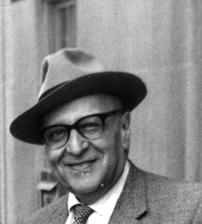
“Although the formulations of science now offer the most advanced knowledge of nature, men continue to use obsolete forms of thought long discarded by scientific theory. In so far as these obsolete forms are superfluous for science, the fact that they persist violated the principle of the economy of thought, that characteristic trait of the bourgeois temper.” MenLongFactsUseFormPrinciplesEconomyTheoryOffersCharacteristicsTemperTraitsPersistBourgeoisObsoleteSuperfluousDiscardedScientific Theory Author:Max Horkheimer
“Whoever desires to live among men has to obey their laws this is what the secular morality of Western civilization comes down to. ... Rationality in the form of such obedience swallows up everything, even the freedom to think.” ThinkingMenFormLawDesireMoralityCivilizationWesternObedienceSecularRationalityWestern CivilizationDesire To Live Book:Zeitschrift Fur Sozialforschung Source: Zeitschrift Fur Sozialforschung
“Calvin's theocentric irrationalism eventually revealed itself as the cunning to technocratic reason which had to shape its human material. Misery and the poor laws did not suffice to drive men into the workshops of the early capitalistic era. The new spirit helped to supplement external pressures with a concern for wife and child to which the moral autonomy of the introverted subject in reality was tantamount.” MenHumansChildrenReasonRealityLawSpiritPoorMoralWifeSubjectsMaterialsShapesConcernPressureMiseryErasAutonomyCunningWorkshopsSupplementsIntroverted Author:Max Horkheimer
“Reason has never really directed social reality, but now reason has been so thoroughly purged of any specific trend or preference that it has finally renounced even the task of passing judgment on man's actions and way of life. Reason has turned them over for ultimate sanction to the conflicting interests to which our world actually seems abandoned.” MenWorldWayHas BeensReasonRealitySeemsActionSocialInterestJudgmentTasksUltimatePassingPassingsOur WorldTrendsAbandonedPreferenceSanctionsPassing Judgment Book:Eclipse of Reason Source: Eclipse of Reason
“The quality of the human that precludes identifying the individual with the class is 'metaphysical' and has no place in empiricist epistemology. The pigeon hole into which a man is shoved circumscribes his fate.” MenHumansIndividualQualityClassFateHolesMetaphysicalIdentifyingPigeonsEpistemology Author:Max Horkheimer
“The pleasure a man gets from a landscape would [not] last long if he were convinced a priori that the forms and colors he sees are just forms and colors, that all structures in which they play a role are purely subjective and have no relation whatsoever to any meaningful order or totality, that they simply and necessarily express nothing....No walk through the landscape is necessary any longer; and thus the very concept of landscape as experienced by a pedestrian becomes meaningless and arbitrary. Landscape deteriorates altogether into landscaping.” IfsMenLongPlayLastsFormOrderWalksPleasureRolesColorConceptsRelationStructureConvincedMeaningfulLandscapeMeaninglessSubjectiveArbitraryTotalityPedestriansLandscaping Author:Max Horkheimer
“Now that science has helped us to overcome the awe of the unknown in nature, we are the slaves of social pressures of our own making. When called upon to act independently, we cry for patterns, systems, and authorities. If by enlightenment and intellectual progress we mean the freeing of man from superstitious belief in evil forces, in demons and fairies, in blind fate--in short, the emancipation from fear--then denunciation of what is currently called reason is the greatest service reason can render.” IfsMenMeanReasonEvilBeliefForceSocialFateProgressCryAuthorityIntellectualEnlightenmentOvercomingPressureBlindSlavePatternsDemonFairyAweEmancipationSuperstitiousSocial Pressure Book:EPZ Eclipse of Reason Source: EPZ Eclipse of Reason