Quotessence
Home / Authors / Milan Kundera
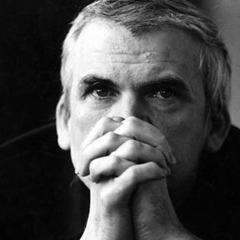
Milan Kundera

Milan Kundera Quotes

Writer

Filter quotes by topic

Famous Milan Kundera Quotes

“Remembering our past, carrying it around with us always, may be the necessary requirement for maintaining, as they say, the wholeness of the self. To ensure that the self doesn’t shrink, to see that it holds on to its volume, memories have to be watered like potted flowers, and the watering calls for regular contact with the witnesses of the past, that is to say, with friends. They are our mirror; our memory; we ask nothing of them but that they polish the mirror from time to time so we can look at ourselves in it.”

“Anyone who thinks that the Communist regimes of Central Europe are exclusively the work of criminals is overlooking a basic truth: The criminal regimes were made not by criminals but by enthusiasts convinced they had discovered the only road to paradise. They defended that road so valiantly that they were forced to execute many people. Later it became clear that there was no paradise, that the enthusiasts were therefore murderers.”

“Speed is the form of ecstasy the technical revolution has bestowed on man. As opposed to a motorcyclist, the runner is always present in his body, forever required to think about his blisters, his exhaustion; when he runs he feels his weight, his age, more conscious than ever of himself and of his time of life. This all changes when man delegates the faculty of speed to a machine: from then on, his own body is outside the process, and he gives over to a speed that is noncorporeal, nonmaterial, pure speed, speed itself, ecstasy speed.”

“Every love relationship rests on an unwritten agreement unthinkingly concluded by the lovers in the first weeks of their love. They are still in a kind of dream but at the same time, without knowing it, are drawing up, like uncompromising lawyers, the detailed clauses of their contract. O lovers! Be careful in those dangerous first days! Once you've brought breakfast in bed you'll have to bring it forever, unless you want to be accused of lovelessness and betrayal.”

“It takes so little, so infinitely little, for a person to cross the border beyond which everything loses meaning: love, convictions, faith, history. Human life -- and herein lies its secret -- takes place in the immediate proximity of that border, even in direct contact with it; it is not miles away, but a fraction of an inch.”

“The day after his father left, Franz and his mother went into town together, and as they left home Franz noticed that her shoes did not match. He was in a quandary: he wanted to point out the mistake, but was afraid he would hurt her. So, during the two hours they spent walking through the city together he kept his eyes focused on her feet. It was then he had his first inkling of what it means to suffer.”

“To put it another way, every love relationship is based upon unwritten conventions rashly agreed upon by the lovers during the first weeks of their love. On the one hand, they are living a sort of dream; on the other, without realizing it, they are drawing up the fine print of their contracts like the most hard-nosed of lawyers. O lovers! Be wary during those perilous first days! If you serve the other party breakfast in bed, you will be obliged to continue same in perpetuity or face charges of animosity and treason!”

“The girl was grateful to the young man for every bit of flattery; she wanted to linger for a moment in its warmth and so she said, 'You're very good at lying.' 'Do I look like a liar?' 'You look like you enjoy lying to women,' said the girl, and into her words there crept unawares a touch of the old anxiety, because she really did believe that her young man enjoyed lying to women.”

“There are moments in life when a man retreats defensively, when he must give ground, when he must surrender less important positions in order to protect the more important ones. But should it come to the very last, the most important one, at this point a man must halt and stand firm if he doesn't want to begin life all over again with idle hands and a feeling of being shipwrecked.”

“The very beginning of Genesis tells us that God created man in order to give him dominion over fish and fowl and all creatures. Of course, Genesis was written by a man, not a horse. There is no certainty that God actually did grant man dominion over other creatures. What seems more likely, in fact, is that man invented God to sanctify the dominion that he usurped for himself over the cow and the horse.”

“This symmetrical composition--the same motif at the beginning and at the end--may seem quite "novelistic" to you, and I am willing to agree, but only on condition that you refrain from reading such notions as "fictive," "fabricated," and "untrue to life" into the word "novelistic." Because human lives are composed in precisely such a fashion.”

“Dreaming is not merely an act of communication (or coded communication, if you like); it is also an aesthetic activity, a game of the imagination, a game that is a value in itself. Our dreams prove that to imagine--to dream about things that have not happened--is among mankind's deepest needs. Herein lies the danger. If dreams were not beautiful, they would be quickly forgotten.”

“His overriding life necessity was not love, it was his profession…He had come to medicine not by coincidence or calculation but by a deep inner desire. Insofar as it is possible to divide people into categories, the surest criterion is the deep-seated desires that orient them to one or another lifelong activity. Every Frenchman is different. But all the actors the world over are similar.”

“When we want to give expression to a dramatic situation in our lives, we tend to use metaphors of heaviness. We say that something has become a great burden to us. We either bear the burden or fail and go down with it, we struggle with it, win or lose. And Sabina - what had come over her? Nothing. She had left a man because she felt like leaving him. Had he persecuted her? Had he tried to take revenge on her? No. Her drama was a drama not of heaviness but of lightness. What fell to her lot was not the burden, but the unbearable lightness of being.”

“In the political jargon of those days, the word "intellectual" was an insult. It indicated someone who did not understand life and was cut off from the people. All the Communists who were hanged at the time by other Communists were awarded such abuse. Unlike those who had their feet solidly on the ground, they were said to float in the air. So it was fair, in a way, that as punishment the ground was permanently pulled out from under their feet, that they remained suspended a little above the floor.”