Quotessence
Home / Authors / Milan Kundera
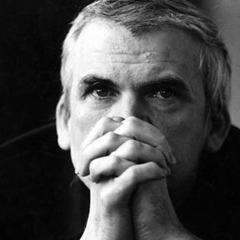
Milan Kundera

Milan Kundera Quotes

Writer

Filter quotes by topic

Famous Milan Kundera Quotes

“Man can only be certain about the present moment. But is that quite true either? Can he really know the present? Is he in a position to make any judgment about it? Certainly not. For how can a person with no knowledge of the future understand the meaning of the present? If we do not know what future the present is leading us toward, how can we say whether this present is good or bad, whether it deserves our concurrence, or our suspicion, or our hatred?”

“A great deal has been said about love at first sight; I am perfectly aware of love's retrospective tendency to make a legend of itself, turn its beginnings into myth; so I don't want to assert that it was love; but I have no doubt there was a kind of clairvoyance at work: I immediately felt, sensed, grasped the essence of Lucie's being or, to be more precise, the essence of what she was later to become for me; Lucie had revealed herself to me the way religious truth reveals itself.”

“What I love in a woman is not what she is in and for herself, but the side of herself she turns towards me, what she is for me. I love her as character in our common love story. what wuld Hamlet be without the castle at Elsinore, without Ophelia, without all the concrete situations he goes through, what would he be without the text of his part? What would be left but an empty, dumb, illusory essence?”

“While people are fairly young and the musical composition of their lives is still in its opening bars, they can go about writing it together and sharing motifs (the way Tomas and Sabina exchanged the motif of the bowler hat), but if they meet when they are older, like Franz and Sabina, their musical compositions are more or less complete, and every motif, every object, every word means something different to each of them.”

“Just imagine living in a world without mirrors. You'd dream about your face and imagine it as an outer reflection of what is inside you. And then, when you reached forty, someone put a mirror before you for the first time in your life. Imagine your fright! You'd see the face of a stranger. And you'd know quite clearly what you are unable to grasp: your face is not you.”

“In Tereza’s eyes, books were the emblems of a secret brotherhood. For she had but a single weapon against the world of crudity surrounding her: the novels. She had read any number of them, from Fielding to Thomas Mann. They not only offered the possibility of an imaginary escape from a life she found unsatisfying; they also had a meaning for her as physical objects: she loved to walk down the street with a book under her arm. It had the same significance for her as an elegant cane from the dandy a century ago. It differentiated her from others.”

“Laughter, on the other hand, " Petrarch went on, "is an explosion that tears us away from the world and throws us back into our own cold solitude. Joking is a barrier between man and the world. Joking is the enemy of love and poetry. That's why I tell you yet again, and you want to keep in mind: Boccaccio doesn't understand love. Love can never be laughable. Love has nothing in common with laughter.”

“Because beyond their practical function, all gestures have a meaning that exceeds the intention of those who make them; when people in bathing suits fling themselves into the water, it is joy itself that shows in the gesture, notwithstanding any sadness the divers may actually feel. When someone jumps into the water fully clothed, it is another thing entirely: the only person who jumps into the water fully clothed is a person trying to drown; and a person trying to drown does not dive headfirst; he lets himself fall: thus speaks the immemorial language of gestures.”