Quotessence
Home / Authors / Nathaniel Branden Books
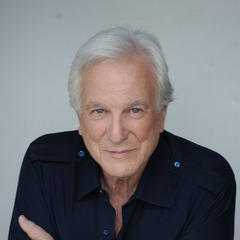
Nathaniel Branden

Nathaniel Branden Books

Psychotherapist

Related Quotes

“It is not only negative feelings that become blocked. The repression extends to more and more of his emotional capacity.When one is given an anesthetic in preparation for surgery, it is not merely the capacity to experience pain that is suspended; the capacity to experience pleasure goes also - because what is blocked is the capacity to experience *feeling*. The same principle applies to the repression of emotions." Chapter 1: Discovering the Unknown Self, pg. 9, Bantam Edition, 1984”

“One of the great self-deceptions--and one of the great foolishnesses--is to tell yourself, Only I will know. Only you will know that you are a liar; only you will know you deal unethically with people who trust you; only you will know you have no intention of honoring your promise. Whose knowledge or judgment do you imagine is more important? It is precisely your own ego from which there is no escape.”

“To think, to judge, to choose our values is to be individuated, to create a distinct, personal identity. But thus to affirm that I exist is to open myself to the realization that I am finite, that my life is limited, that I am mortal, that one day I will die. The rebellion against the inevitability of death results in a rebellion against the challenges and opportunities of life. If I refuse to fully live, I cannot die. So: fear of autonomy entails fear of self-responsibility entails fear of identity entails fear of aloneness entails fear of death. That which does not exist cannot perish.”

“Genuine self esteem – please understand this – genuine self esteem is not competitive or comparative. Genuine self esteem isn’t expressed by self-glorification at the expense of others, or by trying to make yourself superior to everyone else, or diminishing others in order to elevate yourself. Arrogance, boastfulness, the overestimation of your abilities, reflect low self esteem, even though we’re often encouraged to believe the opposite. In human beings, joy in the simple fact of existence is a core meaning of healthy self esteem. Thus understood, how can you possibly have too much of it?”

“While self-esteem touches virtually every aspect of our existence, there are two aspects to which it is related in very distinct and powerful ways: work and love. Through work and through love, we act out the level of our confidence and our sense of personal worth. The drama of our life is the external reflection of our internal vision of ourselves. The higher the level of our self-esteem, the more likely it is that we will find a work and a love through which we can express ourselves in satisfying and enriching ways.”

“The higher our self-esteem, the more likely we are to be creative in our work, which means the more successful we are likely to be. The higher our self-esteem, the more ambitious we tend to be, not necessarily in a career or financial sense, but in terms of what we hope to experience in life - emotionally, creatively and spiritually.”

“Sometimes the path to higher self-esteem is lonely and frightening. We cannot fully know in advance how much more satisfying our lives will be. But the more we are willing to experience and accept the many aspects of who we are, the richer our inner worlds, the greater our resources, the more appropriate we feel to the challenges and opportunities of life. Also, it is more likely that we will find - or create - a style of existence that will meet our individual needs.”

“Our liabilities pose the problem of inadequacy; our our assets, the challenge of responsibility. Our strengths or virtues can make us feel alone, alienated, cut off from the common herd, a target for envy and hostility, and our desire to belong can overcome any desire to actualise our highest potential.”

“It sounded, I told him, as if he had never learned to balance projecting goals into the future with appreciating and living in the present. ... To the extent that our goal is to "prove" ourselves or ward off the fear of failure, this balance is difficult to achieve. We are too driven. Not joy but anxiety is our motor. But if our aim is self-expression rather than self-justification, the balance tends to come more naturally. We will still need to think about its daily implementation, but the anxiety of wounded self-esteem will not make the task nearly impossible.”

“Desires and emotions as such are involuntary; they are not subject to direct and immediate volitional control; they are the automatic result of subconscious integrations. (...) It is impossible to compute the magnitude of the disaster, the wreckage of human lives, produced by the belief that desires and emotions can be commanded in and out of existence by an act of will.”

“We do not hear the term compassionate applied to business executives or entrepreneurs, certainly not when they are engaged in their normal work. Yet in terms of results in the measurable form of jobs created, lives enriched, communities built, living standards raised, and poverty healed, a handful of capitalists has done infinitely more for mankind than all the self-serving politicians, academics, social workers, and religionists who march under the banner of compassion.”

“It is generally recognized that creativity requires leisure, an absence of rush, time for the mind and imagination to float and wander and roam, time for the individual to descend into the depths of his or her psyche, to be available to barely audible signals rustling for attention. Long periods of time may pass in which nothing seems to be happening. But we know that kind of space must be created if the mind is to leap out of its accustomed ruts, to part from the mechanical, the known, the familiar, the standard, and generate a leap into the new.”

“Innovators and creators are persons who can to a higher degree than average accept the condition of aloneness. They are more willing to follow their own vision, even when it takes them far from the mainland of the human community. Unexplored places do not frighten them- or not, at any rate, as much as they frighten those around them. This is one of the secrets of their power. That which we call genius has a great deal to do with courage and daring, a great deal to do with nerve.”

“Positive self-esteem operates as, in effect, the immune system of the consciousness, providing resistance, strength, and a capacity for regeneration. When self-esteem is low, our resilience in the face of life's adversities is diminished. We crumble before vicissitudes that a healthier sense of self could vanquish. We tend to be more influenced by the desire to avoid pain than to experience joy. Negatives have more power over us than positives.”

“There is no value-judgment more important to a man--no factor more decisive in his psychological development and motivation--than the estimate he passes on himself.”

“If we attach more importance to what other people believe than to what we know to be true - if we value belonging over being - we will not attain authenticity.”

“In a world in which we are exposed to more information, more options, more philosophies, more perspectives than ever before, in which we must choose the values by which we will live (rather than unquestioningly follow some tradition for no better reason than that our own parents did), we need to be willing to stand on our own judgment and trust our own intelligence-to look at the world through our own eyes-to chart our course and think through how to achieve the future we want, to commit ourselves to continuous questioning and learning-to be, in a word, self-responsible.”

“A well-developed sense of self is a necessary if not sufficient condition of your well-being. Its presence does not guarantee fulfillment, but its absence guarantees some measure of anxiety, frustration, or despair.”

“Suffering is just about the easiest of all human activities; being happy is just about the hardest. And happiness requires, not surrender to guilt, but emancipation from guilt.”

“In the nature of our existence, we must act to achieve values. And in order to act appropriately, we need to value the beneficiary of our actions. In order to seek values, we must consider ourselves worthy of enjoying them. In order to fight for our happiness, we must consider ourselves worthy of happiness.”

“It is easy enough to say, Be true to your values. But what if your values are irrational? Or what if the virtues you have committed yourself to are so much against human nature that they cannot be practiced consistently? Be careful of what you accept as your code of morality. Think carefully about whether its tenets serve your life and well being. Exercise critical judgment. Realize how much is at stake-your life, your happiness, your self-esteem.”