Quotessence
Home / Authors / Nikolai Gogol Books
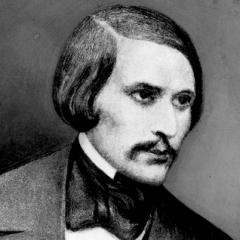
Nikolai Gogol

Nikolai Gogol Books

Dramatist

Dead Souls

A source page for quotes linked to Nikolai Gogol.
0 quotes

The Overcoat

A source page for quotes linked to Nikolai Gogol.

0 quotes

Nevsky Prospect

A source page for quotes linked to Nikolai Gogol.

0 quotes

Taras Bulba

A source page for quotes linked to Nikolai Gogol.

0 quotes

Related Quotes

“But he is wise who does not scorn any character, but, fixing a piercing eye on him, searches out his primary causes. Everything transforms quickly in man; before you can turn around, a horrible worm has grown inside him, despotically drawing all life's juices to itself. And it has happened more than once that some passion, not a broad but a paltry little passion for some petty thing, has spread through one born for better deeds, making him forsake great and sacred duties and see the great and sacred in paltry baubles. Numberless as the sands of the sea are human passions, and no one resembles another, and all of them, base or beautiful, are at first obedient to man and only later become his dread rulers. Blessed is he who has chosen the most beautiful passion; his boundless bliss grows tenfold with every hour and minute, and he goes deeper and deeper into the infinite paradise of his soul. But there are passions that it is not for man to choose. They are born with him at the moment of his birth into this world, and he is not granted the power to refuse them. They are guided by a higher destiny, and they have in them something eternally calling, never ceasing throughout one's life. They are ordained to accomplish a great earthly pursuit: as a dark image, or as a bright apparition sweeping by, gladdening the world—it makes no difference, both are equally called forth for the good unknown to man.”

“And yet the appearance of death was just as awe-inspiring in this little man as it is in a great one: a man who so recently had been walking around, moving, playing whist, signing various documents, and frequently seen amongst the officials with his beetling eyebrows and twitching eye, was now laid out on a table, and the twitch was quite gone from his left eye, although one eyebrow was still raised in an interrogative arch. As to what the deceased was asking, whether he sought to know why he had died or why he had lived--that only God can say.”

“That same moment he ordered the hateful portrait taken out. But that did not calm his inner agitation: all his feelings and all his being were shaken to their depths, and he came to know that terrible torment which, by way of a striking exception, sometimes occurs in nature, when a weak talent strains to show itself on too grand a scale and fails; that torment which gives birth to great things in a youth, but, in passing beyond the border of dream, turns into a fruitless yearning; that dreadful torment which makes a man capable of terrible evildoing.”

“Tomorrow at seven o'clock a strange phenomenon will occur: the earth is going to sit on the moon. This has also been written about by the noted English chemist Wellington. I confess, I felt troubled at heart when I pictured to myself the extraordinary delicacy and fragility of the moon. For the moon is usually made in Hamburg, and made quite poorly. I'm surprised England doesn't pay attention to this. It's made by a lame cooper, and one can see that the fool understands nothing about the moon. He used tarred rope and a quantity of cheap olive oil, and that's why there's a terrible stench all over the earth, so that you have to hold your nose. And that's why the moon itself is such a delicate sphere that people can't live on it, and now only noses live there. And for the same reason, we can't see our own noses, for they're all in the moon.”

“Watch out, brother,' his professor had told him more than once, 'you have talent; it would be a sin to ruin it. But you're impatient. Some one thing entices you, some one thing takes your fancy––and you occupy yourself with it, and the rest can rot, you don't care about it, you don't even want to look at it. Watch out you don't turn into a fashionable painter. Even now your colors are beginning to cry a bit too loudly. Your drawing is imprecise, and sometimes quite weak, the line doesn't show; you go for fashionable lighting, which strikes the eye at once. Watch out or you'll fall into the English type. Beware. You already feel drawn to the world: every so often I see a showy scarf on your neck, a glossy hat ... It's enticing, you can start painting fashionable pictures, little portraits for money. But that doesn't develop talent, it ruins it. Be patient. Ponder over every work, drop showiness––let the others make money. You won't come out the loser.”

“All his feelings and all his being were shaken to their depths, and he came to know that terrible torment which, by way of a striking exception, sometimes occurs in nature, when a weak talent strains to show itself on too grand a scale and fails; that torment which gives birth to great things in a youth, but, in passing beyond the border of dream, turns into a fruitless yearning; that dreadful torment which makes a man capable of terrible evildoing. A terrible envy possessed him, an envy bordering on rage. The bile rose in him when he saw some work that bore the stamp of talent. He ground his teeth and devoured it with the eyes of a basilisk.”

“оставался в том приятном положении, лучше которого и не выдумаешь для русского человека, то есть когда сам ни о чем не думаешь, а между тем мысли сами лезут в голову, одна другой приятнее, не давая даже труда гоняться за ними и искать их.”

“The whole group represented a powerful picture: Ivan Nikiforovich standing in the middle of the room in all his unadorned beauty! The woman, her mouth gaping and with a most senseless and fearful look on her face! Ivan Ivanovich with one arm raised aloft, the way Roman tribunes are portrayed! This was an extraordinary moment! a magnificent spectacle! And yet there was only one spectator: this was the boy in the boundless frock coat, who stood quite calmly and cleaned his nose with his finger.”

“Truth to tell, it was a bit difficult for him at first to get used to such limitations, but later it somehow became a habit and went better; he even accustomed himself to going entirely without food in the evenings; but instead he was nourished spiritually, bearing in his thoughts the eternal idea of the future overcoat. From then on it was as if his very existence became somehow fuller, as if he were married, as if some other person were there with him, as if he were not alone but some pleasant life's companion had agreed to walk down the path of life with him––and this companion was none other than that same overcoat with its cotton-wool quilting, with its sturdy lining that knew no wear.”

“Happy the writer who, passing by characters that are boring, disgusting, shocking in their mournful reality, approaches characters that manifest the lofty dignity of man, who from the great pool of daily whirling images has chosen only the rare exceptions, who has never once betrayed the exalted turning of his lyre, nor descended from his height to his poor, insignificant brethren, and, without touching the ground, has given the whole of himself to his elevated images so far removed from it. Twice enviable is his beautiful lot: he is among them as in his own family; and meanwhile his fame spreads loud and far. With entrancing smoke he has clouded people's eyes; he has flattered them wondrously, concealing what is mournful in life, showing them a beautiful man. Everything rushes after him, applauding, and flies off following his triumphal chariot. Great world poet they name him, soaring high above all other geniuses in the world, as the eagle soars above the other high fliers. At the mere mention of his name, young ardent hearts are filled with trembling, responsive tears shine in all eyes...No one equals him in power--he is God! But such is not the lot, and other is the destiny of the writer who has dared to call forth all that is before our eyes every moment and which our indifferent eyes do not see--all the stupendous mire of trivia in which our life in entangled, the whole depth of cold, fragmented, everyday characters that swarm over our often bitter and boring earthly path, and with the firm strength of his implacable chisel dares to present them roundly and vividly before the eyes of all people! It is not for him to win people's applause, not for him to behold the grateful tears and unanimous rapture of the souls he has stirred; no sixteen-year-old girl will come flying to meet him with her head in a whirl and heroic enthusiasm; it is not for him to forget himself in the sweet enchantment of sounds he himself has evoked; it is not for him, finally, to escape contemporary judgment, hypocritically callous contemporary judgment, which will call insignificant and mean the creations he has fostered, will allot him a contemptible corner in the ranks of writers who insult mankind, will ascribe to him the quality of the heroes he has portrayed, will deny him heart, and soul, and the divine flame of talent. For contemporary judgment does not recognize that equally wondrous are the glasses that observe the sun and those that look at the movement of inconspicuous insect; for contemporary judgment does not recognize that much depth of soul is needed to light up the picture drawn from contemptible life and elevate it into a pearl of creation; for contemporary judgment does not recognize that lofty ecstatic laughter is worthy to stand beside the lofty lyrical impulse, and that a whole abyss separates it from the antics of the street-fair clown! This contemporary judgment does not recognize; and will turn it all into a reproach and abuse of the unrecognized writer; with no sharing, no response, no sympathy, like a familyless wayfarer, he will be left alone in the middle of the road. Grim is his path, and bitterly he will feel his solitude.”

“[..] Căci judecata contemporanilor nu recunoaște că sînt minunate în egală măsură atît lentilele îndreptate spre aștri, cît și cele ce ne ajută să vedem mișcările insectelor nevăzute; căci judecata contemporanilor nu recunoaște că ai nevoie de multă profunzime sufletească pentru a pune în lumină o imagine luată din viața meschină și a face din ea o perlă a creației; [..]”

“Niin! lihavat ne osaavat paremmin asioitansa ajaa maailmassa kuin laihat. Laihat palvelevat enimmäkseen erityisillä toimilla tahi ylimääräisinä, heiluen sinne tänne; heidän toimeentulonsa on ikään kuin köykäistä ilmassa keijumista ja peräti epävarmaa! Lihavat sitä vastoin eivät ole koskaan ylimääräisissä viroissa, vaan aina vakinaisissa, ja mihin virkaan kerran istuvat, niin lujasti ja varmasti siihen istuvatkin, niin että saattaa virkakin heidän altansa risahtaa ja hävitä, vaan he kas vaan eivät paikastaan erkane.”

“Ukrayna'nın benim yurdum olduğunu kim söylüyor? Kim, ne adına orayı bana yurt olarak vermiş? Ruhumu okşayan, beni sevgiyle kucaklayan her yer ya da her şey benim yurdumdur. Benim yurdum, varlığım her şeyim sensin. Yaşadığım sürece de sen olacaksın. Hangi Kazak gelip beni senden koparabilecek göreceğiz. Yeni yurdum için her şeyi terk etmeye, yok etmeye hazırım!”

“Go along, go along quickly, and set all you have on the table for us. We don't want doughnuts, honey buns, poppy cakes, and other dainties; bring us a whole sheep, serve a goat and forty-year old mead! And plenty of vodka, not vodka with all sorts of fancies, not with raisins and flavorings, but pure foaming vodka, that hisses and bubbles like mad.”

“I am very fond of the modest manner of life of those solitary owners of remote villages, who in Little Russia are commonly called "old-fashioned," who are like tumbledown picturesque little houses, delightful in their simplicity and complete unlikeness to the new smooth buildings whose walls have not yet been discolored by the rain, whose roofs are not yet covered with green lichen, and whose porch does not display its bricks through the peeling stucco.”