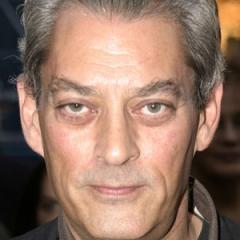
“This was the first time he had seriously confronted what he was doing, and the force of that awareness came very abruptly - with a surging of his pulse and a frantic pounding in his head. He was about to gamble his life on that table, and the insanity of that risk filled him with a kind of awe.” FirstsKindForceRiskAwarenessFirst TimeTablesFilledInsanityAweGamblingPulseGambleFrantic Author:Paul Auster
“It's beyond the grasp of anyone's memory to recall conversations in kind of [memoir] detail. So it's fake. It's all made up.” KindMadeMemoriesConversationDetailsMemoirFakeRecalls Author:Paul Auster
“In a sense I am able to interrogate myself, address myself from that slight distance and enter a kind of dialogical relationship with myself. Because I'm saying, "Look, these are things that have happened to me, but how odd they are or how ordinary they are [is up to the reader to decide]."” LooksKindAbleHappenedReaderOrdinaryDistanceOddAddresses Author:Paul Auster
“I don't read reviews any more, but I'm told by my publisher who gives me an account of what people have been writing and it's been a very split kind of response.” PeopleGivingWritingKindHas BeensAccountsGive MeResponseReviewsSplitsPublishers Author:Paul Auster
“I say at the very end of "Winter Journal" that I do dream about my father often. I think I have a tremendous compassion for him, which has grown over the years. A certain kind of pity for him also in that he was so unrealised as a human being, so dogged, and so shut-off from people in many ways. You know, I've been writing another book, and it's another non-fiction autobiographical work, kind of a compliment to "Winter Journal", and it's just finished.” PeopleThinkingKnowsWayWritingYearsHumansKindBookEndsDreamCertainFatherHuman BeingsFictionCompassionWinterFinishedPityComplimentJournalNon Fiction Author:Paul Auster
“Most of the boys would come with bits of equipment that their fathers had given them from their war days - helmets, canteens, binoculars, these kinds of things - that leant a kind of authenticity to the games we were playing. But, of course, my father never gave me anything. So I began to question him. You know, Why don't you have anything from the war? And I think he was...embarrassed to tell me he hadn't fought, because, you know, little boys want to turn their fathers into heroes, and he didn't want to be diminished in my eyes.” ThinkingKnowsWantKindLittlesWarEyeTurnsCoursesFatherGamesGivenBitsBoysHeroAuthenticityEmbarrassedEquipmentLittle BoysHelmetBinocularsCanteen Author:Paul Auster
“The ideal reader's the same, and I suppose this person has never had a face or a gender or an age. It's just some kind of unknown other who will be sympathetic and read each word carefully and understand what I'm writing about. I suppose every writer feels this.” FeelsWritingKindPersonsAgeFacesReaderIdealsGenderSympathetic Author:Paul Auster
“I think most writers can't really think about their work without a kind of revulsion. And I think that's probably why we keep going back and trying again, trying to do better each time.” ThinkingTryingKindKeep GoingRevulsion Author:Paul Auster
“The kind of fiction I'm trying to write is about telling the truth.” WritingTryingKindFictionTelling The Truth Author:Paul Auster
“I can remember saying again and again and again, "A terrible thing has happened, but this should be a kind of wake-up call for our country, and we have a great opportunity now to reinvent ourselves. To rethink our position about oil and energy, to rethink our relationship with other cultures and other countries, and why other people want to attack us."” PeopleWantShouldKindI CanCountryRememberCultureOpportunityEnergyHappenedPositionTerribleWake UpOilOur CountryOur RelationshipOther CountriesAgain And AgainTerrible ThingsGreat OpportunityOther CulturesRelationships With OthersWake Up Call Author:Paul Auster
“I still believe we wasted a golden opportunity to make significant changes in our country. I think people in America would have been ready and willing to do it, but the Bush administration took a kind of simplistic, almost moronic approach to it, all because people were so afraid.” PeopleThinkingBelieveKindHas BeensStillsCountryAmericaOpportunityWillingReadyApproachSignificantGoldenOur CountryAdministrationI Still BelieveSignificant ChangeGolden Opportunity Author:Paul Auster
“I was always interested in French poetry sort of as a sideline to my own work, I was translating contemporary French poets. That kind of spilled out into translation as a way to earn money, pay for food and put bread on the table.” WayKindMy OwnPayPoetTablesBreadContemporaryTranslateTranslationsSidelinesFrench Poetry Author:Paul Auster
“Take a report. It's dry, the sentences are clunky and unfelicitous, they're just conveying information. But it seems to me that if you're fully engaged in a great piece of literature, once you enter the rhythms of the language, which is a kind of music, meanings are being conveyed that you're not fully aware of. They enter into your subconscious.” IfsKindSeemsLiteratureLanguagePiecesInformationSentencesRhythmEngagedDryReportsSubconsciousConveying Author:Paul Auster
“I write different kinds of sentences, depending on what the book is, and what the project is. I see my work evolving. I'm writing long sentences now, something I didn't use to do. I had some kind of breakthrough, five or six years ago, in Invisible, and in Sunset Park after that. I discovered a new way to write sentences. And I find it exhilarating.” WayWritingYearsKindLongBookDifferentUseFiveSixProjectsYears AgoSentencesInvisibleEvolveParksSunsetDifferent KindsNew WaysBreakthroughExhilarating Author:Paul Auster
“I would say that Edgar Allan Poe, [Georges] Perec, Thomas Pynchon, and [Jorge Luis] Borges are all boy-writers. These are writers who take... a kind of demonic joy in writing.” WritingKindJoyBoysDemonicBorgesAllan Poe Author:Paul Auster
“For example, when I was writing Leviathan, which was written both in New York and in Vermont - I think there were two summers in Vermont, in that house I wrote about in Winter Journal, that broken-down house... I was working in an out-building, a kind of shack, a tumble-down, broken-down mess of a place, and I had a green table. I just thought, "Well, is there a way to bring my life into the fiction I'm writing, will it make a difference?" And the fact is, it doesn't make any difference. It was a kind of experiment which couldn't fail.” ThinkingWayWritingWellsKindTwoFactsHouseDifferencesFictionFailingWrittenNew YorkExampleBuildingBrokenSummerTablesGreenWinterExperimentsMessMaking A DifferenceJournalBroken DownVermontShackLeviathan Author:Paul Auster
“There are two kinds of typical days. There's the typical day when I'm writing a novel, and there's the typical day when I'm not.” WritingKindTwoNovelTypical Author:Paul Auster
“The biggest book for me, when I was fifteen, was Crime and Punishment, which I read in a kind of fever. When I put it down, I thought, if this is what novels are then I want to be a novelist.” IfsWantKindBookNovelCrimePunishmentNovelistsFifteenFeverCrime And Punishment Author:Paul Auster
“I never feel I'm standing on solid ground, and I do write with a certain kind of trembling fear.” FeelsWritingKindCertainStandingTrembling Author:Paul Auster
“In my life, I've lived in very different kinds of places - very tiny rooms when I was young. And you do learn to cope with it. The funny thing is, as you begin to inhabit larger places, it's very interesting how quickly you adapt to your space. What seems enormous at first becomes natural after a few weeks.” FirstsKindDifferentSeemsYoungNaturalSpaceInterestingRoomsWeekTinyEnormousDifferent KindsVery InterestingFunny Things Author:Paul Auster
“Art is not politics. The glory of the novel is that in its essence, it is a democratic form, because it treats individuals as worthy of scrutiny. That alone is a kind of political act. A good novel about a tea party of rich women can be just as galvanizing and important to the soul as War and Peace, so I think it's not really the job of artists to do anything. They can have their opinions as private citizens, but they must continue making their art.” ThinkingKindArtImportantWarSoulPoliticalArtistIndividualPartyOpinionNovelRichGloryArt IsDemocraticWorthyTeaTea Party Author:Paul Auster
“A book, at the same time, also has to do with what I call a buzz in the head. It's a certain kind of music that I start hearing. It's the music of the language, but it's also the music of the story. I have to live with that music for a while before I can put any words on the page. I think that's because I have to get my body as much as my mind accustomed to the music of writing that particular book. It really is a mysterious feeling.” ThinkingWritingMindKindBookFeelingsLanguageMysterious Author:Paul Auster