Quotessence
Home / Authors / Pico Iyer
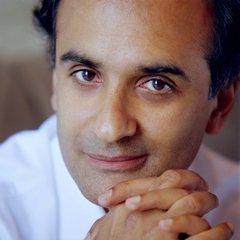
Pico Iyer

Pico Iyer Quotes

Essayist

Filter quotes by topic

Famous Pico Iyer Quotes

“I'd spent thirty years visiting the Dalai Lama, and twenty years as a journalist going to difficult places, war zones and revolutions from North Korea to Haiti and Beirut to Sri Lanka, and the question came up: What does this man have to offer to this world which seems so torn up and so attached to conflict?”

“Dalai Lama has made new opportunities for women that they never had in Tibet, introduced science into the monks' curriculum and had Tibetan students in exile take their classes in English after the age of ten so that they will know more about the outside world. But one of the great things he's done is to bring all the Tibetan groups together in exile, as perhaps they couldn't have been when they weren't in exile and they weren't under such pressure.”

“It's impressive that a man [Dalai Lama], on the day after his Nobel Prize was announced, in October, 1989, said to me, "I really wonder if my efforts are enough?" Most of us, if we just won the Nobel Prize, would think this is vindication, or at last there's a chance for Tibet. He's the rare person who thinks, as a Buddha would, "I don't know if I've done enough, I don't know if I will do enough."”

“If you'd asked me some years ago, I would have said [Dalai Lama] is an extraordinarily compassionate, clear-sighted, calm human being. But now, I'm more convinced than ever that his political positions as well as his spiritual positions arise out of such precise and realistic thinking that they're extremely sound.”

“Dalai Lama is transforming those criteria - and the whole way of conducting politics. He's conducting politics in a much deeper way than most politicians are able to. He's the only politician I know of who's a monk. The Pope, of course, is in a similar position, but the Pope isn't in the same way leading a country of many million people.”

“[The Dalai Lama] told me some years ago, "I've made every concession to China, and I've been as open and tolerant as I could, and still things get worse in Tibet." If you look at it from one point of view, as he himself says, his monastic position of forbearance and nonviolence hasn't reaped any benefits. And yet, he's thinking in terms of the long term, of centuries.”