Quotessence
Home / Authors / Rabih Alameddine Books
Rabih Alameddine

Rabih Alameddine Books

Writer

The Hakawati

A source page for quotes linked to Rabih Alameddine.
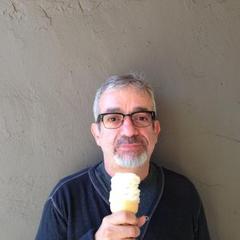
0 quotes

Koolaids

A source page for quotes linked to Rabih Alameddine.

0 quotes

Related Quotes

“You looked inhuman when you were dying, Doc, your eyes glistened like dimming stars, you were wasting away and life was leaving you piecemeal, your soul no longer fit your body, you hated it and I hated it and I couldn't recognize you and I couldn't see you and I was frightened and I never knew what to do, I looked for the man I love in you and I searched for who I used to be around you and I couldn't find either.”

“We all try to explain away the Holocaust, Abu Ghraib, or the Sabra Massacre by denying that we could ever do anything so horrible. The committers of those crimes are evil, other, bad apples; something in the German or American psyche makes their people susceptible to following orders, drinking the grape Kool-Aid, killing indiscriminately. You believe that you’re the one person who wouldn’t have delivered the electric shocks in the Milgram experiment because those who did must have been emotionally abused by their parents, or had domineering fathers, or were dumped by their spouses. Anything that makes them different from you.”

“Once there was and once there was not a devout, God-fearing man who lived his entire life according to stoic principles. He died on his fortieth birthday and woke up floating in nothing. Now, mind you, floating in nothing was comforting, light-less, airless, like a mother’s womb. This man was grateful. But then he decided he would love to have sturdy ground beneath his feet, so he would feel more solid himself. Lo and behold, he was standing on earth. He knew it to be earth, for he knew the feel of it. Yet he wanted to see. I desire light, he thought, and light appeared. I want sunlight, not any light, and at night it shall be moonlight. His desires were granted. Let there be grass. I love the feel of grass beneath my feet. And so it was. I no longer wish to be naked. Only robes of the finest silk must touch my skin. And shelter, I need a grand palace whose entrance has double-sided stairs, and the floors must be marble and the carpets Persian. And food, the finest of food. His breakfast was English; his midmorning snack French. His lunch was Chinese. His afternoon tea was Indian. His supper was Italian, and his late-night snack was Lebanese. Libation? He had the best of wines, of course, and champagne. And company, the finest of company. He demanded poets and writers, thinkers and philosophers, hakawatis and musicians, fools and clowns. And then he desired sex. He asked for light-skinned women and dark-skinned, blondes and brunettes, Chinese, South Asian, African, Scandinavian. He asked for them singly and two at a time, and in the evenings he had orgies. He asked for younger girls, after which he asked for older women, just to try. The he tried men, muscular men, skinny men. Then boys. Then boys and girls together. Then he got bored. He tried sex with food. Boys with Chinese, girls with Indian. Redheads with ice cream. Then he tried sex with company. He fucked the poet. Everybody fucked the poet. But again he got bored. The days were endless. Coming up with new ideas became tiring and tiresome. Every desire he could ever think of was satisfied. He had had enough. He walked out of his house, looked up at the glorious sky, and said, “Dear God. I thank You for Your abundance, but I cannot stand it here anymore. I would rather be anywhere else. I would rather be in hell.” And the booming voice from above replied, “And where do you think you are?”

“On Lou's lips a trace of pinot and out of them poured tales of acts of viciousness worthy of the great Lucifer himself, stories told through the night, the tortures, the beatings, the broken bones, every school has its Tigellinus, but his had more than one and each with followers, all-American boys who delighted in discovering how much pain a soul could withstand, two suicide attempts and all his parents and school could do was try to make Lou change his behavior, his behavior, his behavior, his, his, his, to modify his being just a bit. It gets better, Doc, fucking gets better, no one dared suggest that maybe the family and the school should change, or heaven forbid, that it was the all-Americans who should be modifying their beings, no, the homo should grin and bear it dumbly...”

“I was always alone, Doc, solitary whether I wished to be or not, ever since I could remember I wished to be lost in another, thought that somehow I could disappear into that heart of yours, take walks within your veins, wander through the bones of you. You had friends, Satan said, you loved and were loved, you must not forget that, at least not that. But did I allow anyone in, I asked Satan, and he said, Did you, does anyone?”

“You look at the Koran or the Bible, they all tell the same stories. You see them as the stories of the Middle East. The stories reflect who these people were in the Middle East, and this is where Western culture came from. All our literature is basically influenced by these great myths. So I'm fascinated by it. You could almost say I'm obsessed with it. But if you're asking about the effect of religion on my life - almost everything I do is opposed to the practice of religion.”

“I'm surprised how often I'm asked about being a man with a woman narrator. I'm not the first, nor will I be the last. It's been done forever, but we seem to forget that. The whole notion of "write what you know" is not just boring, but wrong. Lately it seems like every novel has to be a memoir. I'm a boring person, but I'm a writer with a relatively vivid imagination. And when people ask me about how I find the voice of a woman, I tell them that my life is run by women.”

“I love a lot of American writers, but I think that for the most part the scope of what's accepted as great American writing is very limited. What we have is good, but it's limited. There's not enough engagement with the world. Our literature's not adventurous enough. The influence of MFA writing tends to make things repetitive. The idea that writing can be taught has changed the whole conversation in the U.S.”

“I need to have one foot inside and one foot outside a culture to be able to write about it. For example, I couldn't write about the gay culture if I were wholly inside or outside of it. Finding that distance is always interesting. I jokingly say that when I'm in America, I write about Beirut, and when I'm in Beirut, I write about America. A lot of my friends in Beirut think I'm more American than Lebanese. Here, my friends think of me more as Lebanese.”

“When I published my first work, I thought I would never be able to go back to Lebanon. I thought they'd arrest me at the airport. I thought I would change literature as we know it. I thought I'd have men lining up at my door wanting to be my boyfriend. But later I discovered that no one read the book. Or no one cared. Right now, I have only one book translated into Arabic. Someday, maybe if the Syrian regime falls, there will be others, but probably another regime will come into power and it will employ just as much censorship.”

“I think in Arabic at times, but when I'm writing it's all in English. And I don't try to make my English sound more Arabic, because it would be phony - I'm imagining Melanie Griffith trying to do a German accent in Shining Through. It just wouldn't work. But the language in my head is a specific kind of English. It's not exactly American, not exactly British. Because everything is filtered through me, through my experience. I'm Lebanese, but not that much. American, but not that much. Gay, but not that much. The only thing I'm sure of, really, is that I'm under 5'7".”

“Me? I was lost for long time. I didn’t make any friends for few years. You can say I made friends with two trees, two big trees in the middle of the school […]. I spent all my free time up in those trees. Everyone called me Tree Boy for the longest time. […]. I preferred trees to people. After that I preferred pigeons, but it was trees first.”

“By remaining constrained in one's environment or country or family, one has little chance of being other than the original prescription. By leaving, one gains a perspective, a distance of both space and time, which is essential for writing about family or home, in any case.”