Quotessence
Home / Authors / Rainer Maria Rilke Books
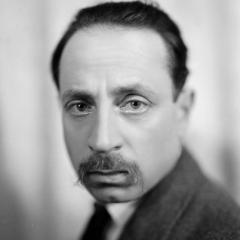
Rainer Maria Rilke

Rainer Maria Rilke Books

Poet

Samtliche Werke

A source page for quotes linked to Rainer Maria Rilke.
0 quotes

Related Quotes

“Progress And again my inmost life rushes louder, as if it moved now between steeper banks. Objects become ever more related to me, and all pictures ever more perused. I feel myself more trusting in the nameless: with my senses, as with birds, I reach into the windy heavens from the oak, and into the small ponds' broken-off day my feeling sinks, as if it stood on fishes. (Fortschritt Und wieder rauscht mein tiefes Leben lauter, als ob es jetzt in breitern Ufern ginge. Immer verwandter werden mir die Dinge und alle Bilder immer angeschauter. Dem Namenlosen fühl ich mich vertrauter: Mit meinen Sinnen, wie mit Vögeln, reiche ich in die windigen Himmel aus der Eiche, und in den abgebrochnen Tag der Teiche sinkt, wie auf Fischen stehend, mein Gefühl.)”

“But as to the influence of the death of someone near on those he leaves behind, it has long seemed to me that this ought to be no other than a higher responsibility. Does the person who passes away not leave all the things he had begun in hundreds of ways to be continued by those who outlive him, if they had shared any kind of inner bond at all? In recent years I had to live through so many close experiences of death, but not one person has been taken from me without my having found the tasks around me increased. The weight of this unexplained and perhaps greatest event, which only due to a misunderstanding has gained the reputation of being arbitrary and cruel, presses us (I think increasingly) more evenly and more deeply into life and places the utmost obligations on our slowly growing strengths.”

“I want to encourage you in your pain so that you will completely experience it in all its fullness, because as the experience of a new intensity it is a great life experience and leads everything back again to life, like everything that reaches a certain degree of greatest strength.”

“First, this is what we welcome now above all, that human beings are making a new start here and there to rebuild life with the strength and the faith of their indestructible hearts. There are others who could try this but who still just stand there, staring and trying to make sense of it all, and for whom sadness and sloth finally become utterly insurmountable. And this even though, based on feeling and reflection, only one thing is urgently needed: to attach oneself somewhere to nature with unconditional purpose, to what is strong, striving, and bright, and to move forward without guile, even if it can happen only in the least important, daily matters.”

“Each time we tackle something with joy, each time we open our eyes toward a yet untouched distance, we transform not only this and the next moment, but we also rearrange and gradually absorb the past inside of us. We dissolve the foreign body of pain of which we know neither its actual consistency and makeup nor how many (perhaps) life-affirming stimuli it imparts, once it has been dissolved, to our blood! Death, especially the most completely felt and experienced death, has never remained an obstacle to life for a surviving individual, because its innermost essence is not contrary to us (as one may occasionally suspect), but it is more knowing about life than we are in our most vital moments. I always think that such a great weight, with its tremendous pressure, somehow has the task of forcing us into a deeper, more intimate layer of life so that we may grow out of it all the more vibrant and fertile. I gained this experience very early on through various circumstances, and it was then confirmed from pain to pain: What is here and now is, after all, what has been given and is expected of us, and we must attempt to transform everything that happens to us into a new familiarity and friendliness with it. For where else should we direct our senses, which after all have been exquisitely designed to grasp and master what is here?”

“Bodily delight is a sensory experience, not any different from pure looking or the pure feeling with which a beautiful fruit fills the tongue; it is a great, an infinite learning that is given to us, a knowledge of the world, the fullness and the splendor of all knowledge...the individual...can remember that all beauty in animals and plants is a silent, enduring form of love and yearning, and he can see the animal, as he sees plants, patiently and willingly uniting and multiplying and growing, not out of physical pleasure, not out of physical pain, but bowing to necessities that are greater than pleasure and pain, and more powerful than will and withstanding. If only human beings could more humbly receive this mystery---which the world is filled with...”

“Girls and women, in their new, particular unfolding, will only in passing imitate men's behavior and misbehavior and follow in male professions. Once the uncertainty of such transitions is over it will emerge that women have only passed through the spectrum and the variety of those (often laughable) disguises in order to purify their truest natures from the distorting influences of the other sex. Women, in whom life abides and dwells more immediately, more fruitfully and more trustingly, are bound to have ripened more thoroughly, become more human human beings, than a man, who is all too light and has not been pulled down beneath the surface of life by the weight of a bodily fruit and who, in his arrogance and impatience, undervalues what he thinks he loves. This humanity which inhabits woman, brought to term in pain and humiliation, will, once she has shrugged off the conventions of mere femininity through the transformations of her outward status, come clearly to light, and men, who today do not yet feel it approaching, will be taken by surprise and struck down by it. One day (there are already reliable signs which speak for it and which begin to spread their light, especially in the northern countries), one day there will be girls and women whose name will no longer just signify the opposite of the male but something in their own right, something which does not make one think of any supplement or limit but only of life and existence: the female human being. This step forward (at first right against the will of the men who are left behind) will transform the experience of love, which is now full of error, alter its root and branch, reshape it into a relation between two human beings and no longer between man and woman. And this more human form of love (which will be performed in infinitely gentle and considerate fashion, true and clear in its creating of bonds and dissolving of them) will resemble the one we are struggling and toiling to prepare the way for, the love that consists in two solitudes protecting, defining and welcoming one another.”

“Out of infinite desires rise finite deeds like weak fountains that fall back in early trembling arcs. But those, which otherwise in us keep hidden, our happy strengths — they come forth in these dancing tears. (Aus unendlichen Sehnsüchten steigen endliche Taten wie schwache Fontänen, die sich zeitig und zitternd neigen. Aber, die sich uns sonst verschweigen, unsere fröhlichen kräfte — zeigen sich in diesen tanzenden Tränen.)”

“But we, when moved by deep feeling, evaporate; we breathe ourselves out and away; from moment to moment our emotion grows fainter, like a perfume. Though someone may tell us: “Yes, you’ve entered my bloodstream, the room, the whole springtime is filled with you . . . " — what does it matter? they can’t contain us, we vanish inside them and around them. (Denn wir, wo wir fühlen, verflüchtigen; ach wir atmen uns aus und dahin; von Holzglut zu Holzglut geben wir schwachern Geruch. Da sagt uns wohl einer: ja, du gehst mir ins Blut, dieses Zimmer, der Frühling füllt sich mit dir . . . Was hilfts, er kann uns nicht halten, wir schwinden inihm und um ihn.)”

“they (who by their very nature are impatient) fling themselves at each other when love takes hold of them, they scatter themselves, just as they are, in all their messiness, disorder, bewilderment. And what can happen then? What can life do with this heap of half-broken things that they call their communion and that they would like to call their happiness, if that were possible, and their future? And so each of them loses himself for the sake of the other person, and loses the other, and many others who still wanted to come.”

“Do not watch yourself too closely. Do not draw over-rapid conclusions from what is happening to you. Simply let it happen. Otherwise you will too readily find yourself looking on your past, which is of course not uninvolved with everything that is going on in you now, reproachfully (that is, moralistically). The extraordinary circumstances of a solitary and helpless childhood are so difficult, so complicated, exposed to so many influences and at the same time removed from any real life context, that if a vice enters into it we must not be too quick to call it a vice. We should in general be very careful with names; it is so often the name of a crime which destroys a life, not the nameless and personal act itself, which was perhaps completely necessary to that life and could have been absorbed by it without difficulty.”

“I have often wondered whether especially those days when we are forced to remain idle are not precisely the days spend in the most profound activity. Whether our actions themselves, even if they do not take place until later, are nothing more than the last reverberations of a vast movement that occurs within us during idle days. In any case, it is very important to be idle with confidence, with devotion, possibly even with joy. The days when even our hands do not stir are so exceptionally quiet that it is hardly possible to raise them without hearing a whole lot.”

“And your doubt can become a good quality if you train it. It must become knowing, it must become criticism. Ask it, whenever it wants to spoil something for you, why something is ugly, demand proofs from it, test it, and you will find it perhaps bewildered and embarrassed, perhaps also protesting. But don’t give in, insist on arguments, and act in this way, attentive and persistent, every single time, and the day will come when, instead of being a destroyer, it will become one of your best workers- perhaps the most intelligent of all the one that are building your life.”

“No one can advise or help you- no one. There is only one thing you should do. Go into yourself. Find out the reasons that commands you to write; see whether it has spread its roots into the very depth of your heart; confess to yourself whether you would have to die if you were forbidden to write. This most of all: ask yourself in the most silent hour of your night: must I write? Dig into yourself for a deep answer. And if this answer rings out in assent, if you meet this solemn question with a strong, simple “I must,” then build your life in accordance with this necessity; your whole life, even into its humblest and most indifferent hour, must become a sign and witness to this impulse. Then come close to Nature. Then, as if no one had ever tried before, try to say what you see and feel and love and lose. Don’t write love poems; avoid those forms that are too facile and ordinary: they are the hardest to work with, and it takes a great, fully ripened power to create something individual where good, even glorious, traditions exist in abundance. So rescue yourself from these general themes and write about what your everyday life offers you; describe your sorrows and desires, the thoughts that pass through your mind and your belief in some kind of beauty- describe all these with heartfelt silent, humble sincerity and, when you express yourself, use the Things around you, the images from your dreams, and the objects that you remember. If your everyday life seems poor, don’t blame it; blame yourself; admit to yourself that you are not enough of a poet to call forth its riches; because for the creator there is no poverty and no poor, indifferent place. And even if you found yourself in some prison, whose walls let in none of the world’s sounds- wouldn’t you still have your childhood, that jewel beyond all price, that treasure home of memories? Turn your attention to it. Try to raise up the sunken feelings of this enormous past; your personality will grow stronger, your solitude will expand and become a place where you can live in the twilight, where the noise of other people passes by, far in the distance.”

“Yes, the Springs needed you. Many a star was waiting for your eyes only. A wave swelled toward you out of the past, or as you walked by the open window a violin inside surrendered itself to pure passion. All that was your charge. But were you strong enough? Weren't you always distracted by expectation, as though each such moment presaged a beloved's coming? (But where would you keep her, with all those big strange thoughts in you going and coming and sometimes staying all night?)”

“I beg you, to have patience with everything unresolved in your heart and to try to love the questions themselves as if they were locked rooms or books written in a very foreign language. Don’t search for the answers, which could not be given to you now, because you would not be able to live them. And the point is to live everything. Live the questions now. Perhaps then, someday far in the future, you will gradually, without even noticing it, live your way into the answer.”

“Therefore, dear Sir, love your solitude and try to sing out with the pain it causes you. For those who are near you are far away... and this shows that the space around you is beginning to grow vast.... be happy about your growth, in which of course you can't take anyone with you, and be gentle with those who stay behind; be confident and calm in front of them and don't torment them with your doubts and don't frighten them with your faith or joy, which they wouldn't be able to comprehend. Seek out some simple and true feeling of what you have in common with them, which doesn't necessarily have to alter when you yourself change again and again; when you see them, love life in a form that is not your own and be indulgent toward those who are growing old, who are afraid of the aloneness that you trust.... and don't expect any understanding; but believe in a love that is being stored up for you like an inheritance, and have faith that in this love there is a strength and a blessing so large that you can travel as far as you wish without having to step outside it.”