Quotessence
Home / Authors / Rebecca Solnit
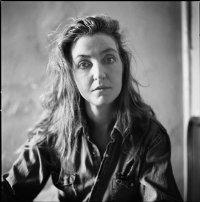
Rebecca Solnit

Rebecca Solnit Quotes

Writer

Filter quotes by topic

Famous Rebecca Solnit Quotes

“In the city, one is alone because the world is made up of strangers, and to be a stranger surrounded by strangers, to walk along silently bearing one's secrets and imagining those of the people one passes, is among the starkest of luxuries. This uncharted identity with its illiminable possibilities is one of the distinctive qualities of urban living, a liberatory state for those who come to emansipate themselves from family and community expectation, to experiment with subculture and identity. It is an observer's state, cool, withdrawn, with senses sharpened, a good state for anybody who needs to reflect or create. In small doses melancholy, alienation, and introspection are among life's most refined pleasures.”

“I read, I daydreamed, I wandered the city so ardently in part because it was a means of wandering in my thoughts, and my thoughts were runaways, constantly taking me away in the midst of the conversation, the meal, the class, the work, the play, the dance, the party. They were a place I wanted to be, thinking, musing, analyzing, imagining, hoping, tracing connections, integrating new ideas, but they grabbed me and ran with me from the situations at hand over and over. I disappeared in the middle of conversations, sometimes because I was bored but just as often because someone said something so interesting that my mind chased after the idea they offered and lost track of the rest of what they said. I lived in a long reverie for years, went days without much interruption to it, which was one of the gifts of solitude.”

“The fear of rape puts many women in their place - indoors, intimidated, dependent yet again on material barriers and protectors... I was advised to stay indoors at night, to wear baggy clothes, to cover or cut my hair, to try to look like a man, to move someplace more expensive, to take taxis, to buy a car, to move in groups, to get a man to escort me—all modern versions of Greek walls and Assyrian veils, all asserting it was my responsibility to control my own and men's behavior rather than society's to ensure my freedom. I realized that many women had been so successfully socialized to know their place that they had chosen more conservative, gregarious lives without realizing why. The very desire to walk alone had been extinguished in them—but it had not in me.”

“Some secret of nurture withered a generation or two before I arrived, if it had ever existed before among the poor, marginalized people on the edges of Europe from whom I descend. Both my parents grew up with a deep sense of poverty that was mostly emotional but that they imagined as material long after they clambered into the middle class, and so they were more like a pair of rivalrous older siblings than parents who see their children as extensions of themselves and their hopes. They were stuck in separateness. I didn't realize anything was odd until I was already on my own and found out that not everyone's parents cut them off financially as soon as the law allowed. I tried to leave home unsuccessfully at fourteen and fifteen and sixteen and did so successfully at seventeen, heading off to another country, as far away as I could go, and once I got there I realized I was more on my own than I had anticipated: I was henceforth entirely repsonsible for myself and thus began a few years of poverty.”

“I'd wrestled against the inner voice of my mother, the voice of caution, of duty, of fear of the unknown, the voice that said the world was dangerous and safety was always the first measure and that often confused pleasure with danger, the mother who had, when I'd moved to the city, sent me clippings about young women who were raped and murdered there, who elaborated on obscure perils and injuries that had never happened to her all her life, and who feared mistakes even when the consequences were minor. Why go to Paradise when the dishes aren't done? What if the dirty dishes clamor more loudly than Paradise?”

“Some women get erased a little at a time, some all at once. Some reappear. Every woman who appears wrestles with the forces that would have her disappear. She struggles with the forces that would tell her story for her, or write her out of the story, the genealogy, the rights of man, the rule of law. The ability to tell your own story, in words or images, is already a victory, already a revolt.”

“How can I tell a story we already know too well? Her name was Africa. His was France. He colonized her, exploited her, silenced her, and even decades after it was supposed to have ended, still acted with a high hand in resolving her affairs in places like Côte d'Ivoire, a name she had been given because of her export products, not her own identity. Her name was Asia. His was Europe. Her name was silence. His was power. Her name was poverty. His was wealth. Her name was Her, but what was hers? His name was His, and he presumed everything was his, including her, and he thought be could take her without asking and without consequences. It was a very old story, though its outcome had been changing a little in recent decades. And this time around the consequences are shaking a lot of foundations, all of which clearly needed shaking. Who would ever write a fable as obvious, as heavy-handed as the story we've been given? ... His name was privilege, but hers was possibility. His was the same old story, but hers was a new one about the possibility of changing a story that remains unfinished, that includes all of us, that matters so much, that we will watch but also make and tell in the weeks, months, years, decades to come.”

“Feminism has both undone the hierarchy in which the elements aligned with the masculine were given greater value than those of the feminine and undermined the metaphors that aligned these broad aspects of experience with gender. So, there goes women and nature. What does it leave us with? One thing is a political mandate to decentralize privilege and power and equalize access, and that can be a literal spatial goal too, the goal of our designed landscapes and even the managed ones -- the national parks, forests, refuges, recreation areas, and so on.”

“A person in her twenties has been a child for most of her life, but as time goes by that portion that is childhood becomes smaller and smaller, more and more distant, more and more faded, though they say at the end of life the beginning returns with renewed vividness, as though you had sailed all the way around the world and were going back into the darkness from which you came.”

“When I first began to write, I had been a child for most of my life, and my childhood memories were vivid and potent, and the forces that shaped me, Most of them have grown fainter with time, and whenever I write one down, I give it away: it ceases to have the shadowy life of memory and becomes fixed in letters: it ceases to be mine; it loses that mobile unreliability of the live.”

“On ordinary days we each walk alone or with a companion or two on the sidewalks, and the streets are used for transit and for commerce. On extraordinary days—on the holidays that are anniversaries of historic and religious events and on the days we make history ourselves—we walk together, and the whole street is for stamping out the meaning of the day.”

“There's a kind of activism that's more about bolstering identity than achieving results, one that sometimes seems to make the left the true heirs of the Puritans. Puritanical in that the point becomes the demonstration of one's own virtue rather than the realization of results. And puritanical because the somber pleasure of condemning things is the most enduring part of that legacy, along with the sense of personal superiority that comes from pleasure denied. The bleakness of the world is required as contrasting backdrop to the drama of their rising above.”

“The term 'politics of prefiguration' has long been used to describe the idea that if you embody what you aspire to, you have already succeeded. That is to say, if your activism is already democratic, peaceful, creative, then in one small corner of the world these things have triumphed. Activism, in this model, is not only a toolbox to change things but a home in which to take up residence and live according to your beliefs, even if it's a temporary and local place...”

“I believe in Hope as an act of defiance, or rather as the foundation for an ongoing series of acts of defiance, those acts necessary to bring about some of what we hope for while we live by principle in the meantime. There is no alternative, except surrender. And surrender not only abandons the future, it abandons the soul. Subcommandante Marcos says, "History written by Power taught us that we had lost... We did not believe what Power taught us. We skipped class when they taught conformity and idiocy. We failed modernity. We are united by the imagination, by creativity, by tomorrow. In the past we not met defeat but also found a desire for justice and the dream of being better. We left skepticism hanging from the hook of big capital and discovered that we could believe, that it was worth believing, that we should believe - in ourselves. Health to you, and don't forget that flowers, like hope, are harvested." And they grow in the dark. "I believe," adds Thoreau, "in the forest, and the meadow, and the night in which the corn grows.”

“Hopefulness is risky, since it is after all a form of trust, trust in the unknown and the possible, even in discontinuity. To be hopeful is to take on a different persona, one that risks disappointment, betrayal, and there have been major disappointments in recent years. Other times that tale of gloom seems to come from the belief in a univocal narrative, in the idea that everything is heading in one direction, and since it's clearly not all good, it must be bad.”

“Artmaking has been, at least since bohemia and modernism appeared in 19th century Paris, largely an urban enterprise: the closer to museums, publishers, audiences, patrons, politicians, other enemies, and each other, the better for artists and for art. For if cities have been essential to artists, artists have been essential to cities...Being an artist was one way of being a participant in the debate about meaning and value, and the closer to the center of things is the more one can participate. This is part of what makes urbanity worth celebrating, this braiding together of disparate lives, but the new gentrification threatens to yank out some strands together, diminishing urbanism itself. Perhaps the new urbanism will result in old cities that function like suburbs as those who were suburbia's blandly privileged take them over.”

“Fairy tales are about trouble, about getting into and out of it, and trouble seems to be a necessary stage on the route to becoming. All the magic and glass mountains and pearls the size of houses and princesses beautiful as the day and talking birds and part-time serpents are distractions from the core of most of the stories, the struggle to survive against adversaries, to find your place in the world, and to come into your own. Fairy tales are almost always the stories of the powerless, of youngest sons, abandoned children, orphans, of humans transformed into birds and beasts or otherwise enchanted away from their own lives and selves. Even princesses are chattels to be disowned by fathers, punished by step-mothers, or claimed by princes, though they often assert themselves in between and are rarely as passive as the cartoon versions. Fairy tales are children's stories not in wh they were made for but in their focus on the early stages of life, when others have power over you and you have power over no one. In them, power is rarely the right tool for survival anyway. Rather the powerless thrive on alliances, often in the form of reciprocated acts of kindness -- from beehives that were not raided, birds that were not killed but set free or fed, old women who were saluted with respect. Kindness sewn among the meek is harvested in crisis... In Hans Christian Andersen's retelling of the old Nordic tale that begins with a stepmother, "The Wild Swans," the banished sister can only disenchant her eleven brothers -- who are swans all day look but turn human at night -- by gathering stinging nettles barehanded from churchyard graves, making them into flax, spinning them and knitting eleven long-sleeved shirts while remaining silent the whole time. If she speaks, they'll remain birds forever. In her silence, she cannot protest the crimes she accused of and nearly burned as a witch. Hauled off to a pyre as she knits the last of the shirts, she is rescued by the swans, who fly in at the last moment. As they swoop down, she throws the nettle shirts over them so that they turn into men again, all but the youngest brother, whose shirt is missing a sleeve so that he's left with one arm and one wing, eternally a swan-man. Why shirts made of graveyard nettles by bleeding fingers and silence should disenchant men turned into birds by their step-mother is a question the story doesn't need to answer. It just needs to give us compelling images of exile, loneliness, affection, and metamorphosis -- and of a heroine who nearly dies of being unable to tell her own story.”

“A garden path,' write the landscape architects Charles W. Moore, William J. Mitchell, and William Turnbull, 'can become the thread of a plot, connecting moments and incidents into a narrative. The narrative structure might be a simple chain of events with a beginning, middle, and end. It might be embellished with diversions, digressions, and picaresque twists, be accompanied by parallel ways (subplots), or deceptively fork into blind alleys like the alternative scenerios explored in a detective novel.”

“The summer before, an estranged husband violated his wife’s restraining order against him, shooting her—and killing or wounding six other women—at her workplace in suburban Milwaukee, but since there were only four corpses the crime was largely overlooked in the media in a year with so many more spectacular mass murders in this country (and we still haven’t really talked about the fact that, of sixty-two mass shootings in the United States in three decades, only one was by a woman, because when you say lone gunman, everyone talks about loners and guns but not about men—and by the way, nearly two-thirds of all women killed by guns are killed by their partner or ex-partner).”

“Meanwhile, the radio host who groped Taylor Swift at a 2013 meet-and-greet and then unsuccessfully sued her for saying so--since her speaking up resulted in his being fired--complains he's afraid to talk to women (perhaps because talking to a woman and grabbing a woman's ass are apparently so hard for him to tell apart, a kind of confusion we're hearing about from many men who are now 'afraid to talk to' women).”

“There’s a direct association between machismo and the refusal to recognize and respond appropriately to the climate catastrophe. It’s a result of versions of masculinity in which selfishness and indifference – individualism taken to its extremes – are defining characteristics, and therefore caring and acting for the collective good is their antithesis.”

“Alone in the car with my social life all before and behind me, I was suspended in the beautiful solitude of the open road, in a kind of introspection that only outdoor space generates, for inside and outside are more intertwined than the usual distinctions allow. The emotion stirred by the landscape is piercing, a joy close to pain when the blue is deepest on the horizon or the clouds are doing those spectacular fleeting things so much easier to recall than to describe.”

“On January 18, 1915, six months into the First World War, as all Europe was convulsed by killing and dying, Virginia Woolf wrote in her journal, 'The future is dark, which is on the whole, the best thing the future can be, I think.' Dark, she seems to be saying, as in inscrutable, not as in terrible. We often mistake the one for the other. Or we transform the future's unknowability into something certain, the fulfillment of all our dread, the place beyond which there is no way forward. Be again and again, far stranger things happen than the end of the world.”

“The multiplication of technologies in the name of efficiency is actually eradicating free time by making it possible to maximize the time and place for production and minimize the unstructured travel time in between. New timesaving technologies make most workers more productive, not more free, in a world which seems to be accelerating around them.”

“Recently, a lot of Americans have swapped the awkward phrase 'same-sex marriage' for the term 'marriage equality'. This phrase is ordinarily implied to mean that same-sex couples will have the rights different-sexed couples do. But it could also mean that marriage is between equals. That's not what traditional marriage was. Throughout much of history in the west, the laws defining marriage made the husband essentially an owner and the wife a possession. Or the man a boss and the woman a slave.”