Quotessence
Home / Authors / Richard J. Foster
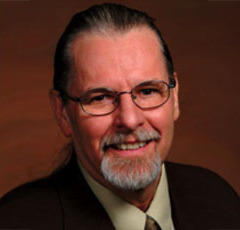
Richard J. Foster

Richard J. Foster Quotes

Author

Filter quotes by topic

Famous Richard J. Foster Quotes

“There is an old proverb to the effect that 'all those who open their mouths, close their eyes!' The purpose of silence and solitude is to be able to see and hear. Control rather than no noise is the key to silence. James saw clearly that the person who could control his tounge is perfect (James 3:1-12). Under the Discipline of silence and solitude we learn when to speak and when to refrain from speaking.”

“The Spiritual Disciplines are things that we do. We must never lose sight of this fact. It is one thing to talk piously about 'the solitude of the heart,' but if that does not somehow work its way into our experience, then we have missed the point of the Disciplines. We are dealing with actions, not merely states of mind.”

“In the chapter on study we considered the importance of observing ourselves to see how often our speech is a frantic attempt to explain and justify our actions. Having seen this in ourselves, let's experiment with doing deeds without any words of explanation whatever. We note our sense of fear that people will misunderstand why we have done what we have done. We seek to allow God to be our justifier.”

“The fruit of solitude is increased sensitivity and compassion for others. There comes a new freedom to be with people. There is new attentiveness to their needs, new responsiveness to their hurts. Thomas Merton observes, 'It is in deep solitude that I find the gentleness with which I can truly love my brothers. The more solitary I am the more affection I have for them.... Solitude and silence teach me to love my brothers for what they are, not for what they say.”

“Go another step. Try to live one entire day without words at all. Do it not as a law, but as an experiment. Note your feelings of helplessness and excessive dependence upon words to communicate. Try to find new ways to relate to tohers that are not dependent upon words. Enjoy, savor the day. Learn from it.”

“The Prayer of Examine produces within us the priceless grace of self-knowledge. I wish I could adequately explain to you how great a grace this truly is. Unfortunately, contemporary men and women simply do not value self-knowledge in the same way that all preceding generations have. For us technocratic knowledge reigns supreme. Even when we pursue self-knowledge, we all too often reduce it to a hedonistic search for personal peace and prosperity. How poor we are! Even the pagan philosophers were wiser than this generation. They knew that an unexamined life was not worth living.”

“To pray is to change. This is a great grace. How good of God to provide a path whereby our lives can be taken over by love and joy and peace and patience and kindness and goodness and faithfulness and gentleness and self-control.”

“Giving with glad and generous hearts has a way of routing out the tough old miser within us. Even the poor need to know that they can give. Just the very act of letting go of money, or some other treasure, does something within us. It destroys the demon greed.”

“Prayer frees us to be controlled by God. To pray is to change. There is no greater liberating force in the Christian life than prayer. To enter the gaze of the Holy is never to be the same. To bathe in the Light in quiet wonder and glad surrender is to be slowly, permanently transformed. There is a richer inward orientation, a deep hunger for communion. We feel as if we are being taken over by a new control Center, and so we are.”

“The Bible is teh means through which we are introduced to Jesus and invited to follow Him in the life of humility and service. Secured by the knowledge that in Christ, our origin... and destination is God, we will yield the fruit of service to God. This is the "so what" of our Bible reading. Does it shape our spirits in love and humility? Does it lead us more fully into life with God? (Life with God, p. 34-35)”

“And so I urge you: carry on an ongoing conversation with God about the daily stuff of life, a little like Tevye in Fiddler on the Roof. For now, do not worry about "proper" praying, just talk to God.”

“But if we know that the people of God are first a fellowship of sinners, we are freed to hear the unconditional call of God's love and to confess our needs openly before our brothers and sisters. The fear and pride that clings to us like barnacles cling to others also. In acts of mutual confession we release the power that heals. Our humanity is no longer denied, but transformed.”