Quotessence
Home / Authors / Seyyed Hossein Nasr
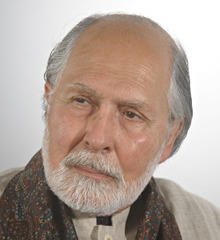
Seyyed Hossein Nasr

Seyyed Hossein Nasr Quotes

Professor

Filter quotes by topic

Famous Seyyed Hossein Nasr Quotes

“The Islamic world is not only suffering from the American occupation of Palestine and Iraq, it's also suffering from the unbelievable corruption in Afghanistan by Afghans themselves and also in Iraq - I'm just giving these 2 examples of countries which are under direct occupation; I do not mean at all to negate the terrible events that led to this or what's going on with the foreign occupation there.”

“Sufis have always been those that have tried to purify the ethics of Islam and society. And they don't have their hands cut off from the external action at all. For example, the bazaar in which the Sufis were very strong always dominated economic life in Islamic world. They could give a much more sane and Islamic form of activity when the economic life of Islam moved out of the bazaar to new parts of Islamic cities with modernized Muslims, who took it in another light and it became very, very anti Islamic, and much against many of the most profound practices of Islamic societies.”

“What is tragic today is that there is a number of Muslims who think that all the solutions are to be found simply by external actions. They don't have to do anything within themselves. This is a deeply Western idea - modern, Western idea, where you try to improve the world without improving yourself. And this is what the Muslims who talk about others putting their heads in the sand and that "We are doing jihad and we are political" and so forth, they are emulating a very important mistake of modernism.”

“Muhammad was the exemplar ruler, exemplar father, exemplar warrior, and once you have a family, you have contentions, you have problems, human problems, and it's the human order. He set the example and model for Muslims for all the different endeavors. He is not only the example of the spiritual life, but he is also an example for our life in this world.”

“There is no religion in the world where there is a possibility of spiritual development outside of the context of that religion. This is only a modern invention. For example, Christian mystics were also Christians. They also went to Church and followed Christian laws. Hindu mystics were practicing Hindus; they didn't kill cows and have steak. They follow the Hindu laws and so on and so forth down the line and Sufism is no exception.”

“Al-Hallaj has a special destiny. He came at a time when worldliness, the luxury, were inundating the Islamic world. His function was to act as kind of an antithesis to this, and he paid for it with his life, and he was very happy to do so. He smiled as he went to the executioner. That was done because it shook the conscience of the Islamic peoples of that time. But the vast majority, the vast, vast, vast majority of Sufis, they have not met the destiny of al-Hallaj. They have spoken about reaching "the Truth" and there is nothing dangerous about it.”

“300 years after the rise of Islam there were Zoroastrians in Iran. The Muslim armies never forced people to accept Islam. It was only within Arabia that God ordered the idolaters to have a choice of either embracing Islam or fight against Muslims, because He wanted to remove this terrible idolatry that exited there. But outside Arabia where Islam met Christians, Jews, Zoroastrians and Hindus, they were given a choice by and large. That's why many Christians and Jewish communities survived in the Muslim world, but gradually many of them embraced Islam for different reasons.”

“The significance of the vast Islamic scientific tradition for Muslims and especially for young Muslims today is not only that it gives them a sense of pride in their own civilization because of the prestige that science fhas in the present day world. It is furthermore a testament to the way Islam was able to cultivate various sciences extensively without becoming alienated from the Islamic world view and without creating a science whose application would destroy the world of nature and the harmony that must exist between man and the natural environment.”

“From it genesis twelve hundred years ago to today, Islamic philosophy (al-hikmah; al-falsafah) has been one of the major intellectual traditions within the Islamic world, and it has influenced and been influenced by many other intellectual perspectives, including Scholastic theology (kalam) and doctrinal Sufism (al-ma'rifah or al-tasawwuf al-'ilmi) and theoretical gnosis ('irfan-i nazari).”