Quotessence
Home / Authors / Seyyed Hossein Nasr Books
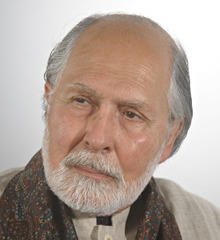
Seyyed Hossein Nasr

Seyyed Hossein Nasr Books

Professor

Related Quotes

“Furthermore, in the 13th/19th century philosophy began to see itself as a complete replacement for religion as one can see in the rise of the very idea of ideology at that time, a term used widely today even by Muslims who rarely realize the essentially secular and anti-religious character of the very concept of ideology which has gradually come to replace traditional religion in so many circles.”

“All spiritual techniques seek to awaken fallen man from the dream in which he lives : he dreams continuously of individual state of being, and of the many forms through which the external world presents itself to him; he builds for himself a paradise of illusions, so as to forget the absence of God. To recover the vision of the spiritual world, the soul of man must "die" to this dream, this ceaseless flow of images which fallen man regards as normal, everyday state of his consciousness.”

“If you ask today what art is, what its function is, what the meaning of art is and why one should create art, the answer given oftentimes by Western philosophers of art and those who special- ize in modern aesthetics is ‘‘art for art’s sake.’’ The modern response is that you just create art for the sake of art; but this was never the answer of traditional civilizations where one created art for both the sake of attainment of inner perfection and for human need in the deepest sense—because the needs of man are not only physical, they are also spiritual. We are as much in need of beauty as of the air that we breathe.”

“We, that is, the traditionalists like myself, use the term ‘‘modernism’’ not in a vague way as characterizing just things that happen to be around today, but as a particular way of looking at the world, a worldview that began in the Renaissance in the West with such components as Renaissance humanism, rationalism, et cetera. As I have mentioned already, modernism rejects the primacy of absolute and ultimate truth transcending the human order and descend- ing upon the human realm from the Divine Order. It places man himself at the center of the stage as ‘‘the absolute.’’ In a sense it absolutizes the human being in his or her earthly reality. Usually it does not come out and say so explicitly, but that is what it really means; that is, it takes the absolute away from God and puts it on the human plane, and therefore makes human reason, human perceptions, human interests the criteria of reality, of knowledge, of the truth, of the goal of human life. Therefore, as a consequence it substitutes the significance of the temporal and the transient for the abiding and the eternal.”

“The Western industrial complex would not change even if millions of people perished in Africa or India or some other faraway place. The population of the earth increases by millions every month, and such losses would be seen as a little drop in the ocean. But if something serious were to occur in the West, then that would turn upside down the currently held vision of Western people with regard to the impact of modern technology on nature. It would be something that would wake them up and perhaps help to stop this really suicidal course that modern civilization is currently pursuing and that the rest of the world is trying to follow.”

“When man penetrates the mysteries of Nature, the "facts of Nature" become transparent symbols, revealing the "divine energies" and the "angelic" state which fallen man has lost, and which he may recover only for a moment, as when he is enraptured by the beauty of music or of a lovely face. At such moments man forgets his limited self, his individualistic dream, and participates in the cosmic dream, thus becoming freed from the prison of his own carnal soul.”

“From the Renaissance until today, Christianity, and also to some extent Judaism, in the West have had to carry out a constant battle against ideologies, philosophies, institutions and practices which are secular in nature and which challenge the authority of religion and in fact its very validity and legitimacy. These challenges to religion have varied from political ideas which are based on secularism to the denial of the religious foundation of morality and the philosophical denial of the reality of God and of the after life or of revelation and sacred scripture. The history of the West has been marked during the last few centuries by a constant battle between the forces of religion and secularism and in fact the gaining of the upper hand by secularism and consequently the denial of the reality of religion and its pertinence to various domains of life.”

“In the West, the great problem that was created for Christianity from the 17th century onward and even earlier during the Renaissance was that religion began to retreat from one domain after another in order to accommodate the forces of modernism and secularism. One can point to the Galileo trial, after which the Church ‘‘lost the cosmos.’’ In fact, the Church was right in many ways, because what Galileo was saying did not concern astronomy alone, but also theology, which was quite something else. As a consequence of this trial, the Church withdrew from its concern with the sciences of nature and no longer challenged what kind of science was developed, and suf- fered the results of accepting the reductionism and materialistic views of modern science. This process resulted in the complete secularization of nature and the cosmos.”

“Islamic science is related profoundly to the Islamic world view. It is rooted deeply in knowledge based upon the unity of Allah or al-tawhid and a view of the universe in which Allah’s Wisdom and Will rule and in which all things are interrelated reflecting unity on the cosmic level. In contrast, Western science is based on considering the natural world as a reality which is separate from both Allah and the higher levels of being. At best, Allah is accepted as the creator of the world, as a mason who has built a house which now stand on its own. His intrusion into the running of the world and His continuous sustenance of it are not accepted in the modern scientific world view.”

“To consider Western science simply as a continuation of Islamic science is, therefore, to misunderstand completely both the epistemological foundations of the two sciences and the relationship that each has to the world of faith and revelation. It is also to misunderstand the metaphysical and philosophical backgrounds of the two sciences.”

“The ecological crisis is only an externalization of an inner malaise and cannot be solved without a spiritual rebirth of Western man […] It is still our hope that as the crisis created by man's forgetfulness of who he really is grows and that as the idols of his own making crumble one by one before his eyes, he will begin a true reform of himself, which always means a spiritual rebirth and through his rebirth attain a new harmony with the world of nature around him. Otherwise, it is hopeless to expect to live in harmony with that grand theophany which is virgin nature, while remaining oblivious and indifferent to the Source of that theophany both beyond nature and at the centre of man's being […] Few are willing to look reality in the face and accept the fact that there is no peace possible in human society as long as the attitude toward nature and the whole natural environment is one based on aggression and war. Furthermore, perhaps not all realize that in order to gain this peace with nature there must be peace with the spiritual order. To be at peace with the Earth one must be at peace with Heaven.”

“Modernism, philosophically speaking, is in a sense the ‘‘worship’’ of time and the transient, a kind of deification of time and becoming and all that flows in the temporal order. That is why it resulted quickly in historicism and evolutionism and the theories all of those 19th-century philosophers such as Hegel and Marx and scientists such as Darwin. Such people are very different from one point of view, but they all in a sense divinize history even if Marx rejected the category of ‘‘divine.’’ The historical process is the reality that is domi- nant in modern thought. It is that which determines values and even real- ity today in the dominant Western paradigm.”

“It must never be forgotten that for non-modern man - whether he be ancient or contemporary - the very stuff of the Universe has a sacred aspect. The cosmos speaks to man and all of its phenomena contain meaning. They are symbols of a higher degree of reality which the cosmic domain at once veils and reveals. The very structure of the cosmos contains a spiritual message for man and is thereby a revelation coming from the same source as religion itself. Both are the manifestations of the Universal Intellect, the Logos, and the cosmos itself is an integral part of that total Universe of meaning in which man lives and dies.”

“For anyone who understood the essence of modernism based on and originating in the secularizing and humanistic tendencies of the European Renaissance, it was easy to detect the confrontation that was already taking place between traditional and modern elements in the Islamic world.”

“When one talks about being like a dead corpse in the hands of a spiritual teacher it means being able to surrender one's will, specially one's nafs al ammarah, that is a part of our soul which is again a Quranic term, which commands us to evil - we must surrender that. That's what it means. It doesn't make you become part of a cog of a machine.”

“The Islamic world is not only suffering from the American occupation of Palestine and Iraq, it's also suffering from the unbelievable corruption in Afghanistan by Afghans themselves and also in Iraq - I'm just giving these 2 examples of countries which are under direct occupation; I do not mean at all to negate the terrible events that led to this or what's going on with the foreign occupation there.”

“Sufis have always been those that have tried to purify the ethics of Islam and society. And they don't have their hands cut off from the external action at all. For example, the bazaar in which the Sufis were very strong always dominated economic life in Islamic world. They could give a much more sane and Islamic form of activity when the economic life of Islam moved out of the bazaar to new parts of Islamic cities with modernized Muslims, who took it in another light and it became very, very anti Islamic, and much against many of the most profound practices of Islamic societies.”

“What is tragic today is that there is a number of Muslims who think that all the solutions are to be found simply by external actions. They don't have to do anything within themselves. This is a deeply Western idea - modern, Western idea, where you try to improve the world without improving yourself. And this is what the Muslims who talk about others putting their heads in the sand and that "We are doing jihad and we are political" and so forth, they are emulating a very important mistake of modernism.”

“Muhammad was, first of all, a Prophet of course, a beloved and lover of God, a father, an army commander, a judge, a ruler of a community, the King of Medina and later of Arabia, and all of these were combined in him and his destiny, the reason God brought him on earth, was to show how each of the functions which human beings have in life have the perfect form in the prophet.”

“Muhammad was the exemplar ruler, exemplar father, exemplar warrior, and once you have a family, you have contentions, you have problems, human problems, and it's the human order. He set the example and model for Muslims for all the different endeavors. He is not only the example of the spiritual life, but he is also an example for our life in this world.”