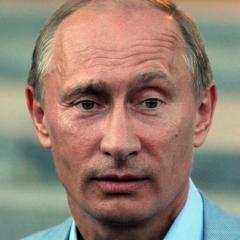
“I would like to inform you with great satisfaction of a new step forward on establishing partnership between Russia and Japan” StepsSatisfactionRussiaJapanPartnershipSteps Forward Author:Vladimir Putin
“Look, there is parliamentary democracy in most European countries, there is parliamentary democracy in Japan, there is parliamentary democracy in many countries, but in the United States, for some reason, the State is organized differently, there is quite a stringent presidential republic.” LooksCountryStatesReasonUnitedUnited StatesDemocracyPresidentialOrganizedJapanRepublicEuropean CountriesParliamentaryParliamentary Democracy Author:Vladimir Putin
“We do not trade territories although concluding a peace treaty with Japan is certainly a key issue and we would like to find a solution to this problem together with our Japanese friends.” ProblemTogetherIssuesKeysSolutionsTradeJapanTerritoryTreatiesConcludingPeace Treaties Author:Vladimir Putin
“Back in 1956, we signed a treaty and surprisingly it was ratified both by the Supreme Soviet of the Soviet Union and the Japanese Parliament. But then Japan refused to implement it and after that the Soviet Union also, so to say, nullified all the agreements reached within the framework of the treaty.” UnionsSupremeJapanAgreementSovietSoviet UnionParliamentFrameworkTreaties Author:Vladimir Putin
“It has nothing to do with any kind of exchange or sale [of Kuril island to Japan]. It is about the search for a solution when neither party would be at a disadvantage, when neither party would perceive itself as conquered or defeated.” KindWould BePartySolutionsPerceiveIslandsJapanDefeatedDisadvantages Author:Vladimir Putin
“Notably, it was only possible [ negotiating on the Tarabarov Island], and this is very important, due to the high level of trust Russia and China reached in their relations by that time. If we reach the same level of trust with Japan, we might be able to reach certain compromises.” IfsImportantMightAbleCertainLevelsRelationChinaDuesRussiaCompromiseIslandsJapanHigh LevelNegotiating Author:Vladimir Putin
“However, there is a fundamental difference between the issue related to Japan's history and our negotiations with China. What is it all about? The Japanese issue resulted from World War II and is stipulated in the international instruments on the outcomes of World War II, while our discussions on border issues with our Chinese counterparts have nothing to do with World War II or any other military conflicts. This is the first, or rather, I should say, the second point.” WorldShouldFirstsWarDifferencesIssuesMilitaryConflictFundamentalsInstrumentsInternationalChinaChineseDiscussionBordersWar Of The WorldsOutcomesRelatedJapanWorld War IiWorld War INegotiationCounterparts Author:Vladimir Putin
“I was told that [Japan journalists] wanted to see my dog, Yume. You can see that she is in great shape.” WantedDogShapesJournalistJapanMy Dog Author:Vladimir Putin
“The last time I was in Japan as President of Russia was 11 years ago, if memory serves. I later visited in my capacity as Prime Minister.” IfsYearsLastsPresidentMemoriesCapacityYears AgoRussiaMinistersJapanPrimeLast TimePrime Minister Author:Vladimir Putin
“I have a huge interest in Japan, which is well known, including its history and culture, and so it will be very interesting for me to see and learn more about Japan.” WellsCultureInterestInterestingKnownHugeIncludingJapanWell KnownVery InterestingHistory And Culture Author:Vladimir Putin
“[Yasuhiro] Yamashita is a respected judo master not only in Japan but across the world. To me, he is an example of an outstanding athlete and a very good man.” MenWorldExampleMastersVery GoodAthleteJapanGood ManOutstandingJudo Author:Vladimir Putin
“Judo has been part of Japanese culture for a long time. It makes sense to me that this sport, which is both athletic and philosophical, was created in Japan. It is based on respect for the partner and for our elders as our teachers, which is very important and makes a strong, positive contribution to human relationships, and not only in sports. I am happy that life brought me to this wonderful sport as a child. It is like my first love.” FirstsHumansChildrenLongHas BeensImportantCultureStrongSportsTeacherWonderfulLong TimePhilosophicalPartnersMake SenseContributionJapanFirst LoveEldersAthleticHuman RelationsHuman RelationshipsJudoJapanese Culture Author:Vladimir Putin
“I like other sports, too, including skiing and swimming, and I am learning to play ice hockey now. But judo is definitely part of my life, a very big part, and I am glad that judo was the first sport I took up and that I have practiced it regularly and seriously. I am also grateful to Japan for this.” FirstsPlayBigsSportsGratefulIncludingGladIceJapanHockeySwimmingSkiingIce HockeyJudoSo Grateful Author:Vladimir Putin
“I remember my very first encounter with Japan. At that time, I was Deputy Mayor of St Petersburg. Out of nowhere, Japan's Consul General in St Petersburg came to my office and said Japan's Ministry of Foreign Affairs wanted to invite me to Japan. I was very surprised because I had nothing to do with Japan except being a judoka. This was an opportunity to visit Tokyo and a couple of other cities. And, you know, a capital is a capital everywhere: there is the official script and certain protocol. It is always easier to talk in the provinces, the conversation is more natural.” KnowsFirstsSaidWantedRememberCertainOpportunityNaturalCitiesCoupleEasierConversationOfficeAffairScriptsOfficialsEncountersJapanInvitesMinistryMayorsProvincesTokyoProtocolDeputiesForeign Affairs Author:Vladimir Putin
“It is 60 years since the restoration of diplomatic relations, but relations between Japan and Russia have much deeper roots. In all, our diplomatic ties date back 150 years, more than 150 years now.” YearsRootsRelationDeeperRussiaTiesJapanRestorationDiplomaticDiplomatic Relations Author:Vladimir Putin
“Therefore, I do not think we should go only 60 years back but should look deeper, centuries back. Maybe this will give us [Russia and Japan] an opportunity to look at the future from a more remote perspective.” ThinkingGivingShouldYearsLooksOpportunityCenturyPerspectiveDeeperRussiaJapan Author:Vladimir Putin
“As for these 60 years, and in general more than a hundred years, we have had different periods in relations and there have been tragic pages in our history, but since 1956 when we restored diplomatic relations, regrettably, we have not had a foundation on which to build ties that would correspond to our wishes and that are currently required in bilateral cooperation with Japan.” YearsHas BeensDifferentWishPeriodsPagesHundredRelationFoundationTiesJapanTragicCooperationDiplomaticDiplomatic Relations Author:Vladimir Putin
“We are natural partners [with Japan] in the world and the Far East, but the absence of a peace treaty does not allow us to develop the full range of our relations. Therefore, we will naturally strive to sign this treaty.” WorldDoeNaturalRelationStriveEastAbsencePartnersRangeJapanTreatiesPeace Treaties Author:Vladimir Putin
“We want full-scale normalisation of relations [with Japan].” WantRelationScalesJapan Author:Vladimir Putin
“The absence of a peace treaty [with Japan] is an anachronism we inherited from the past and it must be removed. However, how to do this is a complicated issue.” PastIssuesComplicatedAbsenceJapanTreatiesAnachronismPeace Treaties Author:Vladimir Putin
“You recalled the 1956 declaration, and this declaration established the rules that should be followed by both sides and that should be put into the foundation of a peace treaty. If you carefully read the text of this document, you will see that the declaration will take effect after we sign a peace treaty and the two islands [Kunashir and Shikotan] are transferred to Japan. It does not say on what terms they should be transferred and what side will exercise sovereignty over them.” IfsShouldDoeTwoSidesTermEffectsExerciseFoundationIslandsJapanDocumentsDeclarationBoth SidesSovereigntyTreatiesIf You CarePeace Treaties Author:Vladimir Putin
“Japan announced that it would not comply with this declaration [ 1956]. Later on, the Soviet Union also declared that the declaration could not be fulfilled unilaterally, by the USSR alone.” UnionsJapanSovietFulfilledDeclarationSoviet UnionUssr Author:Vladimir Putin
“In 2000 the then Prime Minister of Japan [Yoshirō Mori] asked me to return to this process, this conversation, these talks, and to do so, incidentally, on the basis of the 1956 declaration. I agreed. Since then we have conducted dialogue in this regard but I cannot say that our Japanese partners and friends have remained within the limits of the 1956 declaration.” ProcessReturnConversationLimitsBasesRegardPartnersDialogueMinistersJapanPrimeDeclarationPrime Minister Author:Vladimir Putin
“Of course, we will work towards that end. Of course, we will work to achieve this result. However, you have just mentioned the 1956 agreement, and one may recall that these negotiations were later terminated, in effect, on Japan's initiative.” MayEndsCoursesResultsAchieveEffectsJapanAgreementInitiativeRecallsNegotiation Author:Vladimir Putin
“I believe it is no secret that I like Japan very much - Japanese culture, sport, including judo, but it will not offend anyone if I say that I like Russia even more.” IfsBelieveCultureI BelieveSportsSecretIncludingRussiaJapanJudoJapanese Culture Author:Vladimir Putin
“The Prime Minister [Shindzo Abe] and I will negotiate proceeding from our national interests: the interests of Russia and the interests of Japan. We should find a compromise.” ShouldInterestRussiaCompromiseMinistersJapanPrimePrime MinisterProceedingNational InterestsAbe Author:Vladimir Putin
“There is always a chance [for negotiations with Japan], or else it makes no sense to talk. How great is it? Right now, it is difficult for me to say, because this will depend, among other things, on the flexibility of our partners.” DifficultChanceDependsRight NowPartnersJapanNegotiationFlexibility Author:Vladimir Putin
“However, personally, I see this as not having the right to abuse this trust [among the citizens of Russia and Japan], and any decision we reach should correspond to the national interests of the Russian Federation.” ShouldInterestDecisionCitizensAbuseRussiaJapanNational InterestsFederation Author:Vladimir Putin
“Yet our interests, the interests of the Russian Federation, include the normalisation of relations with Japan, which is not at the bottom of the agenda. The whole range of what will be proposed for a solution, the entire range of matters related to the normalisation of our relations and what that would bring after normalisation, this is the whole range of issues to be discussed and decided, and those decisions should be of a practical nature.” ShouldMatterWholeInterestDecisionIssuesSolutionsDecidedRelationBottomPracticalsRangeRelatedJapanAgendasFederation Author:Vladimir Putin
“Our agreements on creating the conditions for preparing a peace treaty [with Japan] should be rooted in this trust. This may be achieved, for example, by large-scale economic activities that will also cover the Kuril Islands. It may be achieved by solving purely humanitarian issues, for instance, unhindered visa-free travel by former residents of the Southern Kuril Islands to where they used to live: visiting cemeteries, native places and so on.” ShouldMayUsedIssuesEconomicConditionsExampleActivityCreatingHumanitarianScalesInstanceFormerIslandsNativeJapanAgreementSouthernRootedPreparingVisitingTreatiesCemeteryResidentsVisaLarge ScalePeace TreatiesNative Place Author:Vladimir Putin
“At some point a few years ago Japan unilaterally stopped those talks and broke off contacts with us. It was not we who broke off contacts with Japan, it was the Japanese side that broke off contacts with us.” YearsSidesYears AgoContactBrokeJapan Author:Vladimir Putin
“Japan has joined the sanctions against the Russian Federation. How are we going to further economic relations on a new and much higher basis, at a higher level under the sanctions regime?” LevelsEconomicHigherBasesRelationJapanRegimesSanctionsHigher LevelFederation Author:Vladimir Putin
“I will not offer my thoughts on what Japan could and should have done, this is none of my business, it is the business of the Japanese leadership. But we should understand how practicable all our agreements are as a whole given the allied obligations Japan has assumed, how much independence there is in making those decision, and what we can hope for, what we can ultimately arrive at.” ShouldDoneWholeGivenDecisionOffersShould HaveIndependenceObligationJapanAgreementMy Thoughts Author:Vladimir Putin
“Our foreign ministries will simply need to sort out some purely technical matters. I see no political restraints here. The same applies to economic matters. We, on our part, are ready. However, let me repeat once again, given that Japan has joined the anti-Russian sanctions, how ready is Japan and how can it do that without breaching its commitments to its allies? We do not know the answer. Only Japan itself knows the answer.” KnowsNeedsMatterPoliticalGivenAnswersEconomicReadyCommitmentLet MeRepeatsJapanAlliesMinistryRestraintSanctions Author:Vladimir Putin
“I do not want to speak about our cooperation with Japan now. Thank God, we have had no such problems there. Nor would we want any to arise in the future. Therefore, everything needs to be pre-calculated, and we need to agree upon everything in advance.” WantNeedsProblemSpeakAgreeAriseJapanCooperationThank GodAgree Upon Author:Vladimir Putin
“I believe there are a lot of questions today that require expert analysis by various agencies: political agencies, foreign ministries, economic agencies and security agencies. We need to assess everything and understand what we can agree on and what the implications will be both for Japan and for Russia so that both the Russian people and the Japanese people come to the conclusion that these compromise solutions are acceptable and are in our countries' interests.” PeopleNeedsBelieveCountryTodayPoliticalI BelieveInterestEconomicSecuritySolutionsAgreeVariousRussiaConclusionCompromiseOur CountryAnalysisExpertsAgencyJapanAcceptableMinistryImplications Author:Vladimir Putin
“We believe we have no territorial problems at all. It is only Japan that believes it has territorial problems with Russia. We are ready to talk about this.” BelieveProblemReadyRussiaJapanTerritorial Author:Vladimir Putin
“The Prime Minister [Shinzō Abe] proposed advancing to a new level of economic engagement, putting forward eight lines of cooperation in the most important and interesting areas both for Russia and for Japan.” ImportantLinesInterestingLevelsEconomicAreasEightRussiaMinistersJapanPrimeCooperationEngagementPrime MinisterAdvancingAbe Author:Vladimir Putin
“There are also other areas. For example, culture. This is extremely important. We keep revisiting sport, judo, because I practice it, but other than that, there is also culture. Every year events that are in some way or other related to Russia take place in Japan.” WayYearsImportantCultureSportsPracticeEventsExampleAreasRussiaRelatedJapanJudo Author:Vladimir Putin
“Next year [2017], we are going to hold a series of events there that we would like to call Russian Seasons [in Japan]. Over 40 different activities - and what is more, in different cities.” YearsDifferentNextCitiesEventsActivitySeasonsSeriesJapanNext Year Author:Vladimir Putin
“I assure you that interest in Japanese culture in Russia is just as strong as interest in Russian culture in Japan.” CultureStrongInterestRussiaJapanJapanese Culture Author:Vladimir Putin
“If we do it, if we work to achieve all this [cultural exchange with Japan], we can and should talk about joint efforts toward ensuring international security, and not only in the Far East.” IfsShouldEffortAchieveSecurityInternationalEastJapanNational SecurityJointsCultural ExchangeJoint Efforts Author:Vladimir Putin
“By the way, Japan is also known to be actively engaged in manned space flights as part of the International Space Station.” WaySpaceKnownInternationalFlightEngagedJapanStationsSpace FlightInternational Space Station Author:Vladimir Putin
“I would like to say, you know, that, unfortunately, we have many unresolved problems. But a great number of people in Russia know Japan and love Japan, and I am sure that eventually we will resolve all our problems.” PeopleKnowsProblemNumbersAnd LoveRussiaJapanResolve Author:Vladimir Putin
“Irrespective of when this may happen, it would not be an exaggeration to say that today millions of people living in Russia and, I am sure, millions of people living in Japan have an urge to get to know each other, cooperate and exchange useful information, as well as a sincere desire that all problems that still remain unresolved be resolved.” PeopleKnowsWellsMayStillsProblemHappensTodayDesireMillionsInformationRussiaJapanUrgesSincereExaggerationUseful Information Author:Vladimir Putin