Quotessence
Home / Authors / Wallace Stevens Books
Wallace Stevens

Wallace Stevens Books

Poet

Selected poems

A source page for quotes linked to Wallace Stevens.
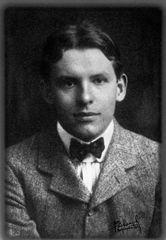
0 quotes

Harmonium

A source page for quotes linked to Wallace Stevens.

0 quotes

Wallace Stevens

A source page for quotes linked to Wallace Stevens.

0 quotes

Collected Poems

A source page for quotes linked to Wallace Stevens.

0 quotes

Letters

A source page for quotes linked to Wallace Stevens.

0 quotes

Poems

A source page for quotes linked to Wallace Stevens.

0 quotes

Related Quotes

“Poetry is a satisfying of the desire for resemblance. As the mere satisfying of a desire, it is pleasurable. But poetry if it did nothing but satisfy a desire would not rise above the level of many lesser things. Its singularity is that in the act of satisfying the desire for resemblance it touches the sense of reality, it enhances the sense of reality, heightens it, intensifies it.”

“It is not an artifice that the mind has added to human nature. The mind has added nothing to human nature. It is a violence from within that protects us from a violence without It is the imagination pressing back against the pressure of reality. It seems, in the last analysis, to have something to do wIth our self-preservation; and that, no doubt, is why the expression of it, the sound of its words, helps us to live our lives.”

“We cannot look at the past or the future except by means of the imagination but again the imagination of backward glances is one thing and the imagination of looks ahead something else. Even the psychologists concede this present particular, for, with them, memory involves a reproductive power, and looks ahead involve a creative power: the power of our expectations.”

“…the imagination gives to everything that it touches a peculiarity, and it seems to me that the peculiarity of the imagination is nobility, of which there are many degrees. This inherent nobility is the natural source of another, which our extremely headstrong generation regards as false and decadent. I mean that nobility which is our spiritual height and depth; and while I know how difficult it is to express it, nevertheless I am bound to give a sense of it. Nothing could be more evasive and inaccessible. Nothing distorts itself and seeks disguise more quickly. There is a shame of disclosing it and in its definite presentations a horror of it. But there it is.”

“The villages slept as the capable man went down, Time swished on the village clocks and dreams were alive, The enormous gongs gave edges to their sounds, As the rider, no chevalere and poorly dressed, Impatient of the bells and midnight forms, Rode over the picket docks, rode down the road, And, capable, created in his mind, Eventual victor, out of the martyr's bones, The ultimate elegance: the imagined land.”

“The House Was Quiet and the World Was Calm The house was quiet and the world was calm. The reader became the book; and summer night Was like the conscious being of the book. The house was quiet and the world was calm. The words were spoken as if there was no book, Except that the reader leaned above the page, Wanted to lean, wanted much to be The scholar to whom his book is true, to whom The summer night is like a perfection of thought. The house was quiet because it had to be. The quiet was part of the meaning, part of the mind: The access of perfection to the page. And the world was calm. The truth in a calm world, In which there is no other meaning, itself Is calm, itself is summer and night, itself Is the reader leaning late and reading there.”

“The Poem That Took The Place Of A Mountain There it was, word for word, The poem that took the place of a mountain. He breathed its oxygen, Even when the book lay turned in the dust of his table. It reminded him how he had needed A place to go to in his own direction How he had recomposed the pines, Shifted the rocks and picked his way among clouds For the outlook that would be right, Where he would be complete in an unexplained completion: The exact rock where his inexactness Would discover, at last, the view toward which they had edged Where he could lie and gazing down at the sea, Recognize his unique and solitary home.”

“It was when I said, “There is no such thing as the truth,” That the grapes seemed fatter. The fox ran out of his hole. You . . . You said “There are many truths, But they are not parts of a truth.” Then the tree, at night, began to change, Smoking through green and smoking blue. We were two figures in a wood. We said we stood alone. It was when I said, “Words are not forms of a single word. In the sum of the parts, there are only the parts. The world must be measured by eye”; It was when you said, “The idols have seen lots of poverty, Snakes and gold and lice, But not the truth”; It was at that time, that the silence was largest And longest, the night was roundest, The fragrance of the autumn warmest, Closest and strongest.”

“THE POEMS OF OUR CLIMATE I Clear water in a brilliant bowl, Pink and white carnations. The light In the room more like a snowy air, Reflecting snow. A newly-fallen snow At the end of winter when afternoons return. Pink and white carnations - one desires So much more than that. The day itself Is simplified: a bowl of white, Cold, a cold porcelain, low and round, With nothing more than the carnations there. II Say even that this complete simplicity Stripped one of all one's torments, concealed The evilly compounded, vital I And made it fresh in a world of white, A world of clear water, brilliant-edged, Still one would want more, one would need more, More than a world of white and snowy scents. III There would still remain the never-resting mind, So that one would want to escape, come back To what had been so long composed. The imperfect is our paradise. Note that, in this bitterness, delight, Since the imperfect is so hot in us, Lies in flawed words and stubborn sounds.”

“Thirteen Ways of Looking at a Blackbird" I Among twenty snowy mountains, The only moving thing Was the eye of the blackbird. II I was of three minds, Like a tree In which there are three blackbirds. III The blackbird whirled in the autumn winds. It was a small part of the pantomime. IV A man and a woman Are one. A man and a woman and a blackbird Are one. V I do not know which to prefer, The beauty of inflections Or the beauty of innuendoes, The blackbird whistling Or just after. VI Icicles filled the long window With barbaric glass. The shadow of the blackbird Crossed it, to and fro. The mood Traced in the shadow An indecipherable cause. VII O thin men of Haddam, Why do you imagine golden birds? Do you not see how the blackbird Walks around the feet Of the women about you? VIII I know noble accents And lucid, inescapable rhythms; But I know, too, That the blackbird is involved In what I know. IX When the blackbird flew out of sight, It marked the edge Of one of many circles. X At the sight of blackbirds Flying in a green light, Even the bawds of euphony Would cry out sharply. XI He rode over Connecticut In a glass coach. Once, a fear pierced him, In that he mistook The shadow of his equipage For blackbirds. XII The river is moving. The blackbird must be flying. XIII It was evening all afternoon. It was snowing And it was going to snow. The blackbird sat In the cedar-limbs.”

“The essential fault of surrealism is that it invents without discovering. To make a clam play an accordion is to invent not to discover. The observation of the unconscious, so far as it can be observed, should reveal things of which we have previously been unconscious, not the familiar things of which we have been conscious plus imagination.”

“Life consists Of propositions about life. The human Revery is a solitude in which We compose these propositions, torn by dreams, By the terrible incantations of defeats And by the fear that the defeats and the dreams are one. The whole race is a poet that writes down The eccentric propositions of its fate.”

“It is the imagination pressing back against the pressure of reality. It seems, in the last analysis, to have something to do with our self-preservation; and that, no doubt, is why the expression of it, the sound of its words, helps us to live our lives.”