“Get it down. Take chances. It may be bad, but that's the only way you can do anything really good.”
Filter quotes by topic
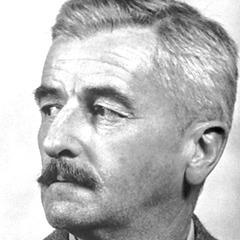
Famous William Faulkner Quotes
“We must be free not because we claim freedom, but because we practice it.”
Source: Essays, Speeches & Public Letters
Source: William Faulkner, Eugene O'Neill [and] John Steinbeck
“A writer is congenitally unable to tell the truth and that is why we call what he writes fiction.”
Source: Absalom, Absalom!
Source: Novels, 1930-1935
Source: A Faulkner perspective: a companion-guide to the limited first edition of the Selected letters of William Faulkner
Source: FAULKNER READER
Source: FAULKNER READER
“Knowing not grieving remembers a thousand savage and lonely streets.”
Source: Light in August
Source: Light in August
Source: Novels, 1930-1935
“Now she hates me. I have taught her that, at least.”
Source: Light in August
Source: Light in August
“Just when do men that have different blood in them stop hating one another?”
Source: Novels, 1930-1935
“Dear God, let me be damned a little longer, a little while.”
Source: My Mother is a Fish: A Commonplace Reader of William Faulkner's Fiction
Source: Novels, 1957-1962
Source: Soldiers' Pay
Source: Soldier's Pay
Source: William Faulkner, Eugene O'Neill [and] John Steinbeck
Source: Light in August
Source: The Best of Faulkner
Source: The Sound And The Fury
“You don’t love because: you love despite; not for the virtues, but despite the faults.”
“My, my. A body does get around.”
Source: Light in August: a concordance to the novel
Source: Novels, 1957-1962
Source: FAULKNER READER
Source: Faulkner's county: tales of Yoknapatawpha county
“The scattered tea goes with the leaves and every day a sunset dies.”
Source: Novels 1942-1954
“Did you ever have a sister? did you?”
Source: The Sound and the Fury (Third International Edition) (Norton Critical Editions)
“Memory believes before knowing remembers. [Light in August]”
Source: The Sound and the Fury (Third International Edition) (Norton Critical Editions)
Source: The Best of Faulkner
Source: The Sound And The Fury
“I took out my watch and listened to it clicking away, not knowing it couldn't even lie”
Source: FAULKNER READER
“He has never been known to use a word that might send a reader to the dictionary.”
Source: As I lay dying: the corrected text
“To understand the world, you must first understand a place like Mississippi.”