Quotessence
Home / Authors / William Stanley Jevons Books
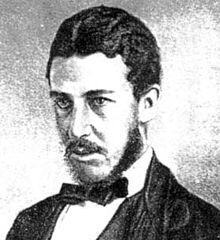
William Stanley Jevons

William Stanley Jevons Books

Economist

Political Economy

A source page for quotes linked to William Stanley Jevons.
0 quotes

Related Quotes

“One of the most important axioms is, that as the quantity of any commodity, for instance, plain food, which a man has to consume, increases, so the utility or benefit derived from the last portion used decreases in degree. The decrease in enjoyment between the beginning and the end of a meal may be taken as an example.”

“I used to think I should like to be a bookbinder or bookseller it seemed to me a most delightful trade and I wished or thought of nothing better. More lately I thought I should be a minister, it seemed so serious and useful a profession, and I entered but little into the merits of religion and the duties of a minister. Every one dissuaded me from the notion, and before I arrived at any age to require a real decision, science had claimed me.”

“Among minor alterations, I may mention the substitution for the name political economy of the single convenient term economics. I cannot help thinking that it would be well to discard, as quickly as possible, the old troublesome double-worded name of our science.”

“Logic is not only an exact science, but is the most simple and elementary of all sciences; it ought therefore undoubtedly to find some place in every course of education.”

“Logic should no longer be considered an elegant and learned accomplishment; it should take its place as an indispensable study for every well-informed person.”

“The laws of thought are natural laws with which we have no power to interfere, and which are of course not to be in any way confused with the artificial laws of a country, which are invented by men and can be altered by them. Every science is occupied in detecting and describing the natural laws which are inflexibly observed by the objects treated in the Science.”

“The conclusion to which I am ever more clearly coming is that the only hope of attaining a true system of economics is to fling aside,once and forever, the mazy and preposterous assumptions of the Ricardian school. Our English economists have been living in a fool's paradise. The truth is with the French school, and the sooner we recognize the fact, the better it will be for all the world, except perhaps the few writers who are far too committed to the old erroneous doctrines to allow for renunciation.”

“There is no such thing as absolute cost of labour; it is all a matter of comparison. Every one gets the most which he can for his exertions; some can get little or nothing, because they have not sufficient strength, knowledge or ingenuity; others get much, because they have, comparatively speaking, a monopoly of certain powers.”

“PLEASURE and pain are undoubtedly the ultimate objects of the calculus of economics. To satisfy our wants to the utmost with the least effort - to procure the greatest amount of what is desirable at the expense of the least that is undesirable - in other words, to maximize pleasure, is the problem of economics.”

“Truth indeed is sacred; but, as Pilate said, "What is truth?" Show us the undoubted infallible criterion of absolute truth, and we will hold it as a sacred inviolable thing. But in the absence of that infallible criterion, we have all an equal right to grope about in our search of it, and no body and no school nor clique must be allowed to set up a standard of orthodoxy which shall bar the freedom of scientific inquiry.”

“When quite young I can remember I had no thought or wish of surpassing others. I was rather taken with a liking of little arts and bits of learning. My mother carefully fostered a liking for botany, giving me a small microscope and many books, which I yet have. Strange as it may seem, I now believe that botany and the natural system, by exercising discrimination of kinds, is the best of logical exercises. What I may do in logic is perhaps derived from that early attention to botany.”

“There are a multitude of allied branches of knowledge connected with mans condition; the relation of these to political economy is analogous to the connexion of mechanics, astronomy, optics, sound, heat, and every other branch more or less of physical science, with pure mathematics.”

“Whoever wishes to acquire a deep acquaintance with Nature must observe that there are analogies which connect whole branches of science in a parallel manner, and enable us to infer of one class of phenomena what we know of another. It has thus happened on several occasions that the discovery of an unsuspected analogy between two branches of knowledge has been the starting point for a rapid course of discovery.”